

Getting Your Payment Bond Quote: A Quick Guide
Getting a payment bond quote shouldn’t be complicated. To protect your project and secure payments for your team, here’s what you need to know fast:
- What is a Payment Bond? A guarantee that subcontractors, laborers, and material suppliers on your project will get paid.
- How Much Does It Cost? Typically 1% to 4% of the bond amount. For a $100,000 bond, that’s often around $3,000.
- How Fast Can I Get a Quote? Get a real-time quote in minutes online. Full bond approval often takes just 1 to 2 business days.
- What Do I Need to Apply? Project details, your personal credit score, and for larger bonds (over $750,000), company and personal financial statements.
This guide simplifies the process, showing you how to get the right payment bond quickly and affordably.
I’m Haiko de Poel. With two decades of experience in construction and fintech finance, my goal is to make securing your payment bond quote as straightforward as possible.
What is a Payment Bond and Why is it Essential?
A payment bond is a financial guarantee in the construction industry, especially for public works. It’s a promise, backed by a surety company, that everyone on your project—subcontractors, suppliers, and laborers—will be paid. This type of contract bond is also known as a construction bond, a labor and material bond, or a Miller Act bond for government contracts.
The Core Purpose: Guaranteeing Payment
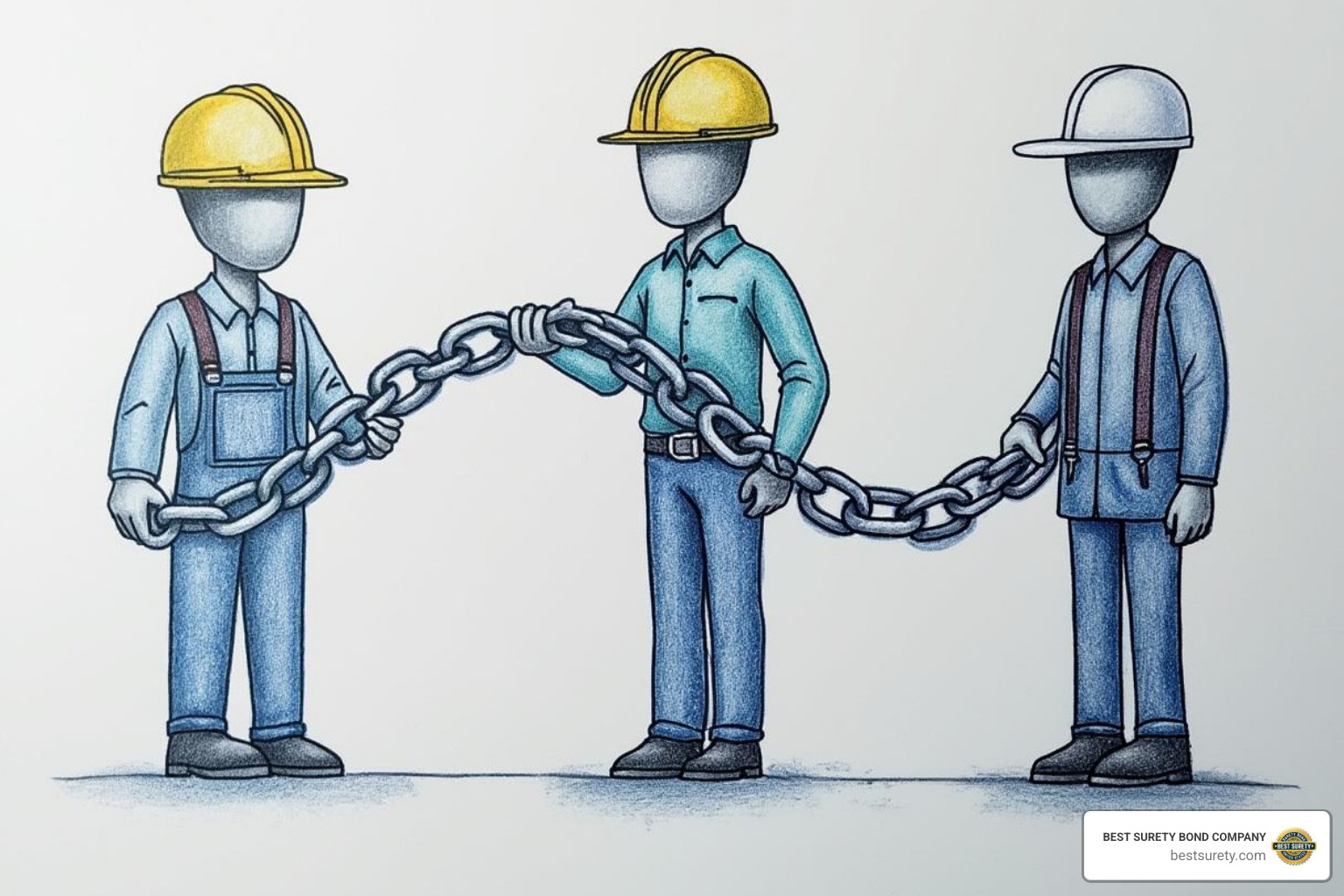
The main purpose of a payment bond is to ensure subcontractors, material suppliers, and laborers are paid for their work. This is vital on public projects where mechanic’s liens are prohibited, leaving these parties with little recourse if a contractor defaults. A payment bond provides project security and peace of mind for everyone.
The Three Key Parties in a Surety Agreement
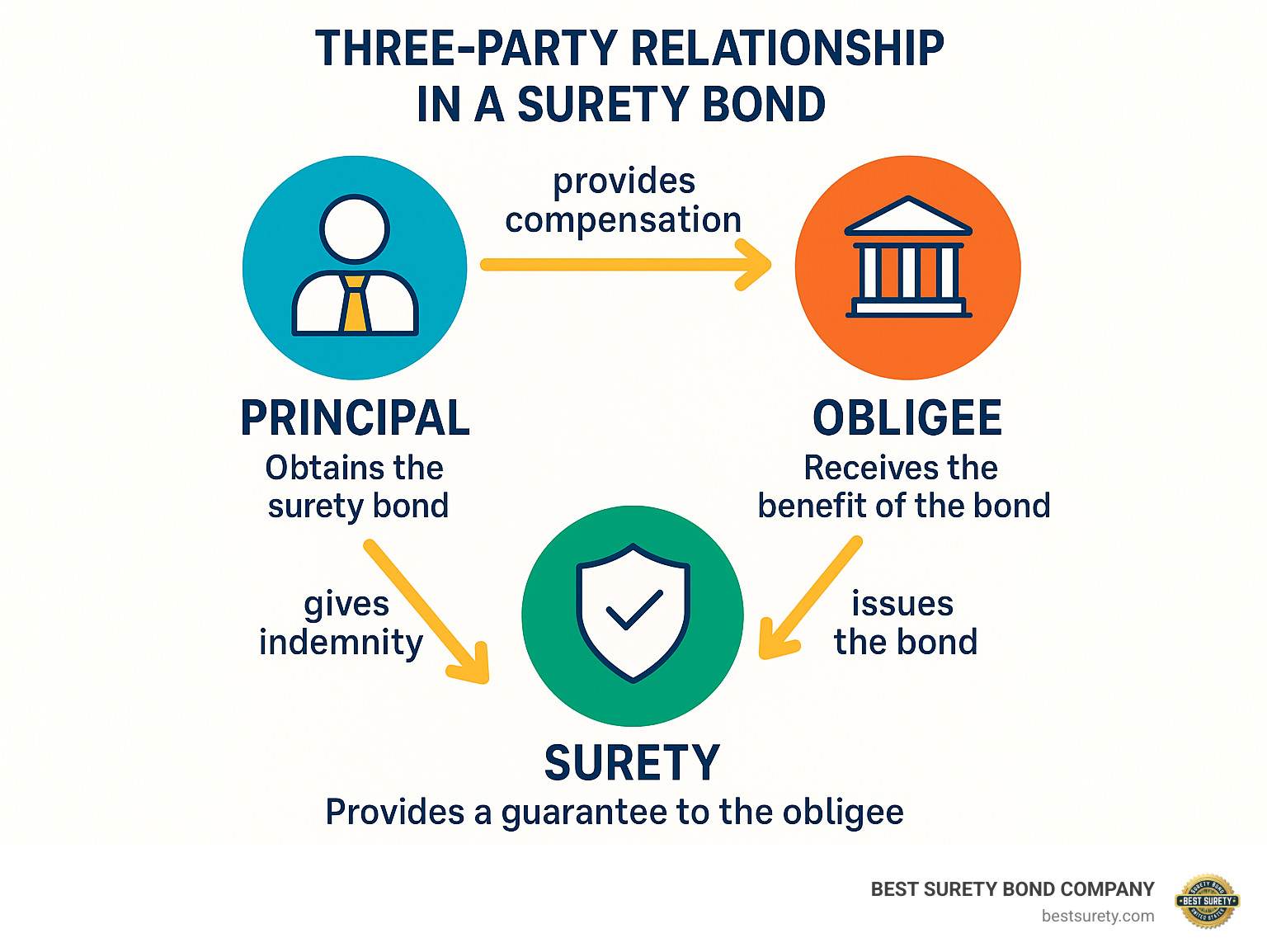
Understanding a payment bond means knowing the three key players:
- The Principal: You, the contractor, who obtains the bond and promises to fulfill payment obligations.
- The Obligee: The project owner who requires the bond and is protected by the guarantee.
- The Surety: The bond provider (like us) that issues the bond and backs your promise to pay.
This three-party contract is designed for mutual assurance.
The Miller Act and Public Project Requirements
Payment bonds are essential for public works due to laws like the Federal Miller Act. This act requires performance and payment bonds for all federally funded construction projects over $100,000. This mandate protects taxpayers and ensures subcontractors are paid on public property where they can’t place a mechanic’s lien.
Many states have similar “Little Miller Acts” for state-funded projects. If you’re bidding on a public project, securing a payment bond quote is a non-negotiable step. We ensure you meet these legal requirements seamlessly.
Decoding the Cost: What Influences Your Payment Bond Quote?
Wondering about the cost of a payment bond quote? The price, or bond premium, is a percentage of the total bond amount, usually the full contract value. It’s determined through an underwriting process where we assess risk based on your business and project specifics to set a fair rate.
Key Financial Factors That Determine Your Rate
Your financial health significantly shapes your bond premium. Your personal credit score is key, especially for smaller contracts; a score of 700+ often leads to lower rates. For larger bonds (over $750,000), your business financials are critical. We’ll need detailed company and personal financial statements. Strong, CPA-prepared statements demonstrate robust cash flow and stability, which can lower your costs. Your overall net worth also provides assurance of your ability to fulfill the project.
Project & Experience-Based Pricing
Project details and your experience also influence your payment bond quote. The contract size and complexity affect the bond amount and premium, though larger contracts may have lower percentage rates due to sliding scales. Your work history and contractor experience are also crucial. A proven track record of successful jobs with no past claims lowers perceived risk. We also consider project specifics like estimated profit, warranty terms (warranties over 12 months may have a surcharge), and liquidated damages clauses.
Typical Costs and How to Get the Best Rate for Your Payment Bond Quote
What can you expect to pay? The cost of a payment bond quote usually falls between 1% and 4% of the total bond amount, with many contractors paying around 3%. For instance, a $100,000 payment bond would typically cost about $3,000. For very large projects, premiums can dip below 1.5% due to sliding scale rates.
To get the best rate on your payment bond quote:
- Keep your personal and business financials strong. A healthy balance sheet and good credit history are vital.
- Work with a construction-savvy CPA. They can present your financials in the most favorable light.
- Provide comprehensive documentation. Complete and accurate information leads to a smoother process and potentially better rates.
- Seek quotes from specialized agencies like ours. At BEST SURETY BOND COMPANY, our strong underwriter relationships and expertise allow us to find the most competitive rates, often better than a general insurance agent can offer.
Your Fast-Track Application: How to Get a Payment Bond Quote
In construction, time is critical. We’ve streamlined our application for a payment bond quote to be as fast as possible. Many contractors get an instant online quote, with full bond approval often in just 1-2 business days—sometimes even same-day issuance is possible if you’re prepared. We offer fast approvals and low rates to make this a simple step in your project. Learn more in our guide on How to Get a Surety Bond Quote.

Step 1: Gather Your Required Documents
The key to a fast application is preparation. Before requesting your payment bond quote, have these documents ready to save time: your completed bond application form and detailed contract documents showing project value, scope, and bonding rules. For larger bonds (over $750,000), we’ll also need business and personal financial statements (CPA-prepared is a plus) and a Work-in-Progress (WIP) schedule. We’ll guide you on exactly what’s needed.
Step 2: The Underwriting and Approval Process
After you submit your application, our underwriters review it to offer the best terms. This includes a credit check (often a soft pull that won’t affect your score) to gauge financial reliability; a score of 700+ is ideal. Our team also conducts a financial review of your statements, assessing net worth, liquidity, and capacity. We perform experience verification by checking your track record on similar projects. In rare, high-risk cases, conditional collateral (typically 8-10% of the bond amount) may be requested, but we always work to minimize or eliminate this requirement.
Step 3: Receiving and Filing Your Bond
Once approved, the final steps are simple. We handle the bond issuance, preparing all forms with the necessary signatures, seals, and Power of Attorney. We can often issue electronic bonds for immediate delivery. After you make the payment for your bond premium, you’ll file your bond with the obligee (the project owner). We can help ensure your bond gets where it needs to be, quickly and efficiently.
We are committed to making this entire process, from your first payment bond quote to the final filing, as efficient and stress-free as possible.
Payment Bonds vs. Performance Bonds: The Dynamic Duo
In construction, payment bonds and performance bonds are the “dynamic duo” of contract bonds. They work together to create a powerful safety net for your project. Though often bundled, it’s important to understand their distinct roles in guaranteeing project success from start to finish.
| Feature | Payment Bond | Performance Bond |
|---|---|---|
| Purpose | Guarantees payment to subcontractors, suppliers, laborers | Guarantees the contractor will complete the project as per contract |
| Who is Protected | Subcontractors, suppliers, laborers (and indirectly the obligee from liens on private jobs) | The project owner (Obligee) |
| What it Guarantees | Financial obligations to lower-tier parties are met | Project completion, quality of work, adherence to schedule and terms |
What’s the Difference?
The difference between a payment bond and a performance bond is simple yet crucial. A performance bond guarantees project completion—that you’ll finish the work on time, on budget, and to specifications. It protects the project owner’s investment. A payment bond ensures everyone who contributes to the project gets paid, protecting subcontractors and suppliers from non-payment and shielding the owner from liens or legal disputes. Learn more about their roles at Performance Bonds vs. Payment Bonds.
Why Are They Issued Together?
Performance and payment bonds are typically issued together for several key reasons: comprehensive protection for the project owner, efficiency from a single underwriting process, cost efficiency as bundling is more affordable, and because it’s the industry standard, often required by law (like the Miller Act).
What Happens When a Claim is Filed?
While nobody wants a claim, it’s crucial to understand the process. If an unpaid party files a claim against your payment bond, we, the surety, begin an investigation. If the claim is valid, we pay the claimant. However, a surety bond is like a line of credit, not insurance. This is the Principal’s Indemnity Obligation: as the principal (contractor), you are legally obligated to reimburse us for any claims we pay. Our goal is to help you prevent claims from ever escalating.
Frequently Asked Questions about Payment Bonds
Have more questions about payment bonds? We’re here to help. Here are answers to some common questions. For more details, visit our main Surety Bond Frequently Asked Questions page.
Can I get a payment bond with bad credit?
Yes, it’s often possible to get a payment bond with imperfect credit. While a strong credit score (700+) helps secure the best premiums, we understand that financial histories vary. For larger companies, strong business financials and a solid track record can often outweigh personal credit issues. For those with lower credit scores or newer contractors, programs like The SBA Surety Bond Guarantee Program can help you secure bonds. The process might take longer or have higher premiums, but our mission is to get you bonded by exploring every option.
How long does a payment bond last?
A payment bond is active for the entire project duration, from issuance until the project is completed and accepted by the owner, often extending through any specified warranty period. If a project exceeds 12 months, the bond may require annual renewal. The specific terms are always clearly outlined in your bond agreement.
Do I need a payment bond for a private project?
While often associated with public works, you might also need a payment bond for a private project. It’s frequently required by project owners or lenders to protect them from mechanic’s liens and ensure project stability. For contractors, offering a payment bond, even when not required, boosts your credibility and provides a competitive edge. We can help you determine if your private project needs a payment bond quote and secure it with ease.
Get Your Instant Quote from a Trusted Surety Partner
Navigating surety bonds can seem daunting, but it doesn’t have to be. At BEST SURETY BOND COMPANY, we make the process smooth and straightforward. Our strong relationships with top underwriters mean we can cut through red tape to secure the best rates for your payment bond quote. Our streamlined process is designed for fast approvals, so you can get back to building.
As a Texas-based company with a nationwide reach, we are committed to providing fast approvals, competitive rates, and the convenience of online quotes. We combine digital efficiency with the support of real, knowledgeable people. Don’t let bond requirements slow you down. We’re here to help you get your payment bond quote quickly and efficiently, so you can move forward with confidence.
Experience the difference of working with a partner committed to your success.
Ready to get started?
