

Understanding the Mortgage Broker Bond
Getting into the mortgage industry can be exciting, but understanding all the rules is key. A Mortgage broker bond is one of those rules you’ll definitely encounter. It’s a crucial piece of the puzzle for anyone looking to help people buy homes.
So, what is a mortgage broker bond, simply put?
- It’s a type of surety bond. Think of it as a financial promise.
- Its main purpose is to protect you, the consumer. It safeguards you from any dishonest or unlawful actions a mortgage broker might take.
- Most states require mortgage brokers to get this bond. It’s a must-have for their license. It shows they are legitimate and will play by the rules.
At BEST SURETY BOND COMPANY, we specialize in helping businesses steer complex regulatory requirements like the Mortgage broker bond. In this guide, we’ll cut through the confusion and explain everything you need to know about these essential bonds to help you get licensed and achieve scalable growth.
What is a Mortgage Broker Bond and Why is it Required?
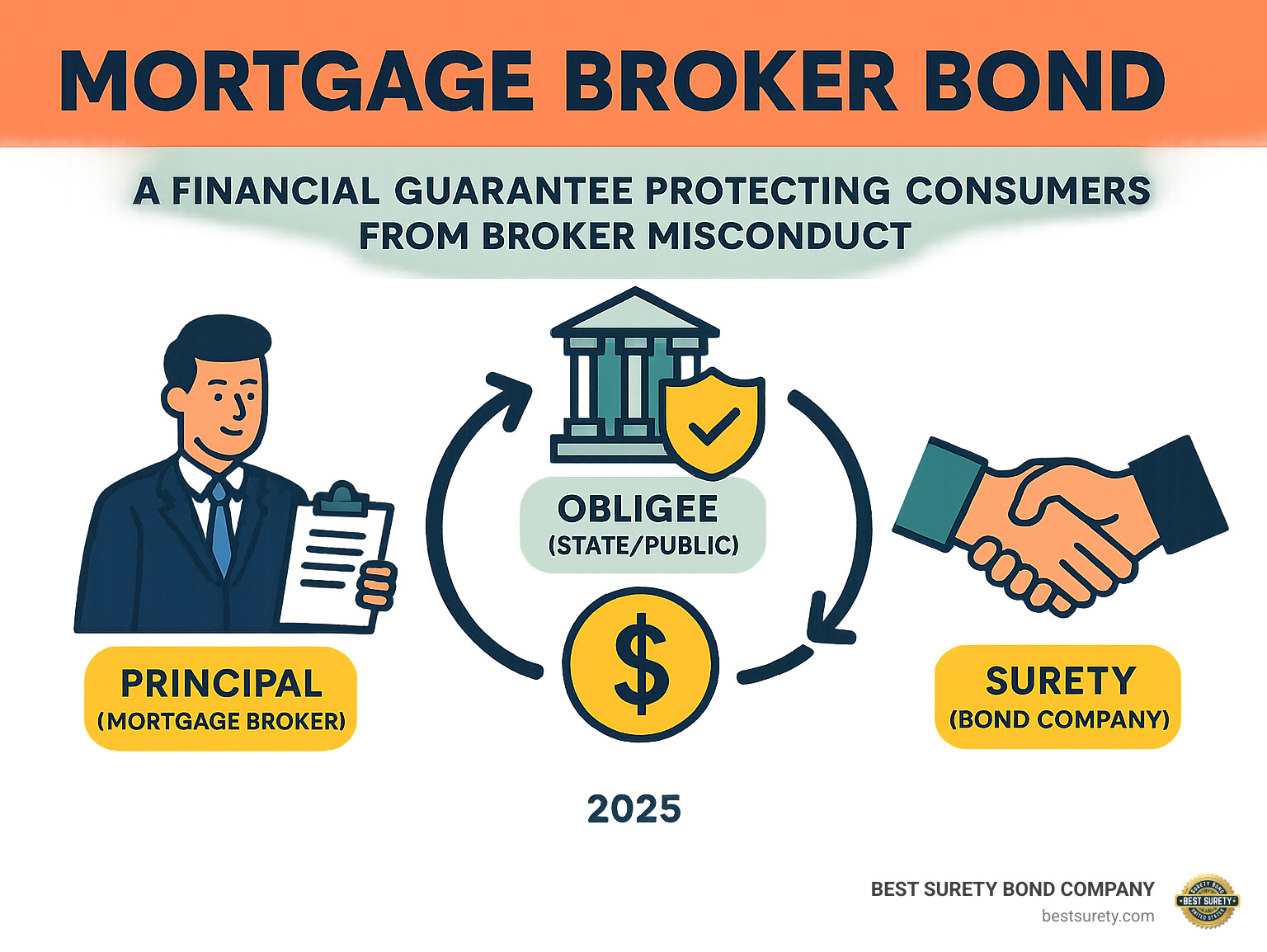
Imagine a Mortgage broker bond as a special kind of promise, a financial guarantee that says, “I’ll play by the rules and do right by you.” At its heart, a Mortgage broker bond is a type of surety bond. Think of it as a three-party handshake: there’s the mortgage professional, the state agency (or the public), and a bond company (like us!). This handshake ensures that if a mortgage professional doesn’t follow the rules, there’s a safety net in place.
The main reason these bonds exist is simple: consumer protection. They’re designed to shield you, the homebuyer, from any financial harm that might come from a broker’s mistakes or, worse, misconduct. It’s like an extra layer of security, ensuring that mortgage professionals stick to ethical standards and state laws. This helps keep the mortgage industry honest and trustworthy.
Getting a Mortgage broker bond isn’t just a nice idea; it’s often a must-have for getting your license. Most states require it! Without one, you can’t legally operate. This requirement really took off with the S.A.F.E. Act (that’s the Secure and Fair Enforcement for Mortgage Licensing Act of 2008). This law made sure that residential mortgage professionals across the U.S. were tracked through the National Mortgage Licensing System (NMLS) and often needed these bonds.
So, who exactly needs to get bonded? Generally, if you’re involved in helping people get home loans, you’ll likely need a Mortgage broker bond. This includes:
- Mortgage Brokers, who connect borrowers with lenders.
- Mortgage Lenders, who provide the loans directly.
- Mortgage Loan Originators (MLOs), who take applications or discuss loan terms.
- And even Mortgage Servicers, who collect payments and manage accounts.
It’s a foundational step to showing you’re financially responsible and committed to doing business the right way. The NMLS website is your go-to resource to find your state’s requirements.
The Core Purpose of a Mortgage Broker Bond
Beyond just being a licensing hurdle, a Mortgage broker bond serves a much deeper purpose: building and maintaining trust. When someone is making one of the biggest financial decisions of their life – buying a home – they need to feel confident in the professional guiding them. This bond helps create that confidence.
It provides a crucial layer of financial recourse for consumers. Let’s say, unfortunately, a mortgage broker acts fraudulently – maybe they give bad information, push loans that are too expensive, or hide fees. The bond allows affected customers to file a claim. If that claim is found to be valid, the bond company steps in to pay out money to compensate the consumer for their losses, up to the bond’s amount. This system is a powerful deterrent against unethical practices and really holds brokers accountable. It’s all about making sure the mortgage industry stays fair and honest for everyone.
Who is Required to Get Bonded?
The rules about who needs a Mortgage broker bond come directly from state licensing agencies, often working hand-in-hand with the Nationwide Multistate Licensing System (NMLS). Every state has its own specific set of regulations, detailing who needs a bond and for how much.
It’s not just big companies, either! Sometimes both the business entity (like a mortgage brokerage firm) and individual mortgage professionals (like those MLOs we talked about) might need to get bonded. For instance, in California, the main mortgage company usually buys a bond that covers all the brokers working under its umbrella, with the bond amount tied to the company’s total lending volume. But head over to New York, and individual MLOs might need their own bond, especially if they handle a lot of loans and aren’t fully covered by their employer.
Because these rules can change quite a bit based on your specific license type (broker, lender, servicer, originator), how much business you do, and even how many loan originators your company employs, it’s super important to check your state’s specific requirements. We always recommend reaching out to your state’s licensing department or checking the NMLS directly to confirm exactly what your bonding obligations are.
How a Mortgage Broker Bond Works: The Three-Party Agreement
A Mortgage broker bond operates on a three-party contract, a fundamental concept in the surety world. Understanding these roles is key to grasping how the bond functions:
- The Principal: This is the mortgage broker or company that is required to obtain the bond. They are the ones promising to adhere to the rules and regulations.
- The Obligee: This is the party requiring the bond. In the case of Mortgage broker bonds, the obligee is typically the state licensing agency and, by extension, the general public or consumers. They are the ones protected by the bond.
- The Surety: This is the bond company (like us!) that issues the bond. The surety financially backs the principal’s promise. If the principal fails to meet their obligations and a valid claim is made, the surety will pay out to the obligee.
A surety bond is different from traditional insurance. With traditional insurance, you pay a premium, and if you suffer a loss covered by the policy, the insurance company pays you. A surety bond, however, protects the obligee (the state and consumers), not the principal (the mortgage broker). While the surety pays out a valid claim, the principal is legally obligated to reimburse the surety for any amount paid. This is formalized through an indemnity agreement that the principal signs when obtaining the bond. This means the broker ultimately bears the financial responsibility for any claims made against their bond. The surety acts as a guarantor, extending a line of credit essentially, but not assuming the ultimate financial risk for the broker’s misconduct.

The Claims Process Explained
Understanding the claims process is vital for both consumers and mortgage brokers. Here’s how it generally works:
- Violation of Regulations: A claim is triggered when a mortgage broker allegedly violates state laws, regulations, or the terms of their bond. This could be anything from misrepresentation to fraud or failure to fulfill contractual obligations.
- Filing a Claim: An affected party, usually a consumer or the state licensing agency, files a claim against the bond with the surety company. They provide documentation and evidence of the alleged misconduct and financial harm.
- Surety Investigation: Once a claim is filed, the surety company conducts a thorough investigation. We examine the evidence, communicate with both the claimant and the principal, and determine the validity of the claim. Our goal is to ensure that all claims are legitimate and covered by the bond’s terms.
- Valid Claim Payout: If the claim is found to be valid and falls within the bond’s coverage, the surety will pay the claimant up to the bond’s full amount. This compensation helps the consumer recover their financial losses.
- Principal’s Reimbursement Obligation: This is where the “indemnity” comes into play. After paying a valid claim, the surety company will seek reimbursement from the principal (the mortgage broker). The broker is legally required to repay the surety for the full amount paid out, plus any legal fees or expenses incurred during the process. This ensures that the ultimate financial responsibility rests with the party whose actions caused the claim.
- Potential License Consequences: Beyond the financial obligation, a paid claim against a Mortgage broker bond can have severe consequences for the principal’s license. State licensing agencies may impose penalties, including fines, license suspension, or even permanent revocation. This underscores the importance of adhering to ethical practices and regulatory compliance.
We want to empower our clients to operate ethically and avoid claims. If you’re a mortgage broker, your license and financial well-being depend on upholding the highest standards of conduct.
The Cost of a Mortgage Broker Bond: What Determines Your Premium?
When you hear about a Mortgage broker bond, you might wonder about the cost. It’s a common question! Here’s the good news: you don’t pay the full bond amount. Instead, you pay a smaller amount called a premium. Think of it like an annual fee to keep your bond active and ensure you’re covered.
So, what goes into figuring out that premium? Several things help us determine your rate:
- The Bond Amount: This is usually the biggest factor. State regulations decide how much bond coverage you need. Naturally, a larger required bond amount will lead to a slightly higher premium.
- Your Credit Score: Your personal credit history plays a huge role. It helps us understand your financial reliability.
- Your Financial History: Beyond just your score, we look at your overall financial picture. This includes things like your assets, any past bankruptcies, or judgments. It helps us get a complete view.
- Your Business Experience: If you’re an experienced broker with a solid track record, that can often help you qualify for better rates.
- State Requirements: As you’ve seen, each state has its own rules, and this includes setting bond amounts. These specific requirements directly influence your premium.
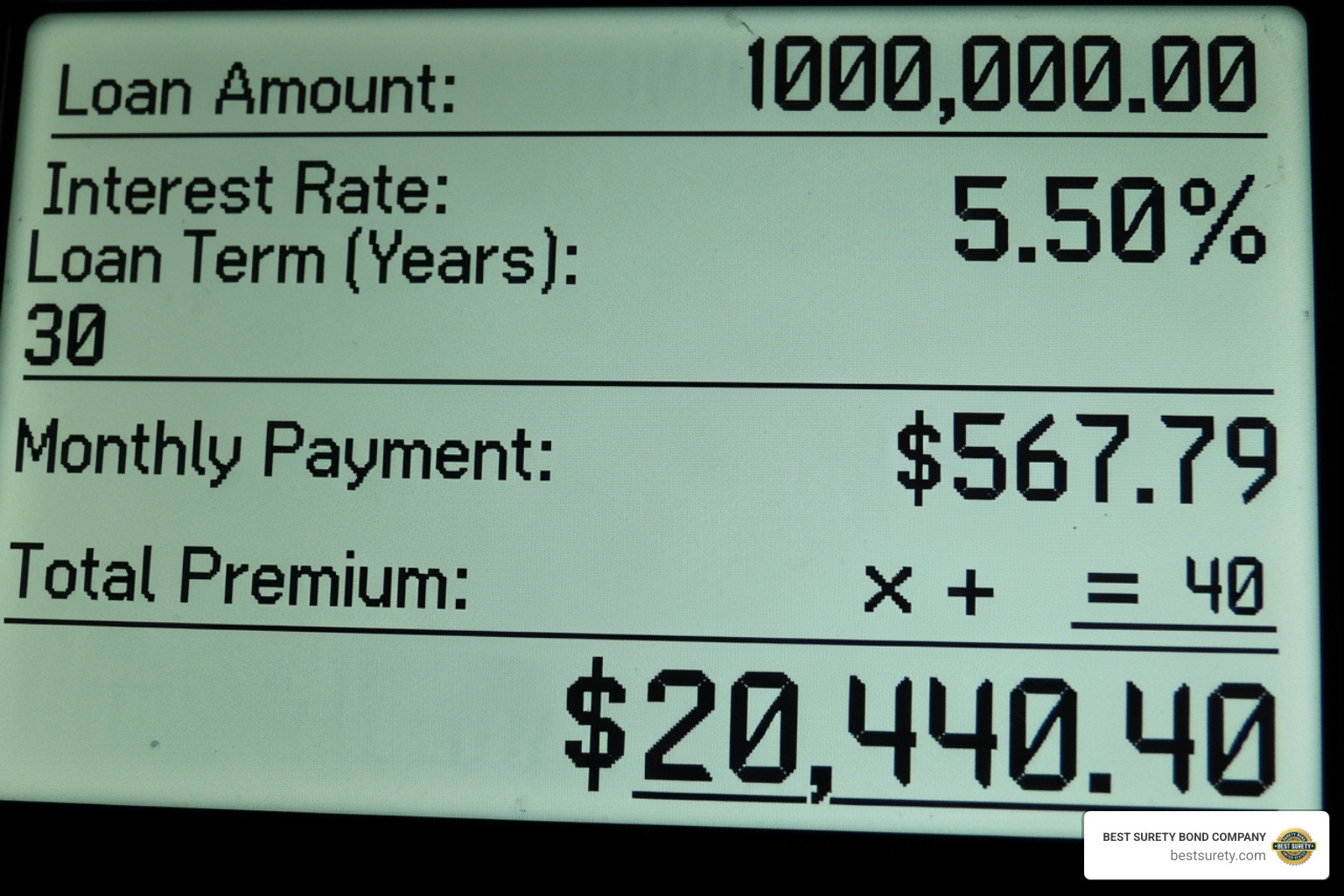
For those with great credit and a strong financial background, annual premiums for a Mortgage broker bond often fall within 1-3% of the total bond amount. So, if you need a $50,000 bond, you might be looking at as little as $500 to $1,500 per year. Pretty manageable, right?
Want to see what your specific bond might cost? It’s easy to find out! Get a fast, free quote for your bond today.
How Your Credit Score Impacts Your Bond Rate
Your personal credit score is truly a key player when it comes to your Mortgage broker bond premium. Surety companies use it to assess the likelihood of you being able to repay them if a claim is ever made against your bond. It’s all about understanding the risk.
- Good Credit Premium: If you have excellent credit (generally a FICO score of 700 or higher), you’ll typically get the best rates. These are what we call “standard market rates,” often in that 1-3% range of the bond amount we mentioned.
- Bad Credit Premium: Don’t fret if your credit isn’t perfect! For those with a lower credit rating (sometimes below 650), premiums will be higher, typically ranging from 5-10% of the full bond amount. While it’s more, it’s certainly not out of reach.
- High-Risk Applicants: In some unique cases, if someone is considered very high risk (perhaps due to very low scores, past bankruptcies, or a history of claims), the premiums might go higher, sometimes up to 15% for non-standard quotes.
Here at BEST SURETY BOND COMPANY, we do a soft credit pull when you get a quote. This is great news because it won’t affect your credit score at all! It just helps us give you the most accurate, no-obligation quote right away.
Can You Get a Mortgage Broker Bond with Bad Credit?
Absolutely, yes! This is one of the most common questions we get, and the answer is a resounding YES. Having less-than-perfect credit does not mean you can’t get a Mortgage broker bond. In fact, nearly 99% of all applicants get approved for a surety bond, even with some credit challenges. We truly believe everyone deserves the chance to build their career.
While your annual premiums might be a bit higher, BEST SURETY BOND COMPANY has special programs designed just for individuals with challenging credit histories. These “bad credit programs” are set up to help mortgage brokers like you get approved at competitive rates.
Looking to potentially lower your rate, even with credit challenges? There are a couple of things that can sometimes help:
- Provide Financial Statements: Sharing strong business and personal financial statements can show us your overall financial health, which is often more comprehensive than just a credit score.
- Verify Liquid Assets: If you have solid liquid assets (like cash in savings), providing verification can sometimes help negotiate a lower annual rate. It demonstrates that you have the means to reimburse the surety if a claim were to occur.
Our goal at BestSurety.com is to make the bonding process as smooth and affordable as possible for everyone. We work with a wide range of programs to ensure almost all applicants get the bond they need, regardless of their credit situation.
State-by-State Requirements: A National Overview
Navigating Mortgage broker bonds can feel a bit like a cross-country road trip – what’s legal in one state might be different just across the border! That’s because there isn’t a single, one-size-fits-all rule for these bonds across the entire United States. Each state has its own specific requirements.
These requirements can change quite a bit. Factors like how much business you do (your annual loan volume) or even how many loan originators work for your company can influence the bond amount you need. It’s a bit like a personalized puzzle for each state!
The good news is that systems like the NMLS (Nationwide Multistate Licensing System) have made things a lot easier with their electronic bond filing (ESB). This helps streamline the process. But here’s a crucial point: if your business spans across multiple states, you’ll almost always need a separate Mortgage broker bond for each state. Think of it as a unique passport for your mortgage business in every state you operate in. One bond simply won’t cover all your bases.

How Bond Requirements Differ Across the U.S.
To really see how much these requirements can vary, let’s peek at a few examples from different corners of the country. This will give you a clearer picture of what to expect.
Take Texas, for instance. If you’re a mortgage broker there, you’ll typically need a $50,000 bond. While the state offers an option to show $25,000 in net assets instead, getting the bond often proves to be a simpler, less complicated path for most professionals. It helps you focus on your business, not on proving your assets every year.
Then we have California, where the minimum Mortgage broker bond amount is generally $25,000. It’s a starting point, but depending on your business volume, that amount might need to be higher to meet the state’s specific rules.
And in New York, things get even more interesting with a tiered system. Depending on your loan volume and other factors, your bond requirement could range anywhere from $10,000 all the way up to $500,000 or even more! It truly emphasizes the need to check your specific situation.
It’s also worth noting that while most states require a Mortgage broker bond, a few exceptions exist. Some states might not require one at all, depending on the specific license type or business model. That’s why understanding your state’s unique landscape is so important. At BEST SURETY BOND COMPANY, we’re here to help you quickly figure out exactly what you need, no matter where you are.
