

Understanding Probate Bond Requirements in Texas
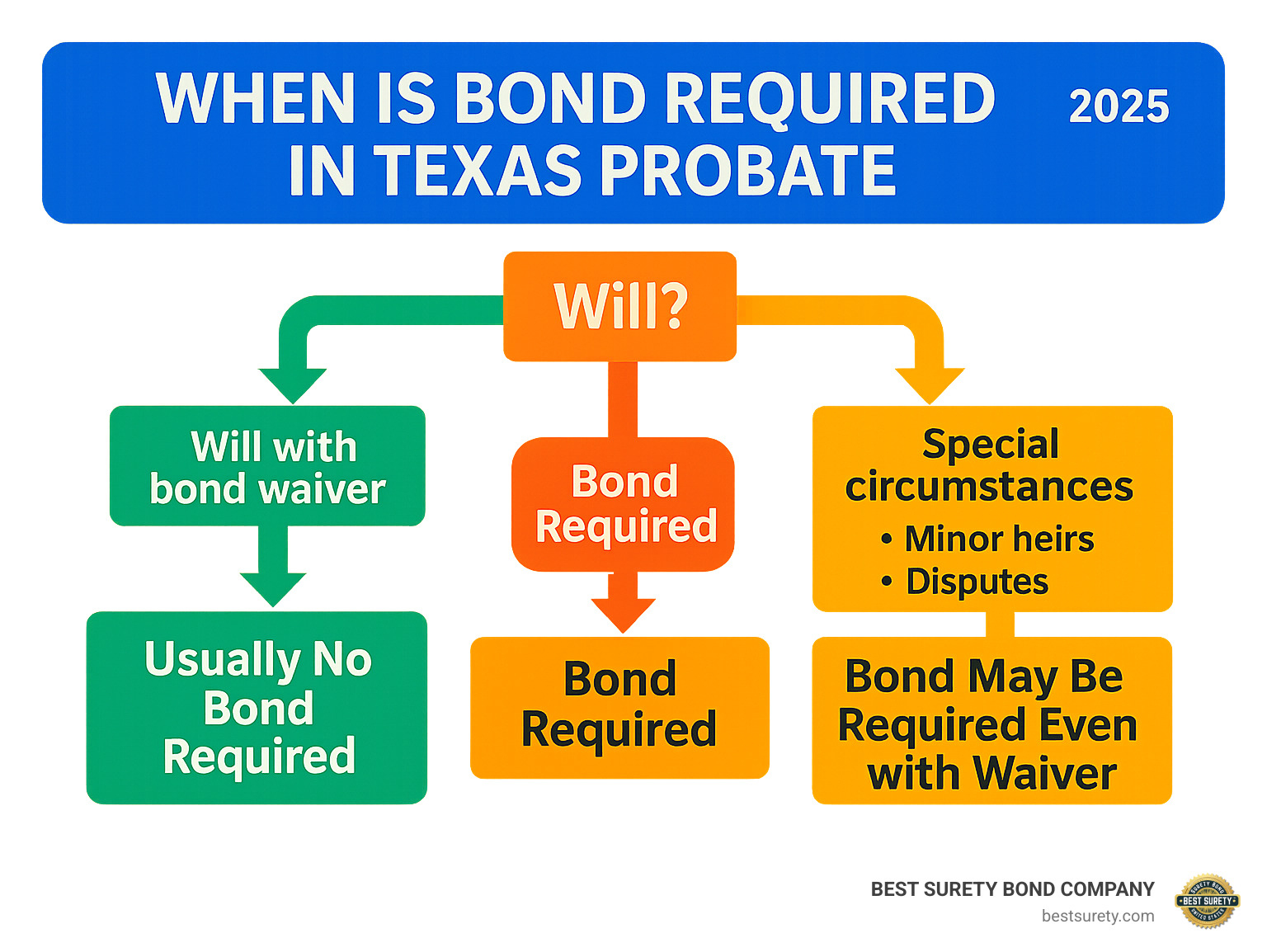
When is bond required in texas probate depends on several key factors, but the general rule is simple: a bond is presumed necessary unless specifically waived or exempted by law.
Quick Answer – Bond is Required When:
- There’s no will (intestate estate)
- The will doesn’t waive the bond requirement
- Court orders dependent administration
- Minor or incapacitated heirs are involved
- Creditors or beneficiaries request protection
Bond is NOT Required When:
- Will explicitly waives bond for the named executor
- Corporate fiduciary serves as executor
- All heirs unanimously agree to waive (in writing)
- Court grants independent administration with waiver
Dealing with a loved one’s estate in Texas is overwhelming. The probate process is complex, and the question of needing a bond adds another layer of stress. The reality is that most Texas probate cases require a bond unless a specific waiver applies. Understanding these rules is key to preparing for the process and avoiding costly delays.
I’m Haiko de Poel. My experience in surety bonds comes from helping families and businesses steer complex financial and legal requirements. I’ve worked directly with executors, administrators, and legal professionals across Texas, providing the fast, reliable bonding solutions they need for probate matters.
What is a Probate Bond and Why is it Important in Texas?
A probate bond is a vital safeguard in the Texas probate process. Think of it as a financial safety net ensuring the person managing an estate does so honestly. Often called a fiduciary bond, executor bond, or administrator bond, it’s a type of surety bond required by many Texas courts. It guarantees the personal representative will fulfill their duties, protecting the estate’s assets, heirs, and creditors from mismanagement. For more details on how these vital court bonds work, you can find more info about court bonds on our website.
The Role of the Personal Representative
The personal representative is the court-appointed individual or entity overseeing the deceased person’s estate. Their title depends on the situation:
- If the deceased left a valid will, the person named to manage the estate is called an Executor.
- If there’s no will, the court appoints an Administrator.
Regardless of the title, their duties are significant and include gathering assets, paying debts and taxes, distributing property to heirs, and filing an inventory with the court. These tasks require diligence, and any misstep can harm the estate, which is why a bond is so important. This comprehensive guide to an executor’s responsibilities offers more detail.
What a Probate Bond Covers
A probate bond shields the estate from misconduct or negligence by the personal representative. If they fail in their duties and cause a financial loss, a claim can be filed against the bond to recover funds. A Texas probate bond safeguards against:
- Fraud: Intentionally deceiving or misrepresenting information for personal gain.
- Negligence: Failing to act with reasonable care, leading to financial harm.
- Misappropriation of Funds: Illegally using the estate’s money or assets.
- Failure to Pay Debts: Neglecting to pay the estate’s legitimate creditors.
- Improper Asset Distribution: Distributing assets incorrectly against the will or law.
- Self-Dealing: Engaging in transactions that benefit the representative personally.
If a valid claim is filed, the surety company that issued the bond compensates the estate up to the bond’s amount, and the personal representative must then reimburse the surety. This mechanism ensures the estate is protected.
When is Bond Required in Texas Probate? The General Rule
Texas courts operate under a “presumption of necessity,” meaning they assume a bond is needed unless a specific reason exists to waive it. This protects everyone involved by placing a financial safety net around the estate’s assets. The most common situations when bond is required in texas probate are dependent administration cases, where the court supervises every decision, and intestate estates (no will). Temporary administrators also typically need bonds. For a detailed look at dependent administration rules, you can explore dedicated legal resources that explain the court’s reasoning.
Dependent Administration: When is bond required in Texas probate without exception?
In a dependent administration, a bond is mandatory. The court maintains tight control, approving every significant action, from selling property to paying debts. This high level of court supervision is used for complex or disputed estates. Even with this oversight, the court requires a bond because mistakes can still happen. The bond remains in place until the court officially closes the estate, serving as financial backup throughout the process.
Intestate Estates: The Default Requirement for a Bond
When someone dies “intestate” (without a will), the court must appoint an administrator to follow Texas intestacy laws. This almost always requires a bond because the deceased did not name a trusted executor and waive the requirement. The bond is critical when there are multiple heirs who may disagree on how to manage the estate. The court is especially protective of minor beneficiaries or incapacitated heirs who cannot advocate for themselves, making a bond essential in these cases. Understanding Texas intestacy laws is crucial, as the administrator must follow them precisely.
Key Exceptions: When Can a Probate Bond Be Waived?
While a bond is often required, there are key exceptions. A bond can be waived when the court is confident the estate is protected, such as through specific instructions in a will, the appointment of a corporate fiduciary (like a bank), or if all heirs agree. Achieving an Independent Administration, which involves less court oversight, often goes hand-in-hand with a bond waiver. These rules are all laid out in the Texas Estates Code Chapter 401, which covers independent administration.
Waiver in the Will: The Most Common Exception
The most common exception is a waiver within the will itself. If the testator (the person who wrote the will) included language like: “I direct that no bond or other security shall be required of my Independent Executor,” the court will usually waive the bond. This demonstrates the testator’s trust and typically allows for an “Independent Administration,” saving the estate time and money by reducing court supervision. At BEST SURETY BOND COMPANY, we understand the importance of this for families across Texas, from Houston to Dallas and San Antonio to Austin.
Other Scenarios for Waiving the Bond
Even without a waiver in the will, a bond may not be necessary in other situations:
- Corporate Fiduciary: If a bank or professional trust company is the representative, a bond is typically not required as they are already heavily regulated.
- Unanimous Agreement of Heirs: If all beneficiaries agree in writing to waive the bond (and there are no minor or incapacitated heirs), the court might grant the waiver.
- Sole Beneficiary is Executor: The court may waive the bond if the executor is also the only person inheriting, as there are no other financial interests to protect.
- Small, Uncomplicated Estates: In rare cases with no disputes or major debts, a judge might use their discretion to waive a bond, but this is not common.
Even if these conditions are met, the judge has the final say. If any red flags appear, like family disputes or concerns about the representative’s trustworthiness, the court can still require a bond to protect the estate.
Understanding the Bond: Amount, Cost, and How to Get One Fast
If the court requires a probate bond, the next steps are to understand the bond amount, its cost, and how to get one quickly. BEST SURETY BOND COMPANY makes this easy, offering fast approvals and low rates to keep the Texas probate process moving forward.

How is the Bond Amount Calculated in Texas?
The bond amount isn’t random; it’s set by the probate court to fully protect the estate. As outlined in the Texas Estates Code on bond amounts, a judge typically bases the amount on:
- The estimated value of all personal property (cash, cars, jewelry).
- The estimated annual cash income the estate’s property will generate.
The court reviews the estate’s inventory to ensure the bond is sufficient to cover potential losses from mismanagement. In some cases, the amount can be lowered if assets are placed in a restricted account requiring a court order for withdrawals.
How Much Does a Texas Probate Bond Cost?
The cost of a probate bond, or “premium,” is a small percentage of the total bond amount. Well-qualified applicants can expect to pay an annual premium between 0.5% and 1% of the bond amount.
| Bond Amount | Estimated Annual Premium |
|---|---|
| $10,000 | $100 |
| $25,000 | $135 |
| $50,000 | $260 |
| $100,000 | $460 – $1,000 |
| $200,000 | $860 – $2,000 |
| $500,000 | $1,610 – $5,000 |
| $1,000,000 | $3,000 – $10,000 |
Please note: These are just estimates. Your actual cost might be a little different.
Factors influencing the final price include the total bond amount, your credit score, and the estate’s complexity. The premium is paid annually until the court closes the estate, which encourages efficient administration. We know finding an affordable and quick probate bond in Texas is critical. Our Texas-based services ensure clients in Houston, Dallas, and across the state get the bond they need without delay.
Navigating Challenges and Complications
Even when a bond seems to be waived, unexpected issues can arise. A judge can always require a bond if “red flags” appear, as their primary duty is to protect the estate.

Factors That Can Trigger a Bond Requirement, Even With a Waiver
A judge can override a will’s waiver and require a bond if risk factors are present. Their duty to protect the estate and everyone with an interest in it is paramount. Key triggers include:
- Minor or Incapacitated Heirs: Courts are highly protective of vulnerable beneficiaries and will almost always require a bond to safeguard their inheritance.
- Disagreements Among Beneficiaries: If family members are fighting, a bond ensures the personal representative acts fairly.
- Large or Complex Estate: For estates with significant assets or business interests, a bond protects against unintentional errors.
- Out-of-State Executor: A court may require a bond if the executor lives outside Texas, as it can be harder to oversee their actions.
- Creditor Demands: If creditors are concerned about being paid, a bond provides a financial safety net for them.
- Allegations of Mismanagement: If any party complains that the representative is misusing assets, the court can order a bond immediately.
What Happens if You Can’t Get a Probate Bond?
If the court requires a bond and you cannot obtain one, it creates significant problems:
- Failure to Qualify: You cannot legally act as the personal representative without the required bond. The court will not issue the necessary “Letters Testamentary” or “Letters of Administration.”
- Removal from Position: If you are already appointed but fail to post a bond when required, the court can remove you.
- Court Appoints an Alternate: The court will appoint someone else—perhaps another heir or a professional administrator—which may not align with the deceased’s wishes and can increase costs.
- Delays and Increased Costs: The inability to secure a bond causes major delays, leading to higher legal and administrative fees for the estate.
Difficulty securing a bond often relates to poor credit or a history of financial mismanagement. At BEST SURETY BOND COMPANY, we work with clients to explore all options, using our expertise in Texas probate bonds to find solutions even in complex cases.
Frequently Asked Questions about Texas Probate Bonds
Managing a Texas estate brings up many questions. Here are answers to some of the most common ones we receive about probate bonds:
Can the court require a bond even if the will says not to?
Yes. A Texas probate judge has the final say and can override a will’s waiver to protect beneficiaries, heirs, and creditors. If there are risk factors like family disputes, minor heirs, or concerns about the executor’s management, the court will likely require a bond to ensure the estate’s assets are safe. The court’s duty to protect the estate outweighs the waiver in the will.
How long does a probate bond last?
A probate bond remains in effect for the entire duration of the probate process, from when you are appointed until the court closes the estate. The bond’s cost, or premium, is paid annually. This yearly renewal serves as an incentive to administer and close the estate efficiently. BEST SURETY BOND COMPANY makes the annual renewal process simple and stress-free.
Can the cost of the bond be paid from the estate?
Yes. The bond premium is considered an administrative expense of the estate. While the personal representative may have to pay the first premium out-of-pocket to qualify, they can reimburse themselves from the estate’s assets once they have legal authority to manage its funds. This ensures the cost of protecting the estate is paid by the estate itself.
Get Your Texas Probate Bond with Confidence
Probate can feel like navigating a maze, and we know that dealing with a loved one’s estate is already a lot to handle. The last thing you need is more stress about legal requirements. Understanding when is bond required in texas probate is a big step, but securing that bond shouldn’t add to your worries.
If a Texas court has told you that a probate bond is needed, you’re probably looking for a solution that’s fast, affordable, and reliable. That’s exactly where BEST SURETY BOND COMPANY shines! We specialize in making this part of the probate journey simple and straightforward.
Our team of licensed agents provides instant approvals and some of the lowest rates on probate bonds across Texas – whether you’re in Houston, Dallas, Austin, or anywhere in between. We’re here to offer the expertise you need, ensuring you meet the court’s requirements without any unnecessary delays. Let us help you move forward with confidence, so you can focus on what truly matters.
Ready to get started? Get your probate bond quickly and easily. Get Bonded Today
