

Why Texas Probate Bond Cost Matters for Executors and Administrators
Texas probate bond cost typically ranges from 0.5% to 1% of the total bond amount annually. Here’s what you need to know:
Quick Cost Reference:
- $25,000 bond: $125-$250 per year
- $100,000 bond: $400-$600 per year
- $500,000 bond: $1,600-$2,500 per year
- $1,000,000 bond: $3,000+ per year
When you’re appointed as an executor or administrator of an estate in Texas, you might be surprised to learn that the court often requires you to purchase a probate bond. This bond acts as insurance, protecting beneficiaries and creditors from potential mismanagement of estate assets.
The bond amount is typically set by the court based on the estate’s total value. But here’s the good news: you don’t pay the full bond amount – just a small annual premium.
Who pays? You pay the premium upfront, but it’s considered a legitimate estate expense that can be reimbursed from the estate’s assets.
As Haiko de Poel, I’ve helped countless clients steer surety bond requirements across multiple industries, including understanding texas probate bond cost calculations and securing affordable coverage. My experience in fintech and legal services has shown me how proper guidance can save both time and money in these critical situations.
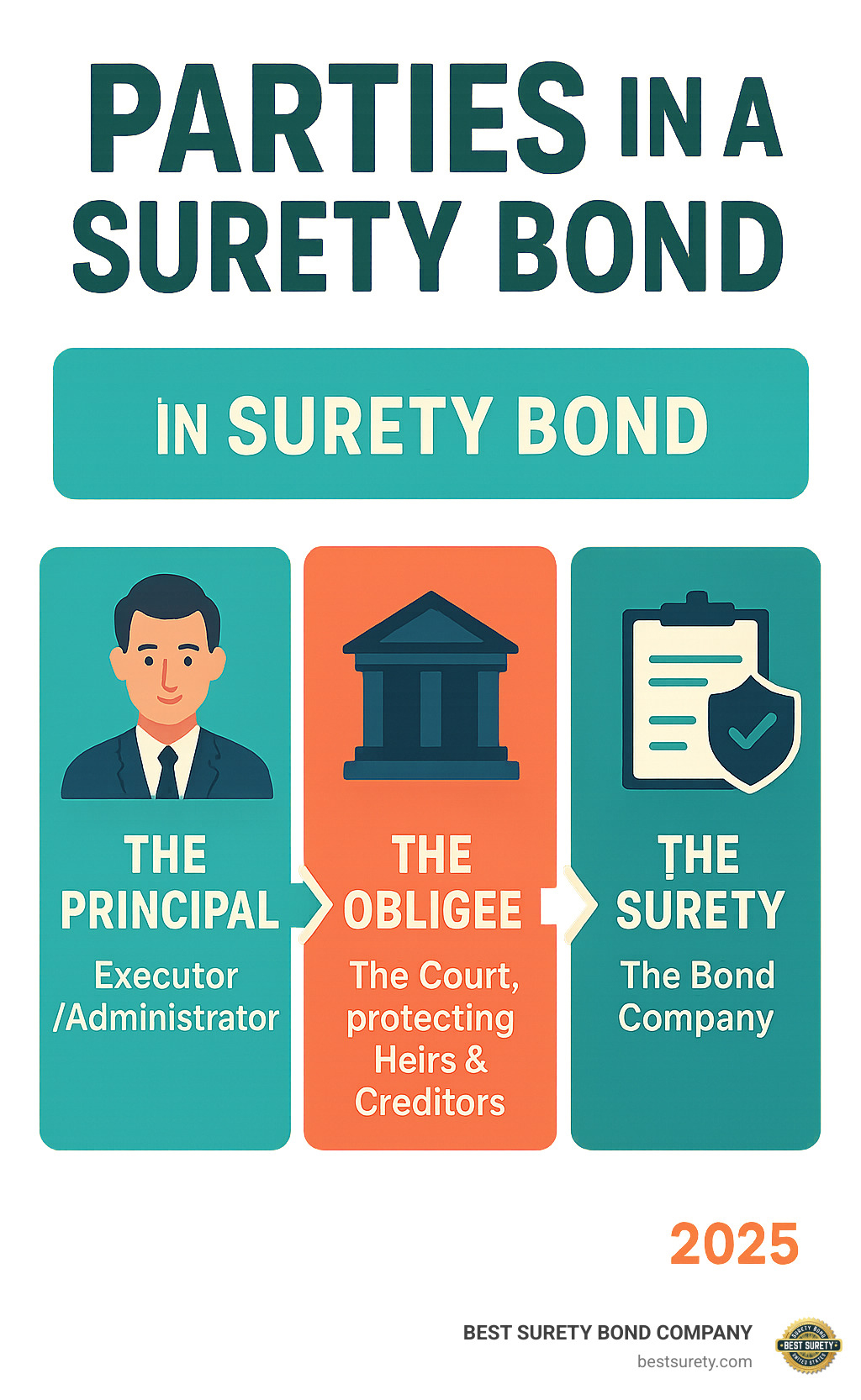
What is a Texas Probate Bond and Why Do I Need One?
When a loved one passes away and you’re appointed to handle their estate in Texas, you might encounter an unexpected requirement: a probate bond. Don’t worry—this isn’t as complicated as it sounds, and understanding the texas probate bond cost upfront can help you plan accordingly.
A Texas probate bond is essentially a financial safety net that protects everyone involved in the estate process. Think of it as specialized insurance that guarantees you’ll handle your duties as executor or administrator honestly and according to Texas law. Whether it’s called a fiduciary bond, executor bond, or administrator bond, they all serve the same crucial purpose.
Here’s how it works: If something goes wrong—whether through negligence or malfeasance—the bond provides a way for beneficiaries and creditors to recover their losses. It’s not a reflection on your character; it’s simply a court requirement designed to protect everyone’s interests while you steer the complex process of settling an estate.
When a Bond is Required in Texas
Texas courts take estate protection seriously, which means probate bonds are required in many situations. The most common scenario is dependent administration, where the court maintains close oversight of your every move as executor or administrator.
Dependent administration almost always triggers a bond requirement, even if the deceased person’s will says otherwise. The court’s supervisory role means they want that extra layer of protection for heirs and creditors. It’s their way of ensuring that unsecured creditors get paid and beneficiaries receive their rightful inheritance.
Judges also have broad discretion to require bonds when they sense potential trouble. Maybe there are disputes among family members, or perhaps some heirs are minors who can’t protect their own interests. Sometimes the estate is simply large or complex enough that the court wants additional safeguards in place.
When someone dies without a will (called dying “intestate”), a bond is almost guaranteed. Since there’s no written guidance from the deceased about their wishes, Texas courts rely heavily on bonds to ensure administrators follow state law precisely. The Texas Estates Code provides specific guidelines for these situations.
When You Might Not Need a Bond
The good news? There are several ways to avoid probate bond requirements entirely, which means zero texas probate bond cost for your situation.
Independent administration is your best friend here. When a will specifically allows for independent administration and names an executor, you often get to skip the bond requirement. This approach gives you much more freedom to manage the estate without constant court oversight—and it’s faster and cheaper overall.
Many well-drafted wills include language that explicitly waives the bond requirement. It’s become standard practice for estate planning attorneys to include these provisions because they streamline the probate process and reduce costs for families.
Even without a will waiver, you might still avoid a bond if all heirs agree in writing to skip it. This works well when family members trust each other and want to keep things simple. It’s particularly common in close-knit families where everyone knows and trusts the appointed executor.
Corporate fiduciaries like banks and trust companies typically don’t need bonds either. Their financial stability and regulatory oversight provide the protection that bonds would otherwise offer. However, judges always retain the final say—they can require a bond even in these situations if circumstances warrant it.
The Real Texas Probate Bond Cost: How Premiums Are Calculated
When you’re dealing with probate in Texas, understanding the texas probate bond cost can save you from sticker shock and help you budget properly. Here’s the key distinction that often confuses people: the “bond amount” is completely different from what you actually pay.
The bond amount is the total financial guarantee the court requires – maybe $100,000 or $500,000. But you don’t write a check for that full amount. Instead, you pay a much smaller annual premium to the surety company, typically just a fraction of the bond amount.
Think of it like car insurance. Your car might be worth $30,000, but you don’t pay $30,000 for coverage – you pay a premium based on the risk involved.
Surety companies calculate your premium as a percentage of the total bond amount, and here’s where it gets interesting: they use a tiered structure. This means larger bond amounts often qualify for lower percentage rates, which can help offset some of the cost on bigger estates.
The whole process involves underwriting, where the surety company essentially acts like a careful lender, assessing how likely you are to fulfill your duties properly as executor or administrator.
Key Factors That Influence Your Texas Probate Bond Cost
Your specific texas probate bond cost isn’t pulled from thin air – several important factors shape what you’ll actually pay.
Your credit score plays the biggest role after the estate value itself. If you have excellent credit, you might qualify for rates as low as 0.5% of the bond amount. Fair credit might push you to 1-2%, while challenged credit could mean 3% or higher. It’s not personal – surety companies need to assess financial responsibility.
The estate’s total value determines the bond amount the court sets, which directly impacts your premium. More valuable estates mean higher bond amounts, though the tiered pricing structure can help keep the percentage reasonable on larger bonds.
Estate complexity matters too. A straightforward estate with simple assets and cooperative heirs looks less risky than one with ongoing business operations, contentious family dynamics, or hard-to-value assets. Complex situations might bump up your rate slightly.
Professional guidance can actually work in your favor. Having an experienced probate attorney involved signals to underwriters that you’re taking the process seriously and following proper procedures.
Typical Price Ranges for Texas Probate Bonds
Most Texas probate bonds fall between 0.5% and 1% of the bond amount annually, though rates can climb higher based on individual circumstances.
Here’s what you can realistically expect to pay for different bond amounts:
| Bond Amount | Estimated Annual Premium |
|---|---|
| $25,000 | $125 – $225 |
| $50,000 | $200 – $300 |
| $100,000 | $400 – $600 |
| $200,000 | $800 – $1,000 |
| $500,000 | $1,600 – $2,500 |
| $1,000,000 | $3,000 – $5,000 |
For smaller estates under $25,000, many surety companies offer flat-rate pricing around $125-$175, which can be more economical than percentage-based pricing.
Larger estates over $500,000 typically require additional documentation during the application process, including detailed financial statements and complete asset inventories. While this adds a step to the process, it often helps secure better rates by demonstrating the estate’s stability and your preparedness.
This premium is considered a legitimate estate expense that can be reimbursed from the estate’s assets once the court approves it.
Getting Your Texas Probate Bond: A Simple Step-by-Step Guide
Obtaining a Texas probate bond might seem daunting, but we’ve streamlined the process to make it as simple and fast as possible for you. Our goal is to minimize your texas probate bond cost and get you bonded quickly.

Step 1: Determine the Required Bond Amount
Before you apply, the most crucial piece of information you’ll need is the bond amount. This is set by the probate court and is typically based on the total value of the estate’s personal property and the estimated annual income from all property.
You’ll find this amount specified in the court order or by discussing it with the probate judge or your attorney. Providing a meticulous inventory and appraisement of the estate’s assets to the court can sometimes help in setting a lower, more accurate bond amount.
Step 2: Apply with a Licensed Texas Surety Company
Once you know the required bond amount, you’re ready to apply. We make this incredibly easy with our simple, one-page online application. Here’s what to expect:
- Online Application: Complete our user-friendly application form. It’s designed to gather all the necessary information efficiently.
- Credit Check: For most bond amounts, especially those over $200,000, we’ll conduct a credit check. This helps us assess risk and offer you the most competitive rates. Rest assured, we work diligently to find the lowest premiums possible, even if your credit isn’t perfect.
- Submitting Documents: You’ll need to provide certain documents, such as the court order requiring the bond, and potentially personal financial statements or a list of estate assets for larger bonds. Our team will guide you on exactly what’s needed.
We are a licensed Texas surety company, ready to help you steer this process. Our high success rate means we can often get our clients probate estate bonds at the best rates possible, with a typical turnaround time of 24 hours or less. Get bonded faster with BEST SURETY BOND COMPANY!
Step 3: Pay the Premium and File the Bond
After your application is approved, the final steps are quick and straightforward:
- Pay the Premium: You’ll pay the annual premium for your bond. We offer secure online payment options for your convenience.
- Instant Issuance: For many bonds, we can issue your bond instantly once the premium is paid.
- File with the Court: You’ll then file the original bond document with the appropriate Texas county court. It’s crucial to do this within the timeframe specified by the court, typically within 21 days after letters testamentary are issued or revoked.
- Annual Renewal: Probate bonds typically last for one year, and the premiums are due annually. This incentivizes the personal representative to close the estate promptly. We’ll send you renewal notices to ensure continuity until the estate is properly settled and you are discharged by the court.
Your Top Questions About Texas Probate Bonds Answered
Navigating probate can feel overwhelming, especially when you’re dealing with financial requirements you’ve never encountered before. Let’s address the most common concerns about texas probate bond cost and what it means for your role as executor or administrator.

Who pays for the probate bond?
Here’s some good news: while you’ll initially pay for the probate bond premium out of your own pocket, you can be reimbursed from the estate’s assets. Think of it like paying for other necessary estate expenses – attorney fees, court costs, or appraisal fees – that get covered by the estate later.
The texas probate bond cost is considered a legitimate and necessary expense of administering the estate. After all, the court required it, so it’s not an optional expense you chose to incur. When you file your accounting with the court, the bond premium should be listed as an administrative expense, subject to court approval.
This reimbursement arrangement makes sense when you think about it – the bond protects the estate’s beneficiaries and creditors, so it’s fair that the estate covers this protective measure.
What happens if I don’t get a required bond?
Skipping a required probate bond isn’t just inadvisable – it can completely derail your ability to serve as executor or administrator. Without the bond, you cannot qualify for your position, plain and simple.
The court won’t issue your “letters testamentary” or “letters of administration” – the official documents that give you legal authority to manage the estate. It’s like trying to drive without a license; you simply don’t have the legal standing to act on behalf of the estate.
If you’re already serving and fail to maintain your bond, the court can remove you from your position. Even worse, operating without a required bond exposes you to personal liability for any financial losses that occur. The bond exists to protect you from this exact scenario, so going without it puts your personal assets at risk.
In Texas courts, judges take bond requirements seriously. Legal penalties and further court intervention are real possibilities if you don’t comply with bonding orders.
How long does the bond last?
Your Texas probate bond stays active for the entire duration of the probate process – from the day you’re appointed until the court officially discharges you from your duties. This could be anywhere from several months to several years, depending on the estate’s complexity.
Here’s what’s important to understand about timing: while the bond coverage lasts throughout the entire administration, you’ll pay the premium annually. Each year, you’ll receive a renewal notice and need to pay another year’s premium to keep the bond active.
The bond can only be cancelled once the estate is fully settled and closed, and you’ve been released from your responsibilities by the court. Until that final discharge order is signed, the bond remains your financial safety net – and a requirement for maintaining your position as personal representative.
This annual payment structure actually benefits everyone involved. It encourages executors to close estates promptly rather than letting them drag on indefinitely, and it ensures continuous protection for beneficiaries throughout the entire process.
Frequently Asked Questions about Texas Probate Bond Cost
We understand that dealing with probate can feel overwhelming, especially when you’re trying to figure out the financial aspects. Here are the most common questions we receive about texas probate bond cost and what you can expect during the process.
Can my bad credit prevent me from getting a probate bond in Texas?
Here’s some good news: bad credit makes getting a probate bond more challenging, but it won’t necessarily stop you from getting bonded. We’ve helped countless clients with less-than-perfect credit secure the bonds they need to fulfill their duties as executors and administrators.
Your credit score does play a role in determining your texas probate bond cost, though. While applicants with strong credit typically enjoy rates between 0.5% and 1% of the bond amount, those with credit challenges might see rates ranging from 5% to 15% annually. It’s a significant difference, but it’s still manageable when you consider that the premium is reimbursable from the estate’s assets.
The application process might require a bit more documentation if your credit needs some work. We may ask for additional financial information to better understand your situation and find you the best possible rate.
The key is working with an experienced surety company that understands how to steer these situations. At BEST SURETY BOND COMPANY, we have exclusive programs specifically designed for applicants with credit challenges. Our high success rate means we can often find solutions even when other companies might say no.
Can the court change the bond amount after it’s been set?
Absolutely, and this happens more often than you might think. The court has full authority to increase or decrease your bond amount as circumstances change throughout the probate process.
When might the court increase your bond? The most common scenario is when new assets are finded that significantly boost the estate’s value. Maybe you find an overlooked investment account, find valuable artwork in the attic, or realize that a piece of real estate is worth much more than initially appraised. The court wants to ensure the bond amount reflects the true risk.
The judge might also order an increase if disputes arise among beneficiaries or if there are concerns about how the estate is being managed. It’s their way of adding extra protection when things get complicated.
Decreases are possible too. If you can demonstrate that most of the estate’s assets are now securely held in court-authorized accounts, or if major debts have been resolved, the court might consider lowering the bond amount. You or your attorney can petition for this adjustment.
These changes directly impact your texas probate bond cost since the premium is based on the bond amount. If the court increases your bond, you’ll need to pay additional premium for the higher coverage.
Is the bond premium refundable if the probate process ends early?
Unfortunately, probate bond premiums are typically earned in full for the year, much like any insurance premium you might pay. Once you’ve paid your annual premium and the bond is active, that money is generally considered non-refundable, even if you close the estate quickly.
Think of it this way: the surety company has provided coverage and taken on financial risk from the moment your bond became effective. They’ve also processed your application, conducted underwriting, and issued the bond – all of which involves real costs on their end.
Some surety companies may offer partial refunds on a pro-rata basis, but this isn’t guaranteed and depends entirely on the specific terms of your bond agreement. It’s not something you should count on when budgeting for your texas probate bond cost.
The annual structure actually creates a good incentive to close the estate efficiently. The sooner you complete your duties and get discharged by the court, the sooner you can stop paying annual premiums. Most executors find this motivating when it comes to staying on top of their responsibilities.
Our advice? When planning your estate administration timeline and budget, assume the full annual premium is a sunk cost. Any potential refund should be considered a pleasant surprise rather than part of your financial planning.
Get Your Texas Probate Bond Fast and Affordably
Dealing with probate can feel overwhelming during an already difficult time, but understanding texas probate bond cost and securing the right coverage doesn’t have to add to your stress. Throughout this guide, we’ve shown you that a probate bond is both a necessary safeguard and a manageable expense. The premium you pay represents just a small fraction of the total bond amount, typically ranging from 0.5% to 1% annually.
The key takeaway? A probate bond protects everyone involved – from beneficiaries and creditors to you as the executor or administrator. It’s a financial safety net that ensures proper estate management, and the cost is usually reimbursable from the estate’s assets.
At BEST SURETY BOND COMPANY, we understand that time is critical when you’re navigating Texas probate requirements. That’s why we’ve streamlined our process to provide fast, affordable probate bonds across Texas, including Houston, Dallas, San Antonio, Austin, and surrounding areas. Our experienced team knows the ins and outs of Texas probate law, which means we can get you bonded quickly without the typical headaches.
We make the process seamless with instant online quotes and same-day issuance for most bonds. No lengthy paperwork, no confusing jargon – just straightforward service when you need it most. Whether you’re dealing with a small estate requiring a $25,000 bond or a complex million-dollar estate, we have the expertise and resources to help.
Our commitment goes beyond just issuing bonds. We provide the personal attention you deserve during this challenging time, combined with the digital convenience that gets things done fast. When the court sets your bond requirement, we’re ready to help you meet it affordably and efficiently.
Don’t let probate bond requirements slow down the estate settlement process. Explore our court and fiduciary bond services and find why executors and administrators across Texas trust us to handle their bonding needs with speed, reliability, and competitive rates.
