
Understanding the Fundamentals of Construction Contract Security

Bid and performance bonds are the two most critical surety bonds in construction contracting. While these terms are often mentioned together, they serve distinct purposes and protect different phases of your project.
Quick Comparison: Bid vs Performance Bonds
- Bid Bond: Guarantees you’ll honor your bid and sign the contract if awarded (5-20% of bid amount)
- Performance Bond: Guarantees you’ll complete the project according to contract terms (typically 100% of contract value)
- Timing: Bid bonds are submitted with proposals; performance bonds are required before work begins
- Cost: Bid bonds are often free; performance bonds cost 1-3% of the contract amount
- Purpose: Bid bonds protect owners during bidding; performance bonds protect owners during construction
If you’re a contractor in Texas bidding on public projects over $100,000, both bonds are typically required by federal Miller Act regulations. Private projects increasingly require them too, especially for commercial developments.
The stakes are real. Contractors have been known to submit low bids to secure a contract, then increase the price or refuse to complete the project altogether. This is exactly why project owners now require these financial guarantees – and why understanding both bonds is crucial for your business success.
As Haiko de Poel, I’ve helped scale companies across multiple industries including construction, insurance, and fintech, giving me deep insight into how bid and performance bonds function as essential risk management tools. My experience in operational innovation and financial systems has shown me that contractors who understand these bonds early gain a significant competitive advantage.
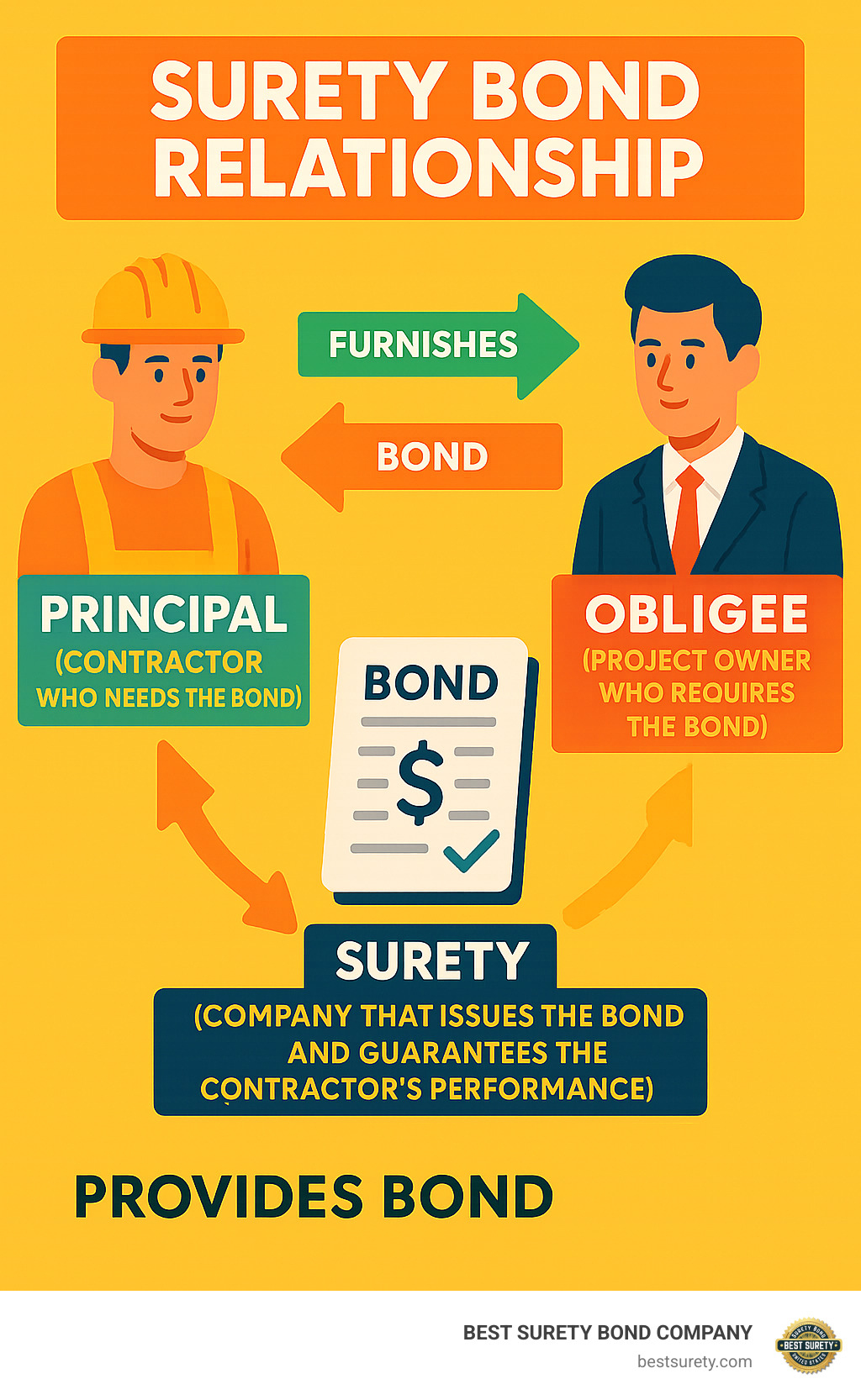
Bid and performance bonds terms to learn:
What is a Bid Bond? The First Step to Winning the Contract
Picture this: you’re a project owner in Houston with a million-dollar construction project on the line. Dozens of bids flood your inbox, but how do you separate the serious contractors from those just fishing for information? Enter the bid bond – your first line of defense against unreliable bidders.
A bid bond is essentially a promise backed by money. It’s a three-party agreement where a surety company guarantees to the project owner that you, the contractor, will honor your bid price and sign the contract if selected. Think of it as putting your money where your mouth is – except the surety company is backing that promise with their financial strength.
This isn’t just paperwork for the sake of paperwork. Bid bonds serve as a crucial prequalification filter that protects project owners from frivolous bids and ensures only serious, financially capable contractors make it to the final selection. Without a valid bid bond, your carefully crafted proposal might be tossed in the rejection pile before anyone even looks at your pricing.
The beauty of the bid bond system is that it creates accountability. When you submit that bond alongside your bid, you’re telling the owner: “I’m serious about this project, I’m financially qualified, and I’m ready to get to work.” It’s your first opportunity to demonstrate reliability before you even shake hands on the deal.

How Bid Bonds Work in the Tendering Process
When you’re ready to submit your bid, especially for public works projects across Texas, you’ll attach your bid bond as proof of your commitment. This isn’t optional for most significant projects – it’s a requirement that keeps the playing field fair for everyone involved.
Federal projects exceeding $100,000 fall under The Miller Act, which mandates bid and performance bonds for all contractors. Texas has its own “Little Miller Acts” that extend similar requirements to state and local public projects. Whether you’re bidding on a new school in Dallas or infrastructure improvements in San Antonio, these bonds are likely part of your submission package.
The bond amount typically ranges from 5% to 20% of your total bid, with most projects falling in the 5-10% range. Federal projects can push that percentage higher, but the exact amount depends on the project’s complexity and the owner’s requirements. The validity period is intentionally short – usually 60 to 90 days from submission – because project owners want to move quickly from bid selection to contract signing.
Here’s how it works in practice: you submit your $500,000 bid along with a $25,000 bid bond (5% of the bid amount). If you win, you have a limited window to sign the contract and provide any required performance bonds. The bid bond essentially holds your place in line while the owner completes their evaluation process.
Consequences of a Bid Bond Default
Nobody plans to default on a bid bond, but life happens. Maybe you finded a major error in your calculations, or perhaps your key subcontractor backed out unexpectedly. Whatever the reason, withdrawing a winning bid triggers serious consequences that go far beyond hurt feelings.
When you fail to sign the contract after winning a bid, the project owner can file a claim against your bid bond. This isn’t a gentle reminder – it’s a financial penalty that typically covers the difference between your bid and the next lowest qualified bidder. If your winning bid was $800,000 but the runner-up bid $850,000, you could face a $50,000 claim against your bond.
The claim process moves quickly because project owners can’t afford delays. Once they file the claim, you’re responsible for reimbursing the surety company for any amounts they pay out. This creates an immediate debt that must be settled, often impacting your ability to secure future bonds.
Perhaps more damaging than the financial hit is the damage to your reputation. The construction industry in Texas operates on relationships and trust. Word travels fast when a contractor defaults on a bid bond, and that reputation follows you to future projects. Surety companies share information, making it increasingly difficult to obtain bonds for upcoming work.
The message is clear: only submit bids you’re genuinely prepared to honor. Your bid bond isn’t just protecting the project owner – it’s protecting your reputation and future business opportunities in the competitive Texas construction market.
What is a Performance Bond? Guaranteeing Project Completion
You’ve won the bid, signed the contract, and you’re ready to break ground. But before you can start swinging hammers, there’s one more crucial step: securing your performance bond. While your bid bond got you through the door, the performance bond is what keeps everyone confident you’ll finish what you started.
A performance bond is your promise made tangible – a financial guarantee that you’ll complete the project exactly as specified in your contract. It’s the project owner’s insurance policy against contractor default, whether that’s due to bankruptcy, failure to meet specifications, or simply walking away from the job. In Texas, where construction projects can range from small municipal buildings to massive Houston commercial developments, this protection becomes absolutely essential.
Think of it this way: the project owner is about to hand you hundreds of thousands, maybe millions of dollars. They need to know that if something goes wrong, they won’t be left with a half-finished building and empty pockets. That’s where your performance bond steps in as the ultimate safety net.

How Performance Bonds Protect Project Owners
When things go sideways on a construction project – and unfortunately, they sometimes do – a performance bond gives the project owner real options, not just empty promises. The beauty of this three-party arrangement is that the surety company becomes actively involved in finding solutions, not just writing checks.
If you default on your contract, whether due to contractor bankruptcy, inability to meet project specifications, or project abandonment, the owner can file a claim against your performance bond. But here’s where it gets interesting – the surety doesn’t just disappear after paying out. We have skin in the game and several ways to make things right.
Financing completion is often our first choice. If you’re 80% done but hit a cash flow snag, we might provide the financial backing to help you cross the finish line. This keeps the project moving, maintains relationships, and usually costs everyone less than starting over with a new contractor.
Sometimes, hiring a new contractor makes more sense. We’ll step in, find a qualified replacement, and ensure they have everything needed to complete the work. The original timeline might shift, but the project gets done according to the original specifications.
As a last resort, we’ll pay the bond penalty directly to the owner, giving them the funds to handle completion themselves. This typically happens when the project is complex or when finding a replacement contractor proves difficult.
The Role of Payment Bonds
Here’s something many contractors don’t realize: performance bonds and payment bonds are like a construction project’s dynamic duo. While your performance bond guarantees the work gets done, a payment bond ensures everyone who contributes to that work gets paid.
Payment bonds are typically issued with performance bonds as a package deal, especially on public projects. This bond protects your subcontractors and suppliers from getting stiffed if you can’t make payments. Without it, unpaid subs and suppliers could file mechanics’ liens against the property, turning the owner’s dream project into a legal nightmare.
The payment bond also prevents mechanics’ liens by providing an alternative route for unpaid parties to seek compensation. Instead of tying up the property with liens, they can file claims against the payment bond. This keeps the project clean and the owner happy.
Protecting subcontractors and protecting suppliers isn’t just good business – it’s often legally required. In Texas, just like with bid and performance bonds, many public projects mandate payment bonds to ensure the entire construction ecosystem stays healthy and paid.
For more details about how we can help secure your payment bonds alongside your performance bonds, check out our comprehensive payment bond services. We make the process fast and affordable, so you can focus on what you do best – building great projects.
Bid and Performance Bonds: A Head-to-Head Comparison
Now that we’ve explored both bonds individually, let’s put them side by side to see how they work together in your contracting journey. Think of bid and performance bonds as a tag team – they’re related, but each has its own specific job to do.
| Attribute | Bid Bond | Performance Bond |
|---|---|---|
| Purpose | Guarantees you’ll honor your bid and sign the contract if selected | Guarantees you’ll complete the project according to contract terms |
| Timing | Submitted with your bid proposal (pre-contract) | Required before work begins (post-contract award) |
| Cost | Often free or low flat fee ($100 or less) | 1-3% of total contract value |
| Validity | Short-term (60-90 days from bid submission) | Entire project duration plus warranty period |
| Typical Amount | 5-20% of your bid amount | Usually 100% of contract value |
The beauty of this system is that these bonds work in sequence throughout your project lifecycle. Your bid bond gets you in the door by proving you’re a serious, qualified bidder. Once you win the contract, your performance bond takes over to guarantee you’ll see the job through to completion.
Key Differences in Purpose and Timing
Here’s where the rubber meets the road: bid and performance bonds serve completely different masters, even though they’re both protecting the same project owner.
Your bid bond is all about the pre-contract phase. It’s your handshake promise that says, “If you pick me, I’ll show up ready to work.” This bond guarantees that if your bid wins, you won’t get cold feet and walk away. You’ll sign that contract and provide the necessary performance and payment bonds. If you don’t follow through, the project owner gets compensated for the mess you’ve created – typically the cost difference between your bid and the next lowest bidder.
The performance bond, however, kicks in after you’ve won and signed the contract. Now it’s showtime. This bond is your guarantee that you’ll actually complete the work according to the contract specifications, timeline, and quality standards. It’s not about your intent anymore – it’s about your ability to deliver.
Think of it this way: the bid bond secures your promise to take the job, while the performance bond secures your promise to finish it. One gets you the contract; the other makes sure you honor it.
Understanding the Cost of Bid and Performance Bonds
Let’s talk dollars and cents, because we know that’s what keeps you up at night when bidding on projects.
Bid bonds are surprisingly affordable – often completely free. Many surety companies, including us at BEST SURETY BOND COMPANY, don’t charge a separate premium for bid bonds. When there is a cost, it’s usually a small flat fee around $100 or less. Why so cheap? The risk is relatively low. We’re only guaranteeing that you’ll sign the contract if selected, not that you’ll build a skyscraper.
Performance bonds are a different story entirely. Since we’re now on the hook for the entire project completion, the stakes are much higher. You’ll typically pay 1-3% of your total contract value as a premium. So that $500,000 project? Expect to pay somewhere between $5,000 and $15,000 for your performance bond.
Several factors determine exactly where you’ll land in that range. Your personal and business credit scores are huge – strong credit can save you thousands. Your financial statements matter too; we need to see that you have the working capital to handle the project. Your track record of completed projects gives us confidence, and project complexity affects our risk assessment.
Here in Texas, we’ve seen contractors with excellent credit and strong financials get rates as low as 1% on straightforward projects. Those with newer businesses or complex projects might pay closer to 3%. The good news? Once you establish a relationship with us and prove your reliability, future bid and performance bonds become faster and more affordable to obtain.
At BEST SURETY BOND COMPANY, we pride ourselves on offering some of the most competitive rates in Texas. Our Houston-based team understands the local market and works hard to get you the best possible premium for your performance bonds.
How to Get Fast Approval for Your Texas Contractor Bonds
Getting your bid and performance bonds quickly and efficiently is crucial, especially when project deadlines are tight. We understand that in the construction world of Texas, time is money. That’s why we’ve streamlined our approval process to be as quick and painless as possible, often offering instant online quotes and same-day issuance.
Our Texas-based surety experts are here to guide you every step of the way. Whether you’re working on a high-rise in Houston, a commercial development in Dallas, or infrastructure projects anywhere else in the Lone Star State, we combine local expertise with national reach to ensure you get the bonds you need, when you need them.
The key to fast approval is being prepared with the right documentation. While specific requirements can vary based on the bond amount and your company’s size, having your paperwork ready makes all the difference. You’ll typically need your completed contractor’s questionnaire, bond request with contract documents, and your most recent business and personal financial statements. For larger contractors, we’ll also want to see your work-in-progress schedule, resumes of key personnel, and bank and trade references, along with proof of your business legal structure and registration.
Requirements for Obtaining Bid and Performance Bonds
Surety companies, including us, use a comprehensive underwriting process to assess a contractor’s eligibility for bid and performance bonds. This process revolves around what we call the “three C’s” of underwriting – a tried-and-true method that gives us a complete picture of your bonding capacity.
Character is the foundation of everything we do. This refers to your integrity, reliability, and reputation in the industry. We’ll look at your track record, any past claims history, and your overall business ethics. A clean record and strong references from clients, suppliers, and subcontractors go a long way in our underwriting process. We want to know that you’re the kind of contractor who keeps their word and delivers on promises.
Capacity evaluates your technical ability and operational capability to perform the contract work. This includes your experience in the field – typically we like to see a minimum of three years of relevant experience for most projects. We’ll examine the skill level of your management team, your equipment and resources, and your work history. We’re particularly interested in your largest completed jobs to date, as this helps us understand your comfort zone and growth trajectory.
Capital represents your financial strength and stability. This is where your business financial statements and personal financial statements become crucial. We need to assess your net worth, working capital, and overall financial health to ensure you have the financial means to execute the project successfully. If a claim does occur, we also need confidence that you can indemnify the surety company.
For smaller contractors and projects, approvals for bid and performance bonds can often be based primarily on personal credit scores and basic financial information. For larger projects and more established contractors, we’ll conduct a more detailed review of all three C’s, including comprehensive business financials and operational assessments.
Can You Get a Bond with Poor Credit?
This is one of the most common questions we hear, and here’s the honest answer: yes, it’s definitely possible to obtain bid and performance bonds even with less-than-perfect credit. We understand that life happens, businesses face challenges, and a perfect credit score isn’t always attainable.
However, let’s be realistic about what this means for your bottom line. If your credit is challenged, the bonds will typically be more costly. The premium for a performance bond with credit issues or for a higher-risk contract can range from 4% to 5% (or even higher) of the contract’s value, compared to the typical 1-3% for contractors with strong credit profiles.
The real key is working with an expert surety agent who understands your unique situation and can explore specialized programs designed for emerging contractors or those with credit challenges. We have licensed agents ready to help you steer these complexities and find creative solutions that traditional routes might miss.
Our approach is to help you build your bondability over time. For new contractors, while bid bonds are often free, pre-approval for performance bonds is necessary, and we can help you understand your bonding capacity early in the process. We might start with smaller projects to establish a track record, then gradually increase your bonding limits as your business grows and strengthens.
The importance of having an experienced agent in your corner cannot be overstated. We’ve seen contractors with challenging credit situations successfully secure bonds and go on to build thriving businesses. Our goal is to get you bonded, so you can focus on what you do best – winning and completing projects that grow your business.
Conclusion: Secure Your Next Project with Confidence
In the construction world of Texas, bid and performance bonds aren’t just paperwork – they’re your ticket to bigger opportunities and lasting success. Whether you’re building in the heart of Houston or expanding across the Lone Star State, these bonds transform you from just another contractor into a trusted partner that project owners can count on.
Think about it: every major project owner wants the same thing you do – confidence that the job will get done right, on time, and on budget. Bid and performance bonds provide exactly that assurance. Your bid bond shows you’re serious about your proposal, while your performance bond proves you have the backing to see it through to completion.
We’ve seen countless Texas contractors open up their potential once they understood how these bonds work. From small residential projects to massive commercial developments across Dallas, San Antonio, and Austin, the right bonding partner makes all the difference.
That’s where BEST SURETY BOND COMPANY comes in. We’re not just another surety company – we’re your Houston-based bonding experts with the local knowledge to steer Texas requirements and the national reach to handle projects anywhere in the country. Our licensed agents understand the unique challenges you face, whether you’re dealing with state Little Miller Act requirements or complex federal projects.
What sets us apart? We combine lightning-fast approvals with genuinely affordable rates. While other companies make you wait days or weeks, we often provide same-day issuance and instant online quotes. We’ve helped thousands of contractors across Texas get bonded quickly, so they can focus on what they do best – building.
Don’t let bonding requirements become roadblocks to your success. Whether you’re bidding on your first public project or expanding into larger contracts, we have the expertise and programs to get you bonded – even if your credit isn’t perfect.
Ready to take your contracting business to the next level? Partner with Texas’s most trusted surety bond company and find why contractors across all 50 states choose us for their bonding needs.
Get Your Fast Texas Surety Bond Quote Today
