
Understanding the Meaning of Suretyship: Your Guide to Financial Guarantees

The meaning of suretyship centers on a legal agreement where one party guarantees another’s obligations to a third party. Here’s what you need to know:
Quick Definition:
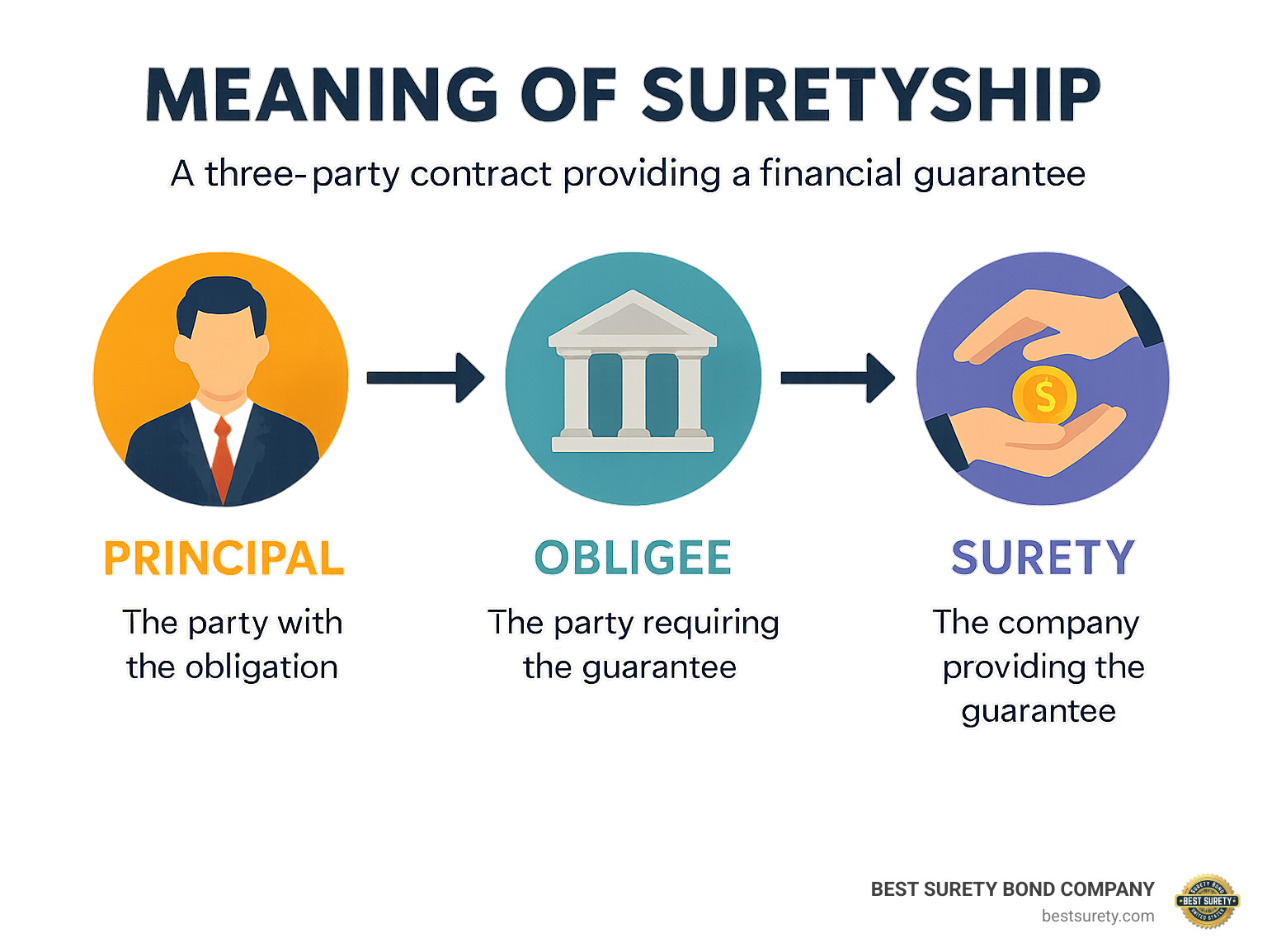
- Suretyship = A three-party contract providing financial guarantee
- Principal = The party with the obligation (you, the business owner)
- Obligee = The party requiring the guarantee (government, client, court)
- Surety = The company providing the guarantee (bond company)
If you’re a contractor in Texas, real estate professional, or business owner, you’ve likely encountered suretyship requirements. Maybe you need a license bond to operate legally, or a performance bond to bid on a project. The concept might seem complex, but it’s actually straightforward once you understand the basics.
Suretyship differs from insurance in a crucial way: you’re still responsible for your obligations. The surety company doesn’t expect to pay claims – they expect you to fulfill your promises. If something goes wrong and they do pay, you must reimburse them.
This financial arrangement builds trust between parties who don’t know each other well. When a client hires your construction company, they need assurance you’ll complete the work. When the state issues your business license, they want protection against potential violations. Suretyship provides that peace of mind.
I’m Haiko de Poel. Through my work scaling ventures in legal services and fintech, I’ve seen how understanding suretyship accelerates business growth. Helping companies steer complex regulations has shown me that the right surety bond strategy is often the key to winning contracts instead of losing opportunities.
The Core Concept: Unpacking the Meaning of Suretyship
At its core, the meaning of suretyship is simple: it’s a promise backed by financial muscle. This three-party contract acts as a safety net, allowing strangers to do business with confidence. The principal (you, the business owner) makes a promise, the obligee (your client or a government agency) needs that promise guaranteed, and the surety (the bond company) provides that guarantee.
Unlike insurance, suretyship holds you accountable. The surety expects you to fulfill your obligations. If they have to pay a claim, you are required to reimburse them. It’s accountability with a capital A.
The Legal Meaning of Suretyship
Legally, suretyship is a consensual security arrangement where all parties agree willingly. The bond is an accessory contract; it only exists because of a primary obligation between you and another party. For example, if you’re a contractor, your promise to build a deck is the primary obligation. The surety bond is the accessory guaranteeing you’ll build it. The surety’s liability is secondary, meaning they only step in if you fail to perform. A legal definition of surety is someone who guarantees another’s promise or duty. It’s a performance guarantee that provides peace of mind.
The Three Key Players: Principal, Obligee, and Surety
Understanding the meaning of suretyship means getting cozy with this three-way relationship. Each party brings something different to the table, and each has skin in the game.
The principal is you – the one making promises and taking on obligations. Whether you’re a Houston contractor bidding on a new shopping center or an auto dealer getting licensed in Texas, you’re the star of this show. You’re also the one who ultimately pays the bills if things go wrong.
The obligee is the party who wants assurance that you’ll keep your word. This could be the city of Houston requiring a contractor bond, a client demanding a performance guarantee, or a court needing a judicial bond. They’re the ones being protected by this tripartite relationship.
The surety is your financial wingman – the company that vouches for you based on their evaluation of your creditworthiness and ability to perform. In Texas and across the nation, surety companies like Best Surety Bond Company analyze your financial responsibility before agreeing to back you up.
This Houston construction project example shows how it works: You (principal) promise to complete a building project, the developer (obligee) requires a performance bond, and the surety company guarantees your performance. Everyone wins when the project gets done right and on time.
How the Meaning of Suretyship Impacts Your Business
Understanding suretyship isn’t just about legal compliance; it’s about opening doors to bigger opportunities and building trust. For practical application, a surety bond shows you’ve been vetted and approved by a financial institution, a powerful advantage in competitive markets like Texas.
While business licensing often mandates surety bonds, they also demonstrate your financial responsibility and professional standards to clients. The benefits are tangible: bonded businesses often qualify for larger contracts and more prestigious projects. In Houston’s booming construction market, the right bonds can be the key to landing multi-million dollar developments. Suretyship provides peace of mind, letting you focus on what you do best—running and growing your business.
Surety vs. Insurance: A Critical Distinction
Many business owners confuse surety bonds with insurance, but understanding the difference is critical. While both involve premiums and financial protection, their core functions are fundamentally different, and confusing them can lead to costly surprises.

The biggest difference is who is protected. With insurance, you are protected; with suretyship, a third party is protected. When you buy car insurance, you benefit from a claim. This is risk transfer—you’ve moved the financial risk to the insurer.
Suretyship is different. The bond protects the obligee (your client, a government agency, etc.). You’re asking a surety company to vouch for you and guarantee your promises. If the surety pays a claim, they will seek full reimbursement from you. Unlike insurance companies that anticipate claims, surety companies expect zero losses. They are not pooling risk; they are underwriting your ability to fulfill your obligations.
Think of it this way: insurance is a safety net that catches you. Suretyship is like a co-signed loan; if you default, your co-signer (the surety) pays but expects you to pay them back.
Key Differences at a Glance
Let me break this down in practical terms that matter to your Texas business:
| Feature | Suretyship | Insurance |
|---|---|---|
| Number of Parties | Three (Principal, Obligee, Surety) | Two (Policyholder, Insurer) |
| Who is Protected | The Obligee (third party) | The Policyholder (first party) |
| How Premiums Work | “Service fees” for the surety’s financial backing; based on underwriting of principal’s creditworthiness. | Payment for risk transfer; pooled to cover potential losses. |
| Handling of Losses/Claims | Surety pays obligee, then seeks reimbursement from Principal. | Insurer pays policyholder’s covered losses; no reimbursement. |
| Primary Purpose | Guarantee of performance/payment; risk mitigation; prequalification. | Protection against unforeseen financial loss; risk transfer. |
| Expected Losses | Not expected; surety underwrites based on principal’s ability to perform and indemnify. | Expected and calculated based on actuarial data. |
This distinction explains why getting a surety bond often feels more like applying for credit than buying insurance. When you call us at BEST SURETY BOND COMPANY for a Houston contractor bond, we’re not just collecting a premium – we’re evaluating your financial strength, your track record, and your ability to complete the job. We’re essentially lending our reputation and financial backing to yours.
That’s also why surety bond premiums are typically much lower than insurance premiums. A performance bond might cost 1-3% of the bond amount annually, while comprehensive business insurance could easily cost 5-10% or more of your coverage limits. The surety isn’t expecting to pay claims, so they don’t need to collect as much in premiums to cover anticipated losses.
Types of Surety Bonds: Finding the Right Guarantee for Your Needs
The meaning of suretyship comes to life when you see how different bonds serve specific business needs. Just like you wouldn’t use a hammer for every home repair job, different situations call for different types of surety bonds. Whether you’re opening a new business in Houston, bidding on a construction project, or dealing with a court proceeding, there’s likely a specific bond designed for your situation.
At Best Surety Bond Company, we’ve helped thousands of Texas businesses steer these requirements with fast approvals and low rates. The key is understanding which type of bond you actually need – and that’s where we come in to guide you through the process.
License & Permit Bonds
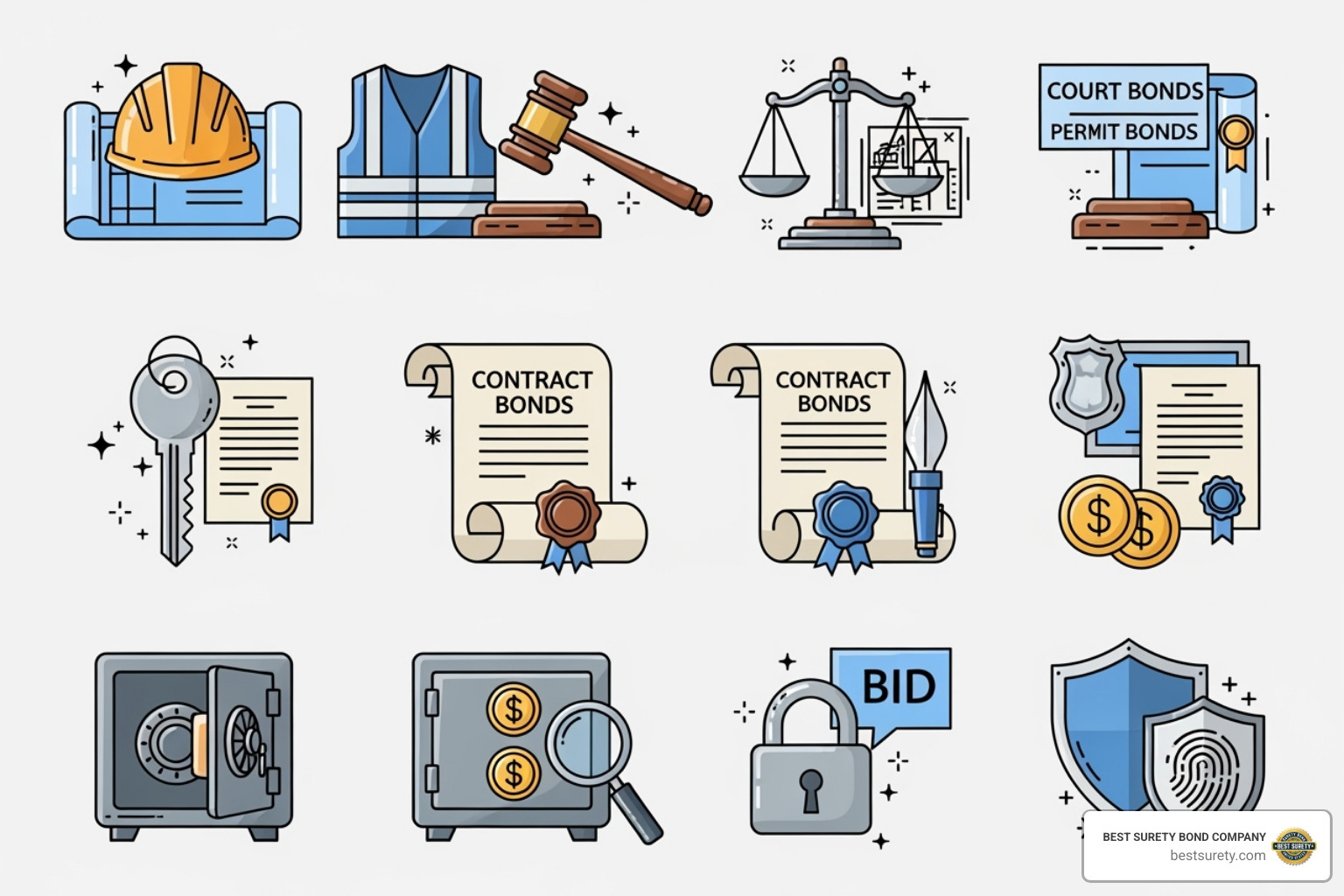
Think of license and permit bonds as your business license insurance policy – except they’re not actually insurance. These bonds are required by government agencies before they’ll issue you the permits or licenses you need to operate legally. The bond protects consumers and the public from potential misconduct or financial harm.
In Texas, we see this requirement across dozens of industries. Auto dealers need bonds to protect car buyers from fraudulent practices. Freight brokers need them to ensure they pay motor carriers. Notaries need them to guarantee they’ll perform their duties properly. The list goes on and on.
What makes these bonds unique is that they’re often relatively affordable – sometimes as low as $100 per year – but absolutely essential for legal operation. We specialize in license & permit bonds across all industries, including specific solutions like Colorado auto dealer bonds for our clients expanding beyond Texas borders.
The application process is typically straightforward since these bonds are usually for smaller amounts. Most business owners can get approved within hours, not days.
Construction & Contractor Bonds
If you’re in the construction industry, these bonds are your bread and butter. They’re also where the meaning of suretyship becomes most clear because the stakes are higher and the relationships more complex.
Performance bonds guarantee you’ll complete the project according to the contract. Payment bonds ensure you’ll pay your subcontractors and suppliers. Bid bonds show you’re serious about entering into a contract if your bid wins. Maintenance bonds cover any defects that show up after completion.
Here’s what many contractors don’t realize: these bonds actually help you win more work. When a project owner sees you’re bonded, they know you’ve been pre-qualified by a surety company. It’s like having a financial reference letter that says “this contractor is reliable and financially stable.”
We offer comprehensive construction surety bonds for projects of all sizes, from small residential jobs to major commercial developments. We also handle specialized needs like Texas contractor bonds for debris collection and transportation.
The underwriting process for construction bonds is more thorough since the bond amounts are typically larger. We’ll look at your financial statements, work history, and current capacity. But don’t worry – we work with contractors at all experience levels.
Commercial & Court Bonds
This category is like the “everything else” drawer in your kitchen – it covers all the specialized bonds that don’t fit neatly into other categories. Commercial bonds might include fidelity bonds that protect against employee theft, or utility deposit bonds that guarantee payment of your electric bill.
Court bonds are required in legal proceedings and can be quite urgent. When someone needs an appeal bond to challenge a court judgment, they usually need it fast. Probate bonds ensure executors and guardians manage estates properly. Bail bonds guarantee a defendant will show up for court.
What makes these bonds interesting is their diversity. We might help a small business owner get a simple commercial bond in the morning, then assist a family with a probate bond in the afternoon. Each situation is unique, which is why we offer personalized service rather than a one-size-fits-all approach.
You can learn more about commercial surety bonds and court bonds on our website, but honestly, the best approach is to call us. These bonds often have specific requirements and tight deadlines that are easier to handle with direct communication.
No matter which type of bond you need, our Texas-based team understands both the legal requirements and the practical realities of doing business in our state. We’re here to make the process as smooth as possible.
The Legal Framework: Rights, Obligations, and Defenses
Understanding the meaning of suretyship goes beyond just knowing the basic concept—it requires grasping the solid legal foundation that governs these agreements. Contract law provides the backbone for suretyship arrangements, creating a framework that protects all parties while ensuring obligations are met. This legal structure isn’t just academic theory; it directly impacts how your bond works and what happens if things go sideways.
The beauty of suretyship law is that it’s built on centuries of legal precedent, refined through countless court cases and business situations. Whether you’re a contractor in Houston needing a performance bond or a business owner seeking a license bond, the same fundamental legal principles apply. This consistency gives everyone involved—principals, obligees, and sureties—clear expectations about their rights and responsibilities.
Requirements for a Valid Suretyship Contract
Not every promise to guarantee someone else’s obligation creates a legally binding suretyship agreement. The law has specific requirements that must be met, and understanding these can save you headaches down the road.
The Statute of Frauds is your first hurdle. In Texas and most other states, suretyship agreements must be in writing and properly signed to be enforceable. This isn’t just bureaucratic red tape—it protects everyone involved by ensuring there’s clear documentation of what was agreed upon. Oral promises to pay someone else’s debt simply won’t hold up in court, which is why we always provide written bond documents.
Valid consideration forms another cornerstone of enforceable suretyship contracts. There must be an exchange of value between the parties. When a project owner extends a contract to a contractor in exchange for the surety’s guarantee, that’s valid consideration. It’s a real-world exchange that gives the agreement legal teeth.
The legal capacity of all parties matters too. Everyone involved—the principal, obligee, and surety—must have the legal ability to enter contracts. This typically means being of legal age and sound mind, though business entities must also have proper authority to enter such agreements.
Finally, clear terms are essential. The contract must spell out exactly what the principal’s obligations are, how much the surety is liable for, and what triggers that liability. Vague language leads to disputes and potentially unenforceable agreements. That’s why professional surety companies like Best Surety Bond Company use standardized forms that clearly define everyone’s responsibilities.
A Surety’s Rights and Defenses
The law provides sureties with specific rights and defenses to balance their responsibilities.
The right of reimbursement is fundamental. If a surety pays a valid claim on your behalf, you are legally obligated to reimburse them for the full amount plus expenses. This is reinforced by the indemnity agreement you sign.
Subrogation rights allow the surety to assume the obligee’s rights against you after paying a claim. For instance, they can enforce any liens the obligee had to recover their losses.
The right of exoneration allows a surety to seek a court order compelling you to perform your duty if you are able but refuse, thus exonerating them from payment.
Sureties also have several defenses against liability:
- Fraud or misrepresentation by the obligee or principal can void the surety’s obligation.
- Material alteration of the primary contract without the surety’s consent can discharge their duty. The surety guaranteed a specific deal, and significant changes alter that risk. As noted in the governing principle of surety rights, even minor violations can lead to discharge.
- Impairment of collateral is another defense. If the obligee damages or releases collateral held from you without the surety’s consent, the surety’s obligation may be reduced by the value of that impairment.
This legal framework creates a balanced system, explaining the careful underwriting involved in suretyship and our close work with principals to ensure successful outcomes.
Frequently Asked Questions about Suretyship
We understand that the meaning of suretyship can bring up practical questions about how these bonds work in real life. Having helped thousands of businesses across Texas and nationwide get bonded, we’ve heard just about every question you can imagine. Here are the ones that come up most often, along with straightforward answers that’ll help you move forward with confidence.
How much does a surety bond cost in Texas?
The honest answer? Most of our clients pay somewhere between 1% and 4% of their bond amount each year. So if you need a $10,000 license bond for your auto dealership in Houston, you’re looking at roughly $100 to $400 annually.
But here’s where it gets interesting – your specific rate depends on several factors that our underwriters evaluate. Your credit score plays a big role in determining your premium. Someone with excellent credit might pay that low 1% rate, while someone with credit challenges could see rates between 5% and 20% of the bond amount.
The type of bond you need also matters. A straightforward license bond typically costs less than a large construction performance bond, simply because the risk profile is different. Bond amount is another factor – larger bonds generally mean higher dollar premiums, though the percentage might actually decrease.
At Best Surety Bond Company, we pride ourselves on offering some of the most competitive rates in Texas. We work with multiple surety markets, which means we can shop around to find you the best possible premium. No surprises, no hidden fees – just honest pricing from day one.
How quickly can I get bonded?
Speed is one of our specialties, and frankly, it’s where many of our competitors fall short. We know you didn’t wake up this morning hoping to spend your day dealing with bond paperwork – you’ve got a business to run.
For most standard bonds, you can get instant online quotes right through our website. No waiting around for someone to call you back or playing phone tag with an agent. Within minutes, you’ll know exactly what your bond will cost.
Once you’re ready to move forward, we offer same-day approval for the majority of our bonds. This means you can apply, get approved, and pay for your bond all before lunch. We’ve streamlined our underwriting process without cutting corners on quality.
The best part? Digital bond delivery means your completed bond can be in your email inbox within hours, not days. Whether you’re submitting it to the Texas Department of Licensing and Regulation or a local municipality, you’ll have what you need when you need it.
Even complex bonds that require more detailed underwriting rarely take more than 48 hours. Our goal is always to be the fastest option available while maintaining the highest standards of service.
Do I need good credit to get a surety bond?
This is probably our most common question, and I get why people worry about it. The good news is that less-than-perfect credit doesn’t automatically disqualify you from getting bonded.
Yes, your credit score is important – it’s one of the key factors our underwriters consider when evaluating your application. Someone with a 750 credit score will typically get better rates than someone with a 580 score. But credit is just one piece of the puzzle.
We also look at your business financials, especially for larger bonds. A contractor with mediocre personal credit but strong business cash flow might still qualify for competitive rates. Your industry experience matters too – we’d rather work with an experienced professional who knows their trade than someone with perfect credit but no track record.
For applicants with credit challenges, we offer specialized high-risk bond programs. These programs are designed specifically for situations where traditional underwriting might not work. Sometimes we’ll ask for collateral as additional security, but that’s less common for standard license and permit bonds.
The bottom line? We’ve bonded thousands of clients across Texas, and many of them didn’t have perfect credit when they started. Our job is to find a way to get you bonded so you can focus on building your business and strengthening your financial position over time.
Get Your Sure Thing: Secure Your Bond Today
The meaning of suretyship becomes crystal clear when you see it in action: it’s your business’s gateway to bigger opportunities, stronger relationships, and solid legal compliance. Whether you’re bidding on that dream construction project in Houston, securing your professional license across Texas, or meeting court requirements nationwide, surety bonds transform from regulatory problems into competitive advantages.
Think about it – when a potential client sees you’re bonded, they’re not just seeing compliance. They’re seeing a business that’s been vetted, trusted, and backed by a reputable surety company. It’s like having a financial endorsement that says, “This company delivers on their promises.”
At Best Surety Bond Company, we’ve made it our mission to turn the traditionally complex world of suretyship into something refreshingly simple. Our fast approvals and low rates aren’t just marketing promises – they’re how we’ve helped thousands of Texas businesses and contractors nationwide get bonded and get back to what they do best.
We know you didn’t start your business to become an expert in surety bonds. You started it to build something, serve clients, or practice your profession. That’s where we come in. Our licensed agents understand both the legal intricacies of suretyship and the practical realities of running a business. We speak your language, not just legal jargon.
From same-day approvals to instant online quotes, we’ve streamlined every step of the bonding process. Need a contractor bond this afternoon? We’ve got you covered. Wondering about costs before you commit? Our transparent pricing means no surprises. Based right here in Texas with nationwide reach, we combine the personal touch of a local company with the resources to serve businesses coast to coast.
Your success is our business. Every bond we write represents a business owner pursuing their goals, and we take that responsibility seriously. Don’t let bond requirements slow you down when opportunities are calling.
Ready to experience the difference that true expertise and genuine service can make? Get Bonded Today in Texas or Nationwide and find why so many businesses trust us with their surety bond needs!
