
Understanding Notary Public Bond Requirements: Your Path to Legal Compliance

A notary public bond is a type of surety bond required by most states to protect the public from financial harm caused by a notary’s misconduct or negligence. Here’s a quick overview:
Key Requirements:
- Bond Amount: Ranges from $500 to $25,000, depending on your state.
- Cost: Typically $35-$55 for a 3-5 year term.
- Purpose: Protects the public, not the notary.
- Duration: Usually matches your commission term (typically 4 years).
- Who Pays Claims: The surety company pays valid claims, but the notary must reimburse them.
Most Common Bond Amounts by State:
- Texas: $10,000 bond, 4-year term
- California: $15,000 bond, 4-year term
- Michigan: $10,000 bond
- Indiana: $25,000 bond, 8-year term
- Wisconsin: $500 bond, 4-year term
Think of a notary bond as your promise to the state to follow all notary laws. If a mistake costs someone money, the bond ensures they are compensated, but you must repay the bonding company.
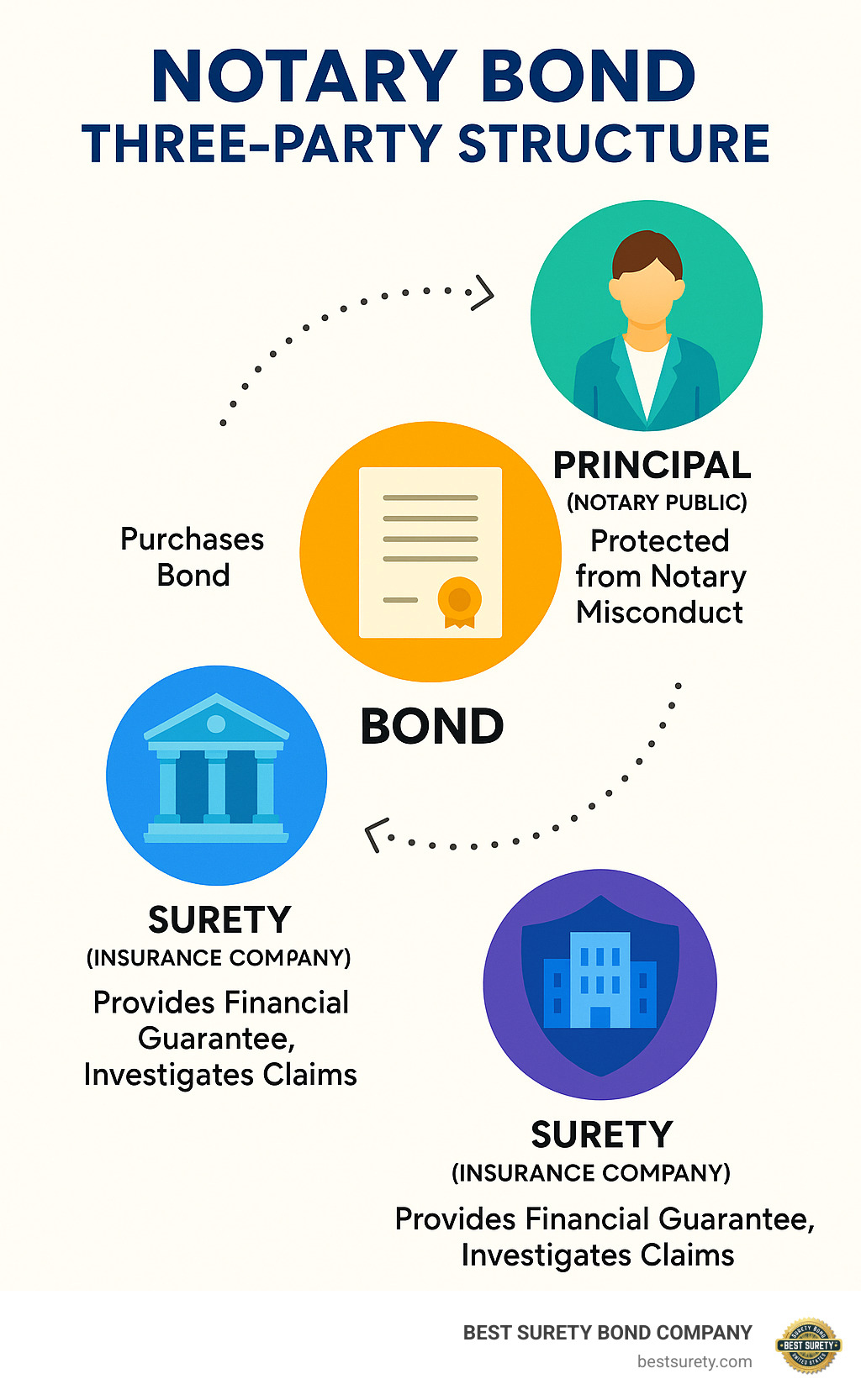
The bond is a three-party agreement between you (the principal), the public/state (the obligee), and the insurance company (the surety). It’s public protection, not personal insurance. For personal protection, many notaries purchase Errors & Omissions insurance.
As Haiko de Poel, I’ve helped thousands of business owners, including notaries, steer complex bonding requirements. My experience shows how critical proper bonding is for maintaining public trust and avoiding costly legal issues.
What is a Notary Public Bond and Why is it Required?
When you become a notary public, you take on a role of public trust, handling documents that can change lives, from home purchases to business contracts. That’s why most states require you to secure a notary public bond before you can begin.
A notary public bond is a type of surety bond—a three-party agreement guaranteeing you’ll perform your duties according to the law. If a mistake on your part costs someone money, this bond ensures they are protected from financial loss.
This requirement is vital because notaries handle sensitive transactions where a single error can cost thousands. The bond creates a safety net for the public against potential misconduct or negligence, holding you accountable to the highest standards.
As the Texas Secretary of State notes, a notary needs a surety bond to ensure they adhere to the law. It’s not just red tape; it’s about maintaining trust in a system millions of Americans rely on. For more details on how these bonds function, see our guide on public official surety bonds.
The Core Purpose of a Notary Bond
A notary public bond exists for one primary reason: protecting the public. The bond ensures that if you make an error—whether through negligence or intentional misconduct—the injured party can recover their losses.
Beyond financial recourse, the bond requirement ensures ethical conduct by creating real consequences for ignoring state laws. It’s a constant reminder that you are upholding state law and maintaining the integrity of legal processes.
The bond also creates direct notary accountability. Knowing any mistake could result in a claim against your bond—which you must repay—encourages careful, thorough work.
How a Notary Bond Works: The Three-Party Agreement
Your notary public bond is a straightforward contractual obligation between three parties, each playing a crucial role in protecting the public.

- You are the Principal: The notary who purchases the bond, promising to follow all notary laws.
- The Public and State are the Obligee: The protected parties who can file a claim against your bond if they suffer financial harm due to your actions.
- The Insurance Company is the Surety: The company that issues your bond and backs your promise. If a valid claim is filed, the surety investigates and pays the claim up to the bond amount.
Here’s the part that surprises many new notaries: the bond isn’t insurance for you. If the surety pays a claim because of your mistake, you are legally required to reimburse them for every dollar, plus any legal fees. The surety provides immediate relief to the public, but you remain personally accountable for your actions.
Notary Bond vs. Notary Errors & Omissions Insurance: Protecting the Public vs. Protecting Yourself
Many new notaries confuse a notary public bond with Errors & Omissions (E&O) insurance. They sound similar but are opposites in who they protect. The bond is your promise to protect the public, while E&O insurance is your safety net to protect yourself.

What is a Notary Public Bond?
Your notary public bond is mandatory in most states to become a commissioned notary. It exists solely to protect the public from your mistakes.
If you fail to properly identify a signer or make another error that causes financial harm, the injured party can file a claim against your bond. The surety company will investigate and, if the claim is valid, pay the injured party up to the bond amount.
Crucially, you must repay every penny to the surety company. The bond covers negligence and fraud, but it doesn’t shield your personal finances. The surety temporarily covers your debt, but you must settle it.
Why Notaries May Consider Errors & Omissions Insurance
Since your bond leaves you financially exposed, many notaries purchase optional E&O insurance for personal protection. This coverage is designed to defend you when things go wrong.
E&O insurance can cover unintentional mistakes like missed signatures or incorrect dates. Importantly, it often covers your legal defense costs, which can be substantial even if you win the case.
The key difference? When your E&O policy pays a claim, you typically don’t have to reimburse the insurance company. It functions like car insurance. That’s why many professional notaries consider E&O insurance an important part of their business toolkit, especially in markets like Texas.
Key Differences: Notary Bond vs. E&O Insurance
Here is a clear breakdown of the differences:
| Feature | Notary Bond | Notary E&O Insurance |
|---|---|---|
| Who is Protected? | The Public (from notary misconduct/negligence) | The Notary (from financial loss due to unintentional errors) |
| Is it Required? | Yes, in most states, to become commissioned | No, it’s optional but highly recommended |
| Who Pays Back a Claim? | The Notary must reimburse the Surety for any claims paid out | The Insurance Company pays the claim; the Notary does not typically reimburse |
The bottom line: Your bond is a legal obligation to the public. E&O insurance is a smart business decision to protect your finances.
The Nuts and Bolts of Your Notary Bond
Now that you understand the purpose of a notary public bond, let’s cover the practicalities: the claim process, prevention strategies, and the consequences of not having a bond.
What Happens if a Claim is Filed Against Your Bond?
If someone files a claim against your notary public bond, the surety company launches a thorough investigation. They will examine your notary journal, review the document in question, and gather all relevant evidence to determine what happened.
If the investigation confirms your error caused financial harm, the surety pays the legitimate claim up to your bond amount. For example, on a $10,000 bond, if damages are $7,500, the surety pays $7,500. If damages are $15,000, they pay the maximum of $10,000.
Crucially, you must then reimburse the surety for the full amount they paid, plus any legal fees incurred. This reimbursement obligation is part of the indemnity agreement you sign. A paid claim can also make it harder or more expensive to get bonded in the future, so prevention is key.
How to Prevent Claims Against Your Bond
The best way to handle claims is to prevent them. Here are essential practices:
- Verify Identity Rigorously: Always use acceptable government-issued photo ID to verify a signer’s identity. No exceptions. This prevents most fraud-related claims.
- Require Physical Presence: Never notarize a document unless the signer is physically present. Traditional notarizations require face-to-face interaction.
- Maintain a Detailed Notary Journal: Your journal is your best defense. Record the date, time, document type, signer’s name, and ID details for every notarization. It serves as your evidence if your actions are questioned.

- Adhere to Legal Boundaries: Know and follow your state’s maximum fees. Never overcharge. Do not offer legal advice or help draft documents—stick to your role as an impartial witness.
- Stay Educated: Notary laws change. Participate in continuing education and stay current on your state’s requirements. Knowledge is your best protection.
Consequences of Not Having a Required Notary Bond
Operating without a required notary public bond has severe consequences:
- Invalid Notarizations: Any notarization you perform may be deemed legally invalid, causing major problems for everyone who relied on those documents.
- Personal Financial Liability: Without a bond, you are directly responsible for all damages and legal fees resulting from your errors.
- State Penalties: States like Texas impose hefty fines, civil penalties, and even misdemeanor charges. Your commission will likely be denied or revoked.
- Reputational Damage: Operating without a bond marks you as unreliable and can permanently harm your professional reputation.
If your state requires a notary public bond, it is the non-negotiable foundation of a legal and ethical practice.
State-Specific Requirements and Costs: A Closer Look at Texas
Notary public bond requirements vary by state, including bond amounts, term lengths, and application processes. In Texas, where we help thousands of notaries get bonded, the requirements are clear and affordable.
How Much Does a Notary Public Bond Cost?
While a notary public bond might be for $10,000 or more, the cost to you is a small fraction of that amount. Most notary bonds cost between $35 and $55 for a multi-year term. You are paying a small premium for the bonding company to guarantee your compliance with the law.
Your state of commission is the biggest factor influencing the cost. For most notary bonds, a credit check is not required. If you are in a state with a very large bond amount or have significant credit challenges, the premium might be higher, but bonding is still accessible.
In Texas, a four-year, $10,000 notary public bond costs around $50, plus the state’s $21 filing fee. This small investment provides crucial protection for you and the public.
Notary Bond Requirements in Key States
To illustrate how much requirements vary, here is a list for several key states:
- Texas: $10,000 bond, 4-year term
- California: $15,000 bond, 4-year term
- Indiana: $25,000 bond, 8-year term
- Michigan: $10,000 bond
- Wisconsin: $500 bond, 4-year term
- Alabama: $50,000 bond
- Florida: No bond required, but E&O insurance is highly recommended.
This variation highlights why you must verify your state’s specific rules. For more information on bonds for various professions, explore our guide on license & permit bonds.
How Long is a Notary Bond Valid?
Your notary public bond term is designed to match your commission period, which is most commonly four years. For example, Texas and California notaries have four-year commissions and four-year bonds. Indiana commissions last eight years, so their bonds do as well.
You must renew your bond before it expires to continue serving as a notary. The renewal process is typically simple, and the cost often remains the same. Mark your calendar with your bond’s expiration date to avoid any lapse in coverage, which could invalidate your notarizations.
Frequently Asked Questions about Notary Bonds
Here are answers to the most common questions we receive about notary public bonds from professionals in Texas and across the nation.
Can someone with bad credit obtain a notary bond?
Yes, you can almost always get a notary bond, even with bad credit. Most standard notary public bonds (under $25,000) are issued at a flat rate without a credit check. This means your credit score typically does not affect your premium.
For larger bond amounts that may require a credit review, having poor credit doesn’t disqualify you. Your premium might be higher, but you can still get bonded and pursue your notary career. We work with specialized programs to help notaries from all financial backgrounds get the coverage they need.
Where can a notary obtain a bond?
The most convenient and cost-effective way to get your notary public bond is through a licensed surety bond company that specializes in them. Look for providers with:
- Online applications for fast service.
- Licensed agents who understand your state’s rules.
- A strong reputation with positive reviews.
At BEST SURETY BOND COMPANY, we serve notaries throughout Texas—from Houston to Dallas—and across all 50 states. Our online platform simplifies the process, and our licensed agents are ready to provide expert guidance.
What information do I need to apply for a notary bond?
The application for a notary public bond is straightforward and can be completed online in minutes. You will typically only need:
- Your full legal name (as it appears on your commission).
- Your residential address and contact information.
- The county where you will be commissioned.
- Your notary commission number (if you already have it).
Don’t worry if you don’t have your commission number yet; we are accustomed to working with applicants at all stages. Our streamlined process ensures you get your bond documents quickly, often within 24 hours.
Get Your Texas Notary Bond with Confidence
Becoming a notary public is a commitment to public trust. The foundation of that trust is your notary public bond—a non-negotiable requirement for a legitimate and protected practice.

In Texas, the requirement is a $10,000 notary public bond for your 4-year commission. The cost is only around $50 for the entire term, but the legal compliance and peace of mind it provides are priceless.
Whether you’re in Houston’s busy business district, Dallas, or any other Texas community, we understand your needs. As Texas-based experts, we know the state’s notary laws inside and out.
What sets us apart is our combination of lightning-fast approvals and rock-bottom rates. We’ve streamlined our process to get you bonded and back to business immediately. Operating without a required bond is illegal and invalidates your work. With BEST SURETY BOND COMPANY, you can be confident that you are fully compliant with all Texas requirements.
Ready to start your notary career on solid ground? Get Bonded Today with an Instant Online Approval and join the thousands of Texas notaries who trust us to keep them compliant and protected.
