

Why Court Bonds Matter for Legal Proceedings
Court surety bonds are financial guarantees required by courts to protect parties in legal proceedings and ensure compliance with court orders. Here’s what you need to know:
Key Types:
- Judicial Bonds – Required for civil court cases (appeal bonds, attachment bonds, injunction bonds)
- Fiduciary Bonds – Required for managing others’ assets (executor bonds, guardianship bonds, trustee bonds)
How They Work:
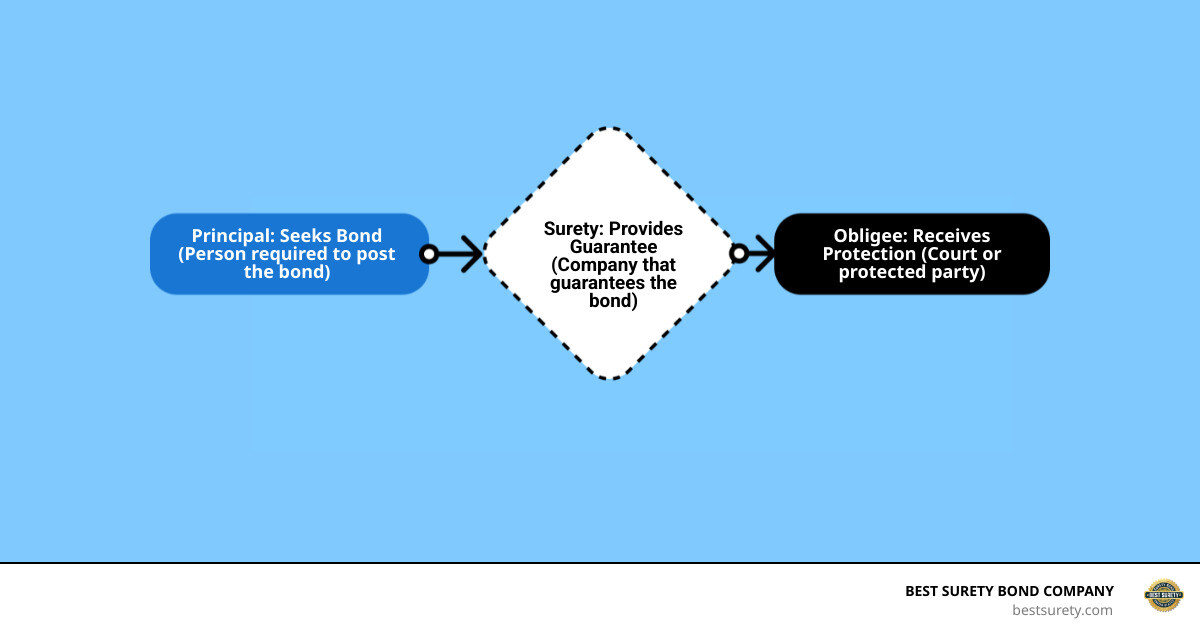
- Principal – The person required to post the bond
- Obligee – The court or protected party
- Surety – The company that guarantees the bond
Cost: Typically 1-15% of the bond amount, depending on credit score and bond type
Purpose: Guarantee payment of judgments, protect against financial loss, and ensure faithful performance of court-appointed duties
When Texas courts order you to obtain a bond, it’s because they need financial assurance that you’ll fulfill your legal obligations. Whether you’re appealing a judgment, managing an estate, or involved in civil litigation, these bonds protect all parties involved and keep the legal system fair.
The process might seem complex, but it doesn’t have to be. Court bonds serve as a bridge of trust within the legal system, ensuring parties honor their commitments while providing a safety net for those who could be harmed by non-compliance.
At BEST SURETY BOND COMPANY, we’ve helped hundreds of business owners and individuals steer the surety bond process across Texas. Our experience has shown us how the right bond provider can turn a stressful situation into a straightforward process, getting you the court surety bonds you need without delay.
What is a Court Surety Bond and Why is it Required?
Think of a court surety bond as a financial safety net that keeps the legal system running smoothly. When you’re involved in court proceedings in Texas, judges often require these bonds to make sure everyone follows through on their promises and obligations.
A court surety bond creates a three-party agreement that’s surprisingly straightforward once you understand it. You have the person who needs the bond (that might be you), the court or party being protected, and a bonding company like us at BEST SURETY BOND COMPANY that backs the promise with financial muscle.
The beauty of this system is that it levels the playing field. Whether you’re appealing a judgment in Harris County or managing someone’s estate in Dallas, these bonds ensure that financial obligations get met and vulnerable parties stay protected. It’s like having a trusted friend vouch for you – except this friend has deep pockets and legal backing.
Courts don’t require these bonds to make your life difficult. They’re actually protecting everyone involved, including you. Without court surety bonds, the legal system would be chaos, with people making promises they can’t keep and leaving others holding the bag.

The Key Parties and Their Roles
Every court surety bond involves three key players, each with a specific role that keeps the system balanced and fair.
The Principal is you – the person the court requires to get bonded. Maybe you’re appealing a case and need to guarantee you’ll pay the judgment if you lose. Or perhaps you’re managing someone’s estate and need to promise you’ll handle their assets responsibly. As the Principal, you’re ultimately on the hook for fulfilling whatever obligation the court has set.
The Obligee is usually the court itself or someone the court wants to protect. This could be the opposing party in your lawsuit, the beneficiaries of an estate you’re managing, or even the general public. The Obligee has the right to make a claim against your bond if you don’t follow through on your commitments.
The Surety – that’s where we come in at BEST SURETY BOND COMPANY. We’re the financial muscle behind your promise. When you get a bond through us, we’re telling the court “If this person doesn’t do what they’re supposed to do, we’ll step in and make it right financially.” We evaluate your situation, set your premium rate, and issue the bond that satisfies the court’s requirements.
This three-party setup works because everyone has skin in the game. You want to avoid having us pay out a claim because you’d have to reimburse us. We want to avoid claims by carefully choosing our clients. And the court gets the peace of mind that comes with a financial guarantee.
How Bonds Uphold Fairness in the Legal System
Court surety bonds are the unsung heroes of legal fairness. They create a system where promises have real financial backing, not just good intentions.
Protecting parties from financial loss is the most obvious benefit. Imagine winning a lawsuit against someone who immediately appeals just to delay payment. Without an appeal bond, you might wait years to collect your judgment – if you ever collect at all. The bond ensures that money will be available when the appeals process ends, giving you confidence that justice isn’t just served, but actually paid.
Motivating compliance with court orders happens naturally when people know there’s a financial guarantee attached to their actions. When someone managing an estate knows that mishandling funds will trigger a bond claim they’ll have to repay, they tend to be much more careful with their decisions. It’s human nature – we all behave better when there are real consequences.
Preventing frivolous lawsuits and appeals is an underappreciated benefit of the bond system. When someone has to post a significant bond to pursue legal action, they think twice about whether their case has merit. This saves everyone time and money by filtering out weak claims before they clog up the courts.
Ensuring duties are performed faithfully becomes critical when vulnerable people are involved. If you’re appointed guardian for an elderly relative or executor of a friend’s estate, the beneficiaries need assurance that you’ll act in their best interests. The bond provides that assurance, backed by our financial guarantee.
The result is a legal system that works better for everyone. Courts can make orders knowing they’ll be followed. Winning parties can collect their judgments. Vulnerable people get protection. And even you, as the bonded party, get the credibility that comes with having a reputable surety company standing behind your commitments.
The Main Types of Court Surety Bonds Explained
When you’re navigating the Texas legal system, understanding the different types of court surety bonds can save you time, money, and stress. These bonds fall into two main categories that serve distinct purposes in our legal proceedings: Judicial Bonds and Fiduciary & Probate Bonds.
Think of it this way: Judicial bonds protect parties during the heat of legal battles, while Fiduciary bonds ensure responsible management when someone is entrusted with another person’s assets or affairs. Both are essential pillars of our legal system, but they work in very different scenarios.
| Feature | Judicial Bonds | Fiduciary & Probate Bonds |
|---|---|---|
| Purpose | Guarantee payment of money or compliance in civil court cases. | Guarantee faithful performance of duties by court-appointed fiduciaries. |
| Typical Principal | Plaintiff or Defendant in a lawsuit. | Executor, Administrator, Guardian, Conservator, Trustee. |
| Risk Level | Generally higher risk for sureties due to unpredictable court rulings. | Varies, depends on the fiduciary’s credit and the estate’s complexity. |
| Examples | Appeal, Attachment, Injunction, Replevin. | Executor, Administrator, Guardianship, Conservator, Trustee. |
| What they Protect | Opposing party from financial loss due to court action. | Beneficiaries, heirs, or wards from mismanagement of assets. |
The key difference lies in their purpose and timing. Judicial bonds are typically required during active litigation when courts need to ensure financial protection for opposing parties. Fiduciary bonds, on the other hand, come into play when someone is appointed to manage another person’s affairs, often after a major life event like death or incapacitation.
Judicial Bonds: Required for Civil Court Proceedings
Judicial bonds are the workhorses of civil litigation in Texas courts. These bonds guarantee that if you take a specific legal action, you’ll be financially responsible if that action causes harm to the other party. They’re considered higher-risk bonds because court outcomes can be unpredictable, which is why working with an experienced provider like BEST SURETY BOND COMPANY makes all the difference.
Appeal Bonds (Supersedeas Bonds) are probably the most common judicial bonds we see. When you lose a case and want to appeal, Texas courts often require you to post a bond for the full judgment amount plus interest and costs. This protects the winning party while your appeal works through the system. Without this bond, you’d typically have to pay the judgment immediately, even if you’re confident your appeal will succeed.
Attachment Bonds come into play when you need to seize someone’s property before winning your case. Let’s say you’re suing a business that you believe is trying to hide assets. The court might allow you to attach their property, but only if you post a bond that protects them if you’re wrong. This prevents people from using the legal system to harm others without consequences.
Injunction Bonds protect parties when courts issue temporary restraining orders or injunctions. If you convince a judge to stop someone from taking a specific action, you’ll likely need to post a bond. This ensures that if the injunction was wrongly granted, you’ll compensate the other party for their losses.
Release of Lien Bonds are particularly important in Texas’s active construction industry. When a contractor places a mechanic’s lien on your property, this bond allows you to clear the title so you can sell or refinance while the dispute is resolved. It’s a lifesaver for property owners caught in payment disputes.
Fiduciary & Probate Bonds: For Managing Others’ Assets
Fiduciary bonds represent some of the most important responsibilities in our legal system. When Texas courts appoint someone to manage another person’s assets or affairs, these bonds ensure that sacred trust isn’t broken. We help families and individuals steer these sensitive situations with the care they deserve.
Executor and Administrator Bonds are required when someone is appointed to handle a deceased person’s estate. Whether you’re named in a will as an executor or appointed by the court as an administrator, you’ll likely need a bond that guarantees you’ll properly manage the estate’s assets, pay debts, and distribute inheritances according to law. The bond amount is typically set at the value of the estate’s personal property.
Guardianship Bonds protect some of our most vulnerable community members. When a court appoints you as guardian for a minor child or incapacitated adult, this bond ensures you’ll manage their finances responsibly and provide proper accounting to the court. In Texas, these bonds are especially important given our state’s emphasis on protecting individual rights and property.
Conservator Bonds work similarly to guardianship bonds but typically involve managing property and financial affairs specifically. The court sets the bond amount based on the value of assets under management, and you’re responsible for providing regular accountings of how those assets are handled.
Trustee Bonds may be required when you’re appointed to manage assets held in a trust, unless the trust document specifically waives this requirement. These bonds protect beneficiaries and ensure the trust is administered according to its terms and Texas law.

How to Get Court Surety Bonds: A Step-by-Step Guide
Getting court surety bonds doesn’t have to be overwhelming, especially when you’re already dealing with legal proceedings. At BEST SURETY BOND COMPANY, we’ve simplified the process to get you bonded quickly and affordably, whether you’re in Houston, Dallas, or anywhere across Texas.
The whole process typically takes just 1-2 business days, and sometimes we can approve your bond within hours. When you’re facing court deadlines, every hour counts, and we understand that urgency.
Step 1: Determine the Bond Type and Amount
Before you can apply for court surety bonds, you need to know exactly what type you need and how much it should be for. This information comes directly from your court order or Texas statutory requirements – it’s not something you guess at.
The judge has discretion in setting bond amounts, but they typically follow established guidelines. For appeal bonds, you’re usually looking at the original judgment amount plus extra for interest and court costs that could accumulate during the appeals process. If you’re dealing with fiduciary bonds for estate management, the court sets the amount based on the value of assets you’ll be managing.
Texas courts are pretty consistent with their requirements, but each case is unique. If you’re staring at a court order and scratching your head about what exactly you need, don’t hesitate to check with your attorney. Getting this step wrong means starting over, and nobody has time for that when court deadlines are looming.
The court order will specify not just the bond amount, but also any Texas-specific rules that apply to your situation. Keep this document handy – you’ll need it for your application.
Step 2: Apply and Get Approved for Your Court Surety Bonds
Once you know what you need, the application process is refreshingly straightforward. Our online application takes just minutes to complete, and we’ve designed it specifically for people who need bonds fast.
The underwriting review is where we evaluate your situation to determine your premium rate. We’ll look at your credit history using a soft credit pull that won’t ding your credit score, review any financial statements you provide, and examine the court documents you upload. For most court surety bonds, this process moves quickly because we understand the time-sensitive nature of legal proceedings.
Your premium costs typically range from 1-15% of the bond amount, depending on several factors. A strong credit score can get you rates as low as 1-2%, while challenging credit might push you toward the higher end of that range. For example, if you need a $50,000 appeal bond and qualify for our 3% rate, you’re looking at $1,500 in premium costs.
We serve clients throughout Texas, so whether your case is in Harris County, Travis County, or any other Texas jurisdiction, we know the local requirements and can expedite your application accordingly.
Submit your online application now and let’s get you bonded today.
Step 3: Handling Bad Credit and Finalizing Your Bond
Here’s the reality: not everyone has perfect credit, and that shouldn’t prevent you from meeting your legal obligations. We work with clients who have bad credit options, though it does mean higher premiums and possibly additional requirements.
If your credit isn’t stellar, you might face premium rates of 5-15% instead of the lower rates available to those with excellent credit. For judicial bonds, which are considered higher risk, we sometimes require collateral requirements – typically cash or an irrevocable letter of credit equal to the full bond amount. This isn’t ideal, but it’s often the only way to secure these bonds when credit is a concern.
Co-signers can be a game-changer if you’re struggling to qualify on your own. A financially strong co-signer essentially vouches for you, which can lower your premium rate and reduce collateral requirements.
Once we approve your application and you’ve met any collateral or co-signer requirements, you pay your premium and we issue your bond immediately. Bond issuance happens electronically, so you can download your bond and get it filed with the court right away.
The final step is filing with the court – presenting your bond to satisfy the court’s requirement. We make sure your bond meets all the specific requirements for Texas courts, whether you’re dealing with a complex commercial litigation case in Houston or a straightforward probate matter in a smaller Texas county.
Our team handles hundreds of court surety bonds every year across Texas, so we know exactly what each court expects and how to get your bond processed without delays or rejections.
What Happens When a Bond Obligation is Not Met?
When you secure a court surety bond, you’re entering into a serious financial commitment that extends beyond just paying the premium. If you, as the Principal, fail to meet your court-ordered obligations, the protected party (Obligee) has the right to file a claim against your bond. This triggers a process that can have significant financial consequences, which is why understanding these potential outcomes is crucial before you proceed.
Think of it this way: the bond isn’t a “get out of jail free” card—it’s more like a financial safety net for others that you’re ultimately responsible for maintaining. When that safety net gets used, you’re the one who pays to repair it.
The Claims Process Explained
The bond claims process follows a structured path that protects all parties while ensuring legitimate claims are paid promptly. Filing a claim begins when the Obligee—whether it’s the court, a plaintiff, or another protected party—demonstrates that you’ve failed to perform your duties or comply with a court order, resulting in financial loss. They submit this claim directly to us as the Surety company, along with supporting documentation.
Once we receive a claim, our investigation process begins immediately. We thoroughly examine the details of the alleged breach, review all relevant court documents, and assess whether the claim has merit. This isn’t a rubber-stamp process—we take our role seriously in ensuring only valid claims move forward. Our experienced team understands the nuances of Texas court requirements and will carefully evaluate every aspect of the situation.
If our investigation confirms the claim is valid, we’ll pay the Obligee for their damages or losses, up to the full bond amount. This ensures the protected party receives compensation quickly, without having to pursue lengthy legal battles against you. It’s one of the key benefits of the surety bond system—it provides immediate financial relief to those who’ve been harmed by non-compliance.
Here’s the critical part that many people don’t fully understand: the Principal’s liability to the Surety is absolute. A court surety bond is NOT insurance for you. When we pay out a claim on your behalf, you become legally obligated to reimburse us for every dollar paid, plus any legal fees or expenses we incurred during the claims process. This reimbursement obligation stems from the indemnity agreement you signed when obtaining the bond.
Failure to reimburse the Surety can lead to severe consequences including collection actions, significant damage to your credit score, and extreme difficulty obtaining future bonds. We’ve seen cases where individuals faced years of financial hardship because they didn’t understand this fundamental aspect of how court surety bonds work.

How to Be Released from Your Court Surety Bonds
Getting released from your court surety bond obligation is typically straightforward when you’ve successfully fulfilled your duties, but it requires following proper legal procedures. The most common path to release is fulfilling your obligation completely. For appeal bonds, this means seeing the appeal process through to completion and paying any required judgments. For fiduciary bonds, it involves faithfully managing the estate or guardianship and providing a final accounting that satisfies the court.
Once you’ve met your responsibilities, you’ll need to obtain a court order of release or exoneration. This formal court document confirms that you’ve satisfied all requirements and that the bond is no longer needed. Your attorney will typically petition the court for this release order, though the specific procedures can vary depending on which Texas court issued the original bond requirement.
After the court issues the exoneration order, any collateral you provided will be returned to you. This includes cash deposits, letters of credit, or other security you may have pledged when the bond was originally issued. The timeline for collateral return varies, but we work diligently to process these releases as quickly as possible once we receive the proper court documentation.
It’s worth noting that simply completing your obligations doesn’t automatically release the bond—you must follow through with the formal legal process. We’ve seen cases where people assumed their bond was released, only to find years later that they were still technically liable because the proper paperwork was never filed. Working with experienced legal counsel familiar with Texas court procedures is essential to ensure your bond is properly exonerated.
The Satisfaction of Judgment process varies by case type, but our team is always available to help guide you through the requirements specific to your situation in Houston or anywhere else in Texas.
Get Your Texas Court Bond with Confidence
When you need a court surety bond in Texas, you’re not just looking for paperwork – you’re seeking peace of mind during what’s often a stressful legal situation. These bonds serve as the backbone of our legal system, ensuring financial protection for all parties while keeping court proceedings fair and efficient. Whether you’re appealing a judgment, managing an estate, or involved in civil litigation, the right bond makes legal obligations accessible without requiring massive cash deposits.
At BEST SURETY BOND COMPANY, we understand that navigating court surety bonds shouldn’t add to your legal stress. As your Texas-based experts with national reach, we’ve helped thousands of clients secure the bonds they need across Houston, Dallas, San Antonio, Austin, and beyond. We know Texas courts inside and out, and we’re licensed in all 50 states to serve you wherever your legal matters take you.
What sets us apart is our commitment to making the bond process as smooth as possible. We offer fast approvals because we know court deadlines don’t wait – many of our bonds are issued the same day, sometimes within hours of application. Our low rates help keep your legal costs manageable, whether you’re a small business owner facing litigation or an individual appointed as an executor.
Our expert guidance means you’re never alone in this process. Our licensed agents understand the nuances of judicial bonds versus fiduciary bonds, and we’ll walk you through every step from application to court filing. We combine digital convenience with genuine human service – get an instant quote online, then speak with a real person who cares about getting you bonded quickly and affordably.
Whether you need an appeal bond to protect your right to challenge a judgment, or a guardianship bond to fulfill your court-appointed duties, we’re here to help. Don’t let the complexity of court surety bonds overwhelm you during an already challenging time. Let our Houston-based team provide the expertise and support you need to move forward with confidence.
Get your free court bond quote today
