

Why Understanding Notary Bond Costs Matters for Your Business
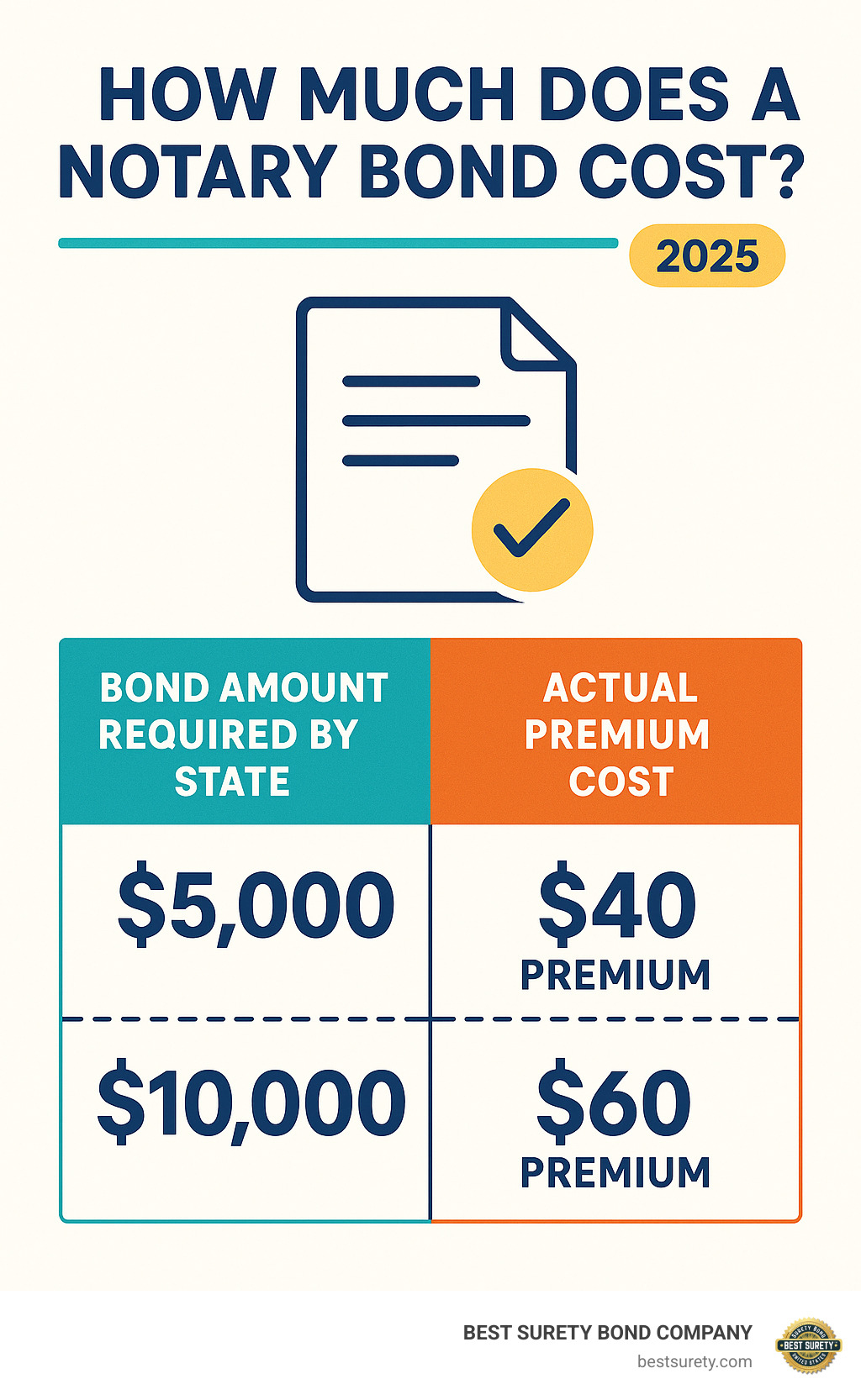
How much does a notary bond cost? It’s the top question for new notaries. The short answer: most notary bonds cost between $35-$100 for a 3-5 year term, regardless of whether your state requires a $5,000 or $25,000 bond amount.
Quick Cost Breakdown:
- $5,000 bond: $35-$55 premium
- $10,000 bond: $40-$80 premium
- $15,000 bond: $60-$100 premium
- $25,000 bond: $80-$150 premium
- Term length: Usually 3-5 years
- Credit check: Rarely required
Here’s what confuses most people: the bond amount (what the state requires) is different from the bond cost (what you actually pay). If your state requires a $10,000 bond, you don’t pay $10,000—you pay a small premium of around $50 for the entire term.
The cost stays low because notary bonds protect the public from your mistakes, not you. Since claims are rare, surety companies consider them low-risk.
I’m Haiko de Poel, and in my two decades of helping business owners with surety bonds, this remains the top question. The good news is that notary bonds are among the most affordable surety bonds available, designed to be accessible for small business owners and independent contractors.
First Things First: What a Notary Bond Is (and Isn’t)
Before diving into cost, let’s clarify what you’re buying. A notary bond is a type of surety bond—a financial guarantee to protect the public from your mistakes or misconduct as a notary. It’s a three-way agreement:
- The Principal: You, the notary.
- The Obligee: The public or your state’s commissioning authority (e.g., the Secretary of State), who is being protected.
- The Surety: The bond company (like BEST SURETY BOND COMPANY) that guarantees you’ll perform your duties correctly.
If you make an error causing financial harm, the public can file a claim against your bond for compensation up to the bond amount.

Why a Notary Bond is Required by Your State
States require notary bonds because notaries hold legal authority to witness documents, verify identities, and prevent fraud in major transactions. The bond is a consumer protection tool, ensuring that if you make a costly mistake, the injured party has a way to recover their losses.
For example, Texas requires a $10,000 notary bond for all commissions. This isn’t just bureaucracy; it’s about maintaining public trust and ensuring financial responsibility. The bond also deters fraud, as it encourages notaries to follow procedures carefully. For more information on notary laws and best practices, the National Notary Association is an excellent resource.
Want to learn more about your state’s specific requirements? State Notary Resources
A Notary Bond is NOT Insurance for You
This is the most critical distinction: a notary bond protects the public from you, not for you. If a valid claim is paid by the surety company, you are legally obligated to reimburse them for the full amount, plus any legal costs. This is part of the indemnity agreement you sign.
Because you are personally liable, many notaries also purchase Errors & Omissions (E&O) insurance. E&O insurance does protect you personally by covering legal defense costs and damages from covered claims. It complements your bond by protecting your personal assets.
Read our FAQ on notary liability
The bottom line: your bond protects the public, while E&O insurance protects you. Understanding this is key before you buy.
So, How Much Does a Notary Bond Cost, Really?
So, how much does a notary bond cost? The cost is surprisingly low. You pay a small, one-time premium that covers the entire term of your bond (usually 3-10 years), not the full bond amount. This makes becoming a bonded notary affordable for everyone, from small business owners to independent contractors.
The Typical Price Range: What to Expect
While state-required bond amounts range from $500 to $50,000, your actual cost is typically between $35 and $100 for a multi-year term. A $10,000 bond usually costs around $40-$80 for the entire term, not annually. The premium doesn’t scale directly with the bond amount; a $25,000 bond might only cost $20-$30 more than a $5,000 bond because notaries are considered low-risk.
Here’s a look at some typical costs across different states:
| State | Bond Amount Required | Typical Term Length | Approximate Cost (Premium) |
|---|---|---|---|
| Texas | $10,000 | 4 years | $50 (plus $21 state fee) |
| California | $15,000 | 4 years | $38 |
| Arizona | $5,000 | 4 years | $30 |
| Tennessee | $10,000 | 4 years | $45 |
| Louisiana | $10,000 | 5 years | $110 |
| Washington | $10,000 | 4 years | $40 |
| Alabama | $25,000 | 4 years | $70 |
As you can see, even Alabama’s $25,000 bond only costs about $70 for four years.
Factors That Drive Your Bond Price
Several factors influence your exact premium:
- State of Commission: This is the primary driver. Each state sets its own bond amount and term length.
- Bond Amount & Term Length: A higher amount or longer term may slightly increase the cost, but the effect is minimal.
- Surety Provider: Prices can vary slightly between providers. At BEST SURETY BOND COMPANY, we work with multiple carriers to find you the lowest rate.
- Credit Score: Great news—your credit score usually doesn’t matter for notary bonds. They are typically issued at a flat rate, making them accessible to everyone.
How to Save Money on Your Notary Bond
Even with low costs, you can still save:
- Compare Quotes: While differences are small, it’s always wise to shop around.
- Choose Longer Terms: If your state offers them, multi-year bonds often provide better annual value.
- Bundle with E&O Insurance: We offer packages that combine your bond with Errors & Omissions insurance, often at a discount. This gives you required public protection and vital personal protection.
- Check for Discounts: Members of notary associations may qualify for group rates.
The Fast Track to Getting Bonded: A Simple Step-by-Step Guide
Getting your notary bond is the easiest part of the process. Our streamlined system gets you bonded in minutes, not days, with minimal time and hassle.

Your Application and Instant Approval
Notary bonds are straightforward: no credit checks, no complex underwriting, and instant approval. Our online application takes about three minutes. You’ll only need to provide your full legal name, address, and county of residence.
Because notary bonds are low-risk, we offer same-day issuance, with your bond documents delivered to your email within minutes. No waiting, no wondering.
See how fast it is. Apply Online with BEST SURETY BOND COMPANY and get your bond today.
Filing and Renewing Your Bond
After getting your bond, you must file it with your state, usually the Secretary of State or County Clerk. You typically have 30 to 90 days after your commission date to file. We provide clear, state-specific instructions to guide you through this step.
Renewal is even easier. Your bond covers your entire commission term (typically 4-6 years). When it’s time to renew, we’ll send a notice. The renewal cost is usually identical to your original premium, assuming no claims were filed. Pay the invoice, and we’ll issue your new bond form immediately, ensuring no interruption to your services.
Notary Bond vs. E&O Insurance: Protecting the Public vs. Protecting Yourself
It’s a common point of confusion: a notary bond protects the public, while Errors & Omissions (E&O) insurance protects you. Understanding this difference is crucial for your financial safety.

- Notary Bond: A safety net for the public. If you make a mistake that causes financial harm, the bond compensates the victim. However, you must then reimburse the surety company for the payout.
- E&O Insurance: Your personal protection. This professional liability coverage protects your assets by covering legal defense costs, settlements, and judgments if you’re sued for an honest mistake.
Experienced notaries bundle both. The bond fulfills your legal requirement, while E&O insurance provides the personal protection you need to operate with confidence.
Why E&O Insurance is a Smart Investment for Every Notary
E&O insurance is an affordable but powerful tool. Policies can start as low as $18 for a 4-year term—less than $5 per year for significant protection.
Here’s why it’s so valuable:
- It covers legal defense costs. Defending a lawsuit can be expensive, even if you’re not at fault. E&O covers these costs from day one.
- It covers unintentional errors. Honest mistakes happen. E&O protects you from the financial fallout of oversights like improperly verifying an ID.
- It provides peace of mind. Knowing you’re personally protected allows you to focus on serving clients without the constant worry of potential lawsuits.
E&O insurance does not cover intentional fraud. It’s protection against human error, not a license for misconduct. We offer affordable E&O policies that bundle seamlessly with your required bond.
Get a quote for affordable E&O policies
What Happens When a Claim is Filed Against Your Bond?
Though rare, claims can happen. Understanding the process is key to protecting your financial interests. When someone files a claim alleging financial harm from your notarial act, a straightforward process begins.
- Surety Investigation: Our claims department investigates the claim’s validity. We will contact you for information, which is why keeping a detailed notary journal is essential for your defense.
- Payout for Valid Claims: If the claim is valid, the surety company pays the injured party up to the full bond amount.
- Your Reimbursement Obligation: This is the critical part. Your bond is an indemnity agreement, meaning you are responsible for reimbursing the surety company for the entire payout, plus any legal costs.
A paid claim can also impact your commission, as we may be required to notify your state’s commissioning authority, potentially leading to a suspension.
The good news is that most claims are preventable. You can significantly reduce your risk by following best practices:
- Always require the signer to be physically present.
- Verify identity with state-approved ID.
- Never notarize documents with blank spaces.
- Keep a detailed journal of every notarial act.
- Remain impartial and never offer legal advice.
This personal liability is exactly why we recommend pairing your required bond with Errors & Omissions insurance. Knowing the cost of a bond is important, but knowing the potential cost of a claim is critical.
Frequently Asked Questions about Notary Bond Costs
Here are answers to the most common questions we get about notary bond costs.
How much does a notary bond cost if I have bad credit?
Your credit score typically has zero impact on your notary bond cost. Most notary bonds do not require a credit check because they are considered low-risk. You can expect to pay the same affordable premium—usually between $35-$100 for your entire term—regardless of your credit history.
Are there additional fees besides the bond premium?
Yes, there are a few other costs to budget for besides the bond premium itself:
- State Filing Fees: Most states charge a fee to process your commission application (e.g., Texas charges a $21 state filing fee). This goes directly to the state.
- Notary Supplies: You will need a notary stamp or seal ($15-$30) and a record book or journal ($10-$25).
- Education/Training: Some states require mandatory courses or exams, which have associated fees.
- E&O Insurance: This optional but highly recommended coverage is an additional cost that protects you personally.
How much does a notary bond cost to renew?
Your renewal cost is typically the same as your initial bond premium, assuming you have not had any claims filed against your bond. The process is simple: we send you a renewal notice, you pay the invoice, and we issue the new bond for your new commission term. We send reminders to ensure your bond remains active without interruption.
Get Your Texas Notary Bond Fast and Affordably
The key takeaway is clear: notary bonds are affordable, typically costing just $35-$100 for a multi-year term. They provide essential public protection, but remember, they don’t protect your personal assets. That’s why we always recommend pairing your bond with E&O insurance for your own financial safety.
Getting bonded is easier than ever with our simple online process. Applications take minutes, and instant approval means you can get bonded today.
At BEST SURETY BOND COMPANY, we’ve streamlined the entire experience. As Texas’s trusted surety provider with nationwide reach, we combine local expertise with digital efficiency. We are committed to providing:
- Fast Approvals: Get back to business quickly.
- Competitive Rates: Respect your budget with our low-cost options.
- Human Service: Get real answers from our licensed agents.
Whether you’re in Houston, Dallas, or anywhere in the nation, we make bonding simple. Understanding your bond’s cost and purpose empowers you to serve your community with confidence.
Ready to get started? We’re standing by to provide an instant quote and same-day service.
Get Your Free Notary Bond Quote Today.
