

Why Understanding Bond Payoff Matters for Your Business
Pay off bond obligations can mean different things depending on the type of bond you’re dealing with. Whether you’re looking to settle a mortgage bond early, cash out savings bonds, or understand what happens when a surety bond claim is made against your business, the financial implications are significant.
Quick Answer for “Pay Off Bond”:
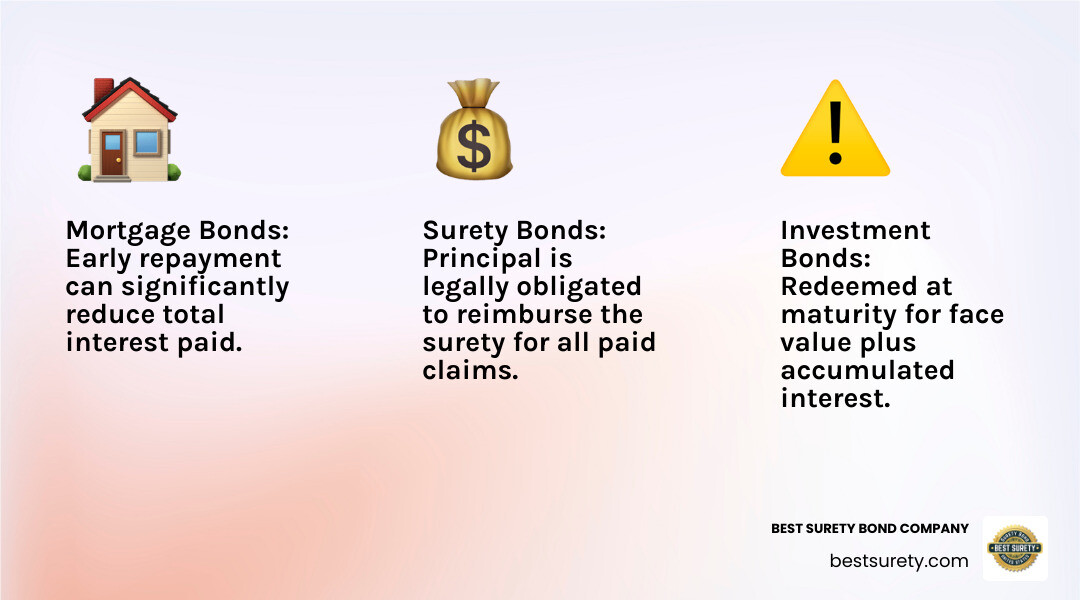
- Mortgage/Investment Bonds: Early repayment to save interest or cashing out at maturity
- Surety Bonds: Principal must reimburse surety company after a claim is paid
- U.S. Savings Bonds: Redeem through TreasuryDirect.gov for face value plus interest
- Business Impact: Surety bond payoffs can damage credit and future bonding ability
For business owners and contractors, the most critical scenario involves surety bonds – the three-party agreements that guarantee your performance on contracts or compliance with licensing requirements. When someone files a successful claim against your surety bond, you become responsible for paying back every dollar the surety company pays out, plus fees and interest.
This isn’t like insurance where you file a claim and walk away. Surety bonds work more like a line of credit – if the surety pays a claim on your behalf, you owe them that money back immediately. The financial consequences can be severe, affecting your credit, your ability to get bonded in the future, and even your personal assets.
I’m Haiko de Poel, and through my experience scaling ventures across fintech, legal services, and franchise development, I’ve seen countless businesses struggle with understanding how to pay off bond obligations and avoid costly claims. My work with companies requiring surety bonds has shown me that prevention and proper education are key to protecting your business and financial future.
Important pay off bond terms:
Financial Bonds vs. Surety Bonds: Understanding the Difference
When you search “pay off bond,” you might be thinking about your home mortgage or those savings bonds your grandmother gave you. But if you’re a business owner or contractor, there’s another type of bond that could impact your finances in ways you never expected. Let’s clear up the confusion between these very different financial instruments.
Paying Off Mortgage & Investment Bonds
Most people think of mortgage bonds when they hear about paying off bonds early. Your home loan represents one of your biggest monthly expenses, so it makes sense that you’d want to eliminate that debt as quickly as possible.
Early mortgage bond repayment can save you thousands in interest over the life of your loan. Even small extra payments make a huge difference. If you’re paying off a R1.5 million bond at 10.25% interest, adding just R1,000 extra each month could cut more than three years off your loan and save you over R400,000 in interest payments.
The key strategies for early repayment include applying windfalls like tax refunds directly to your principal, using salary increases to boost your monthly payments instead of upgrading your lifestyle, and setting specific target dates to keep yourself motivated. Every rand you put toward principal today saves you multiple rands in interest savings down the road.
Investment bonds work completely differently. When you buy an investment bond, you’re lending money to a company or government for a fixed period. These bonds pay regular interest and return your principal at the maturity date.
Cashing out investment bonds usually means either holding them until they mature or selling them on the secondary market before their maturity date. For U.S. Savings Bonds specifically, the process is straightforward – you can redeem U.S. Savings Bonds directly through TreasuryDirect.gov to receive your principal plus accumulated interest.
Understanding Surety Bonds for Your Business
Here’s where “pay off bond” takes on a completely different – and potentially expensive – meaning for business owners. Surety bonds aren’t debt instruments you pay off to save money. They’re performance guarantees that protect others from your potential failure to meet obligations.
A surety bond creates a three-party agreement between you (the principal), the entity requiring the bond (the obligee), and us as your bond provider (the surety). Unlike insurance where you file a claim and walk away, surety bonds work more like a line of credit backed by your promise to perform.
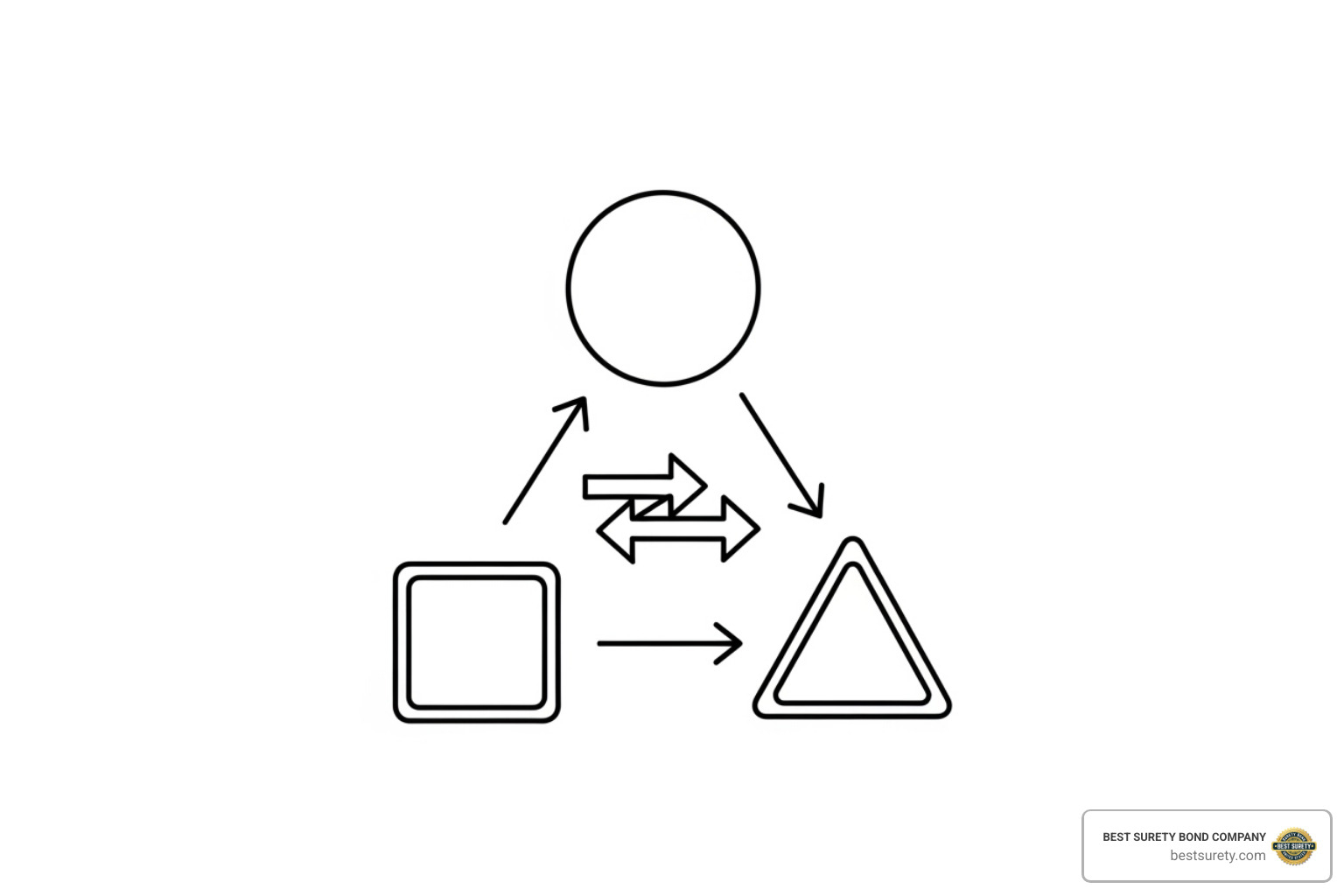
When we issue your surety bond, we’re not taking on your risk – we’re guaranteeing your performance to the obligee. If you fail to meet your obligations and someone files a successful claim, we’ll pay the damages to protect the obligee. But then you must reimburse us for every dollar we paid out, plus legal fees and expenses.
License & permit bonds are essential for many Texas businesses operating under state regulations. The Texas Department of Licensing and Regulation (TDLR) requires these bonds to ensure professionals follow ethical practices and comply with industry standards. Whether you’re running an auto dealership, working as a collection agency, or operating in another licensed profession, these bonds protect the public from potential misconduct.
Contractor bonds are critical for construction projects across Texas and nationwide. Performance bonds guarantee you’ll complete your project according to contract specifications, while payment bonds ensure subcontractors and suppliers get paid. On public projects where mechanic’s liens aren’t available, performance bonds guarantee project completion and payment bonds become the primary protection for everyone in the payment chain.
The bottom line? While paying off mortgage and investment bonds improves your financial position, being forced to pay off bond claims in the surety world means something went wrong with your business operations. That’s why understanding your obligations and maintaining good business practices is so crucial for Texas contractors and licensed professionals.
The Surety Bond Payoff: What Happens When a Claim is Made?
When we talk about pay off bond in the surety world, we’re not celebrating the completion of a mortgage or cashing in an investment. Instead, we’re dealing with a business crisis – a claim has been filed against your surety bond, and you now face serious financial consequences. This is the scenario every business owner wants to avoid, yet it’s crucial to understand what happens when things go wrong.
The Principal’s Duty to Pay Off the Bond Claim
Here’s the harsh reality: when someone files a valid claim against your surety bond and we pay out to make them whole, your obligation to us has just begun. The legal term is indemnification, and it means you must reimburse us for every dollar we paid out, plus all the associated costs, fees, and interest that come with handling the claim.
Think about it this way – we didn’t absorb your problem or make it disappear. We simply stepped in to fulfill your promise when you couldn’t. Now that we’ve protected the injured party, we need you to make us whole. It’s like having a friend cover your restaurant bill when your card gets declined – you still owe them the money, plus probably a coffee as a thank-you.
The reimbursement obligation hits your business from multiple angles. Your credit score – both personal and business – takes a major hit when a claim is paid and you fail to reimburse promptly. Future lenders will see this as a red flag, making it incredibly difficult to secure loans, lines of credit, or even basic business services.
Your personal assets might be at risk too. Many surety bonds require personal indemnification, meaning if your business can’t pay, we can come after your house, car, and other personal property. For larger bonds or newer businesses, we often require collateral upfront – and if you can’t pay off bond claims, that collateral gets seized to cover our losses.
The legal obligation is ironclad. The indemnity agreement you signed isn’t a suggestion – it’s a binding contract that gives us the right to pursue legal action if you don’t reimburse us. Court costs, attorney fees, and collection expenses just add to your growing debt.
Examples of a Surety Bond Payoff in Texas
Let me paint you some real pictures of how this plays out for Texas businesses. These aren’t hypothetical scenarios – they’re the kinds of situations our Houston-based team handles regularly.
Contractor default is probably our most common claim scenario. Picture this: a contractor in Houston lands a big commercial project and secures a performance bond through us. Halfway through the job, cash flow problems hit, and they abandon the project. The property owner files a claim, and after our investigation confirms the contractor’s default, we step in to get the project completed. We might hire a replacement contractor, cover cost overruns, and handle delays. When the dust settles, that original contractor owes us everything we spent – often hundreds of thousands of dollars. Performance bonds guarantee project completion, but when they fail, the financial consequences for the principal are severe.
Subcontractor non-payment creates another common pay off bond situation. A subcontractor on a large Texas project fails to pay their material suppliers or workers. Since it’s a public project where mechanics’ liens aren’t available, those suppliers file claims against the subcontractor’s payment bond. We pay the suppliers to keep the project moving, then turn to the subcontractor for reimbursement. The subcontractor now faces the original unpaid bills plus our fees and interest.
The Texas Department of Licensing and Regulation (TDLR) sees its share of license bond claims too. Take an auto dealer bond claim – a customer pays for a car but never receives the title, or finds the vehicle has undisclosed damage. They file a complaint with TDLR and a claim against the dealer’s bond. After investigating, we pay the customer’s damages, then the auto dealer must reimburse us. These claims might seem smaller than construction bonds, but they can still devastate a small business’s finances and reputation.
Each of these examples shows why prevention is so much better than dealing with the aftermath. When you have to pay off bond claims, you’re not just covering the original damage – you’re also paying interest, legal fees, and administrative costs that can double or triple your final bill.
How to Avoid a Claim and a Costly Bond Payoff
The smartest approach to handling a surety bond “payoff” situation? Make absolutely sure it never happens in the first place. Prevention is your best friend when it comes to protecting your business from the financial devastation and reputation damage that comes with claims.
Think of it this way: every day you operate without a claim is money in the bank. The cost of prevention is always less than the cost of paying back a surety company after they’ve covered your obligations.
For Contractors in Texas and Nationwide
As a contractor, whether you’re building custom homes in Houston’s suburbs or managing commercial projects across Texas, your reputation is everything. One claim can ripple through your business relationships for years to come.

Superior project management is your first line of defense against having to pay off bond claims. This means creating realistic timelines, building in buffer time for unexpected delays, and monitoring every aspect of your project daily. We’ve seen too many contractors get blindsided by cash flow problems or scheduling conflicts that could have been avoided with better planning.
Paying suppliers and subcontractors promptly might seem obvious, but it’s the number one cause of payment bond claims. Cash flow challenges happen to every contractor, but communication is key. If you’re going to be late with a payment, call your suppliers before they call you. Most are willing to work with you if they know what’s happening.
Contract compliance isn’t just about following the rules – it’s about protecting your bottom line. Every deviation from the agreed specifications opens the door to disputes. Read every contract thoroughly, ask questions when something isn’t clear, and document any changes in writing.
Following building codes is non-negotiable, especially here in Texas where local regulations can vary significantly between Houston, Dallas, and smaller municipalities. Stay current with code changes and invest in ongoing training for your team. A failed inspection can delay your project and strain relationships with project owners.
Clear communication throughout the project lifecycle prevents most misunderstandings from escalating into claims. Weekly progress reports, prompt responses to concerns, and transparent problem-solving go a long way toward maintaining trust.
For deeper insights into managing your contract obligations and avoiding claims, check out More info about contract bonds.
For Licensed Professionals
If your business requires a license bond, your path to avoiding a pay off bond scenario is straightforward: operate with integrity and stay compliant with your industry’s regulations.
Understanding state regulations is your foundation. Whether you’re dealing with the Texas Department of Licensing and Regulation or navigating requirements through the Nationwide Multistate Licensing System (NMLS), ignorance isn’t an excuse when claims are filed. These regulations exist to protect consumers, and violations often trigger immediate claims.
Ethical business practices might sound like common sense, but they’re your strongest shield against claims. Avoid any practices that could be seen as deceptive or fraudulent. This includes honest advertising, transparent pricing, and following through on all promises made to clients.
Maintaining accurate records becomes crucial if a dispute arises. Document everything – client interactions, transaction details, compliance efforts, and any complaints received. Good record-keeping has saved countless businesses from costly claims by providing clear evidence of proper procedures.
Addressing client complaints quickly prevents small issues from becoming big problems. When someone files a complaint with your licensing agency, they’re often looking for resolution, not punishment. A prompt, professional response can resolve most issues before they escalate to formal claims.
License renewal and continuing education requirements aren’t just bureaucratic problems – they’re your proof of ongoing competence. Operating with an expired license or missing required education can void your bond coverage and leave you personally liable for any damages.
For professionals handling client funds, fiduciary duty is paramount. Whether you’re a collection agency managing consumer payments or a mortgage broker handling earnest money, any “wrongful conversion of funds” will almost certainly trigger a claim. Keep client funds separate from business accounts and maintain detailed transaction records.
The beauty of prevention is that it’s entirely within your control. By following these practices consistently, you protect your business from the financial shock of having to pay off bond claims while building a reputation for reliability that attracts more clients and better opportunities.
Frequently Asked Questions about Surety Bond Claims
The world of surety bonds can feel overwhelming, especially when you’re trying to understand what happens when claims are involved. As a Texas-based surety company serving clients nationwide, we hear these questions daily from business owners who want to protect themselves from costly surprises.
What happens if I can’t pay off the surety company after a claim?
This is the question that keeps business owners up at night, and honestly, it should. When you can’t pay off bond obligations after we’ve paid a claim on your behalf, you’re facing a financial storm that can devastate both your business and personal life.
Legal action becomes inevitable. We’re not just going to write off thousands or potentially hundreds of thousands of dollars. Our legal team will pursue every avenue to recover the funds, including lawsuits, judgments, and wage garnishments. Collection efforts will be relentless and professional – we work with specialized agencies that know how to recover surety debts.
Your credit score takes a massive hit that can last for years. We’re talking about damage to both your business and personal credit that makes it nearly impossible to secure loans, lines of credit, or even lease equipment. Many of our Texas clients don’t realize how interconnected their business and personal financial lives are until it’s too late.
Here’s what really hurts: your inability to get bonded in the future. Once you have unpaid claims on your record, other surety companies won’t touch you. In Texas, where so many industries require bonds – from contractors in Houston to licensed professionals across the state – this effectively shuts down your ability to operate legally.
If you provided collateral when we issued your bond, we’ll seize and liquidate it immediately. Depending on your indemnity agreement, your business assets and potentially personal assets could be on the chopping block too. We’ve seen family homes, business equipment, and retirement accounts all at risk because someone couldn’t pay off bond obligations.
The bottom line? Prevention is everything. The cost of avoiding a claim is always less than dealing with the aftermath.
Is a surety bond claim the same as an insurance claim?
This misconception trips up so many business owners, and I get why. Both involve paying premiums and filing claims, but that’s where the similarities end.
Think of insurance as risk transfer. You pay your car insurance premium, get in an accident, and your insurance company pays the claim. You walk away, maybe with higher premiums next year, but you don’t owe them the money back. The premium you paid was calculated to cover expected losses across all their policyholders.
Surety bonds work as risk mitigation, not transfer. When we issue your bond, we’re essentially co-signing for your promise to perform. If you break that promise and we have to pay off bond claims to make the injured party whole, you owe us every penny back plus fees and interest.
The indemnification agreement you signed isn’t just paperwork – it’s a legally binding promise that you’ll reimburse us. We’re not absorbing your risk like an insurance company would. We’re guaranteeing your performance to a third party, but you retain full financial responsibility.
Your surety bond premium isn’t building up a fund to pay future claims. It’s primarily a fee for our underwriting services and our guarantee of your performance. Think of it more like a line of credit that you’re responsible for repaying if it gets used.
This distinction is crucial for Texas contractors and licensed professionals. When you understand that surety bonds don’t make problems go away but instead create a direct financial obligation back to you, it changes how seriously you take compliance and performance.
How much does a surety bond cost to get in the first place?
The cost question always comes up because business owners need to budget, and rightfully so. Surety bond premiums are calculated as a percentage of the total bond amount, but the rate you pay depends heavily on your specific situation.
Most premium calculations fall between 0.5% and 10% of the bond amount. A $10,000 license bond for a Texas professional might cost anywhere from $50 to $1,000 annually, depending on the risk factors we evaluate.
The bond amount itself is usually non-negotiable – it’s set by whoever requires the bond. The Texas Department of Licensing and Regulation might require a $25,000 bond for your profession, or a Houston construction project might demand a $500,000 performance bond. That amount represents the maximum we’ll pay if a claim is made.
Your credit history plays a huge role in determining your rate. Business owners with strong credit scores – typically 700 and above – qualify for our lowest rates. We’ve seen Texas contractors with excellent credit pay as little as 1% annually, while those with credit challenges might pay closer to 10%.
Our underwriting factors go beyond just credit scores. We look at your business’s financial statements, your industry experience, how long you’ve been in business, and the specific risks associated with your bond type. A Houston contractor seeking a performance bond will face different underwriting criteria than a licensed professional needing a compliance bond.
Here’s something that sets us apart: we approve 99% of applicants. Even if your credit isn’t perfect, we work hard to find solutions. We understand that Texas businesses need bonds to operate, and we’re committed to helping you get bonded quickly and affordably.
For the most accurate pricing custom to your specific situation, you can explore more info about surety bond costs and get a personalized quote that reflects your unique circumstances.
Get Bonded with Confidence in Texas and Nationwide
Understanding how to pay off bond obligations – especially the serious financial consequences of surety bond claims – is just the first step. The real power comes from partnering with the right surety company, one that helps you avoid those costly scenarios entirely while getting you bonded quickly and affordably.
At Best Surety Bond Company, we’ve built our reputation on making the bonding process straightforward for Texas businesses and companies nationwide. Whether you’re a contractor bidding on your next Houston project, a licensed professional renewing your permit bond, or a business owner navigating court requirements, we understand that speed matters and rates matter.
Our approach is simple: fast approvals that don’t keep your business waiting, low rates that respect your budget, and expert agents who actually understand the complexities of surety bonds. We’re not just licensed in Texas – we serve all 50 states, bringing local Houston expertise with national reach.
What sets us apart is our commitment to education and prevention. We don’t just sell bonds; we help you understand them. By working with clients who know how to avoid claims, we can offer better rates and faster service. It’s a win-win that has allowed us to build lasting relationships with contractors, licensed professionals, and businesses across Texas and beyond.
Licensed in all 50 states, we bring the personal touch of a Houston-based company with the capability to serve your business wherever it operates. Our team knows Texas regulations inside and out, from TDLR requirements to local Houston construction standards, but we’re equally equipped to handle bonds in New York, California, Florida, or anywhere else your business takes you.

Ready to experience the difference of working with Houston’s trusted surety experts? Let us show you how the right bond partner can protect your business from ever facing a pay off bond situation.
Get Your Free Surety Bond Quote Today!
