

Understanding Your Fiduciary Bond Requirements in Texas
Surety fiduciary bonds are court-ordered guarantees that protect beneficiaries when someone is appointed to manage another person’s assets or affairs. These bonds ensure fiduciaries fulfill their legal duties and provide financial protection against fraud, negligence, or mismanagement.
Key Facts About Surety Fiduciary Bonds:
- Purpose: Protect beneficiaries, creditors, and estates from fiduciary misconduct
- Required By: Texas courts for executors, guardians, trustees, and conservators
- Cost: Typically 0.5% to 3% of the bond amount (e.g., $750 for a $150,000 bond)
- Duration: Remains active until court releases the fiduciary from duties
- Coverage: Fraud, embezzlement, negligence, and failure to comply with court orders
Whether you’re managing a deceased person’s estate in Houston, serving as a guardian for a minor, or acting as a trustee, Texas courts often require these bonds to ensure you handle your responsibilities legally and ethically. The bond amount typically equals the value of assets under your control.
Common situations requiring fiduciary bonds include:
- Estate administration when someone dies without naming an executor
- Guardianship of minors or incapacitated adults
- Managing trust assets for beneficiaries
- Court-appointed receiverships or conservatorships
At Best Surety Bond Company, our team has experience in insurance and legal services, helping countless fiduciaries steer the complexities of surety fiduciary bonds across Texas. Our deep insights into both the legal requirements and the practical challenges you’ll face mean we can help you obtain these essential bonds quickly and efficiently.
What is a Fiduciary Bond and Why is it Crucial?
When a Texas court appoints someone to manage another person’s assets or affairs, they’re taking on enormous responsibility. That’s where surety fiduciary bonds come into play – they’re essentially a financial safety net that protects everyone involved.
Think of a fiduciary bond as a promise backed by money. It guarantees that the person handling the assets (the fiduciary) will do their job honestly and follow all the rules. If they don’t, the bond provides financial compensation to cover any losses.
These bonds aren’t just paperwork – they’re crucial protection mechanisms. When someone is managing an estate worth hundreds of thousands of dollars, or caring for a vulnerable adult’s finances, there’s real money at stake. The bond ensures that if something goes wrong due to fraud, negligence, or simple mistakes, the beneficiaries won’t be left empty-handed.
Texas courts take this protection seriously. As part of their fiduciary duty, these appointed individuals must act in the best interests of those they serve. The bond provides an extra layer of accountability that gives everyone peace of mind.
Who is Considered a Fiduciary?
A fiduciary is someone who has agreed to act in another person’s best interests, especially when it comes to money and property. In Texas, these roles are typically court-appointed and come with significant legal responsibilities.
The most common fiduciaries include executors who carry out the wishes in someone’s will, and administrators who handle estates when there’s no will or named executor. Guardians step in to manage both personal and financial matters for minors or incapacitated adults, while conservators focus specifically on the financial side of things.
Trustees manage assets held in trust for beneficiaries, and personal representatives serve as a catch-all term for executors and administrators in probate court. Each of these roles involves handling someone else’s money or property, which is why Texas courts often require bonds.
The common thread among all these positions is trust. Whether you’re managing a deceased person’s estate in Houston or serving as a guardian for an elderly parent, you’re holding other people’s financial futures in your hands.
Key Benefits of a Fiduciary Bond
Surety fiduciary bonds offer protection that goes far beyond basic legal compliance. The most obvious benefit is financial protection – if a fiduciary steals money or makes costly mistakes, the bond covers the losses up to the bond amount. This means beneficiaries aren’t left scrambling to recover their inheritance through lengthy court battles.
For fiduciaries themselves, bonds provide legal compliance assurance. Texas courts mandate these bonds for good reason, and having one in place demonstrates that you’re meeting all legal requirements. This protects you from potential legal complications down the road.
The risk mitigation aspect can’t be overstated. Managing someone else’s assets is inherently risky – even honest mistakes can lead to significant financial losses. The bond provides a safety net that protects both the fiduciary and the beneficiaries.
Perhaps most importantly, fiduciary bonds create trust and assurance in emotionally difficult situations. When families are grieving or dealing with a loved one’s incapacity, knowing there’s financial protection in place provides invaluable peace of mind for beneficiaries.
Since these bonds are mandated by Texas courts in most fiduciary situations, they’re not optional – they’re a necessary part of fulfilling your legal duties. The good news is that getting bonded is typically straightforward and affordable, especially when you work with experienced providers who understand Texas requirements.
Exploring the Common Types of Fiduciary Bonds
When Texas courts require surety fiduciary bonds, they’re not using a one-size-fits-all approach. Different fiduciary roles need different types of protection, and understanding which bond you need can save you time and ensure you meet all legal requirements. Whether you’re settling an estate in Houston or managing a trust fund, the right bond provides crucial protection for everyone involved.
The beauty of working with an experienced surety provider is that we help identify exactly which bond matches your situation. Each type serves the same fundamental purpose – protecting beneficiaries from potential misconduct – but the specific requirements and coverage can vary significantly based on your role and responsibilities.

Bonds for Estate Administration
Estate administration bonds are the workhorses of the surety fiduciary bonds world. These bonds come into play whenever someone passes away and their assets need proper management and distribution. Texas probate courts take these requirements seriously, often setting bond amounts at one to two times the estate’s total value.
Executor bonds protect estates when someone dies with a valid will. If you’ve been named as an executor, this bond guarantees you’ll follow the deceased person’s wishes exactly as written. You’ll need to pay debts, handle taxes, and distribute assets to the right people – all while the bond provides financial protection if something goes wrong.
Administrator bonds become necessary when someone dies without a will or without naming an executor. Courts appoint an administrator to handle everything, and since there’s no will to guide the process, these bonds often face stricter requirements. The administrator must follow Texas intestacy laws, which can be complex when determining who gets what.
Personal representative bonds serve as an umbrella term covering both executors and administrators. Whether you’re working with a will or without one, you’re acting as the personal representative of the deceased person’s estate. This bond ensures you handle everything properly – from paying final bills to distributing inheritances according to legal requirements.
Bonds for Guardianship and Conservatorship
Protecting vulnerable individuals requires special attention, and these bonds provide essential safeguards for people who can’t manage their own affairs. Texas courts are particularly careful about these appointments because they involve such personal responsibility.
A guardianship bond comes into play when courts appoint someone to care for a minor or an incapacitated adult. This isn’t just about managing money – guardians often make decisions about healthcare, living arrangements, and daily care. The bond protects the ward’s financial interests while ensuring their guardian acts in their best interest at all times.
Conservator bonds focus specifically on financial management for adults who’ve been declared incapacitated. If you’re appointed as a conservator, you’re handling someone’s money, investments, and property decisions. This bond protects against financial exploitation and ensures every dollar gets managed responsibly and ethically.
Both types of bonds recognize that these roles involve tremendous trust. When someone can’t protect themselves, the bond steps in to provide that protection on their behalf.
Other Common Fiduciary Bonds
Beyond estates and guardianships, several other situations require surety fiduciary bonds in Texas. These specialized bonds cover unique circumstances where courts need extra assurance about asset management.
Trustee bonds protect trust beneficiaries when someone manages trust assets. Even if the trust document doesn’t require a bond, courts sometimes mandate one if they have concerns about the trustee’s ability to handle the responsibility properly.
Receiver bonds come up during business disputes or bankruptcy proceedings. When courts appoint someone to take control of a company or individual’s assets temporarily, this bond ensures they’ll preserve everything properly for creditors or other interested parties.
Custodian bonds protect minors’ assets under laws like the Uniform Transfers to Minors Act. If you’re managing money or property for a child until they reach adulthood, this bond guarantees you’ll handle everything responsibly until they can take control themselves.
Our extensive carrier network means we can provide fast approval and competitive rates for any type of fiduciary bond required in Texas. Whether you need same-day issuance in Houston or have questions about specific court requirements, we’re here to help you get bonded quickly and affordably.
The Practical Guide to Obtaining Surety Fiduciary Bonds
Getting your surety fiduciary bonds doesn’t have to be complicated or time-consuming. At Best Surety Bond Company, we’ve designed our process to be as smooth as possible, especially for our Texas clients. With fast approval times, competitive rates, and our streamlined online application system, you can often get bonded the same day you apply.
Whether you’re in Houston, Dallas, or anywhere else in Texas, we understand the specific requirements courts expect and work diligently to meet them quickly and affordably.
How to Apply for a Fiduciary Bond in Texas
Applying for a fiduciary bond in Texas is straightforward when you know what to expect. We’ve helped thousands of fiduciaries steer this process, and our experience shows in how efficiently we handle each application.
Starting your application is as simple as contacting us online or by phone. We’re licensed in all 50 states with deep expertise in Texas probate and guardianship requirements. Our team understands the nuances of different Texas counties and can guide you through the specific requirements your court may have.
The application itself requires some basic information about you, the estate or assets you’ll manage, and the court order appointing you. Don’t worry if you’re not sure what documents you need – we’ll walk you through exactly what’s required for your situation.
Required documentation typically includes copies of your court order and any related legal documents that establish your fiduciary role. You’ll also need to provide an estate inventory or schedule of assets showing the value of what you’ll be managing. For example, if you’re administering a $1 million estate, the bond amount would typically be set at or above this value.
We’ll also need a personal financial statement that outlines your assets, liabilities, and credit history. This helps our underwriters assess your financial stability. For probate bonds, we sometimes request your attorney’s information as well, which can actually help streamline the approval process.
Our underwriting team reviews everything quickly – typically within 2-4 hours once we have all necessary paperwork. We’re looking at your character, stability, and financial security to determine the appropriate rate for your bond.
Once approved, you’ll pay the premium and we’ll issue your bond immediately. Many of our clients receive their bonds the same day they apply, allowing them to file with the court without delay.
What Factors Influence the Cost of Surety Fiduciary Bonds?
The cost of your surety fiduciary bond – called the premium – is calculated as a percentage of the total bond amount. Most fiduciary bonds cost between 0.5% to 3% of the bond’s value. So if you need a $150,000 bond, you might pay anywhere from $750 to $4,500, though most of our clients pay closer to the lower end of that range.
The bond amount itself is the biggest factor in determining your premium. This amount is usually set by the court based on the value of assets you’ll be managing. Texas courts often require the bond to equal or exceed the estate’s total value to ensure adequate protection for beneficiaries.
Your credit history plays a significant role in the rate you’ll receive. Fiduciaries with strong credit scores often qualify for our lowest rates – sometimes as low as 0.5% of the bond amount. We review your credit score, payment history, and overall financial picture to determine your risk profile.
Financial stability beyond just credit scores matters too. Our underwriters look at your personal financial statements, employment history, and overall ability to meet the bond’s obligations. A stable financial profile typically translates to better rates.
The complexity of your case can also influence pricing. Estates with multiple beneficiaries, ongoing business operations, or significant debts may present higher risks. Similarly, guardianships involving substantial assets or complex family situations might require additional underwriting review.
Geographic factors occasionally come into play, though our Texas expertise usually works in your favor. We understand local court requirements and can often structure bonds more efficiently than out-of-state providers.
The good news is that we work hard to find you the most affordable rate possible. Our extensive carrier network means we can shop your bond with multiple surety companies to find the best premium. Many of our Texas clients are pleasantly surprised by how reasonable their bond costs turn out to be, especially when they factor in the peace of mind and legal compliance the bond provides.
The Legal Landscape: Claims, Compliance, and Waivers
Understanding the legal framework surrounding surety fiduciary bonds is essential for anyone serving in a fiduciary role in Texas. These bonds operate within a carefully structured three-party agreement designed to protect beneficiaries while ensuring fiduciaries meet their court-mandated obligations under state law.

How a Fiduciary Bond Works and the Claims Process
Think of a surety fiduciary bond as a safety net with teeth. When you’re appointed to manage someone else’s assets, this bond serves as your promise to act with integrity and follow the law. But unlike a simple promise, it comes with real financial consequences if things go wrong.
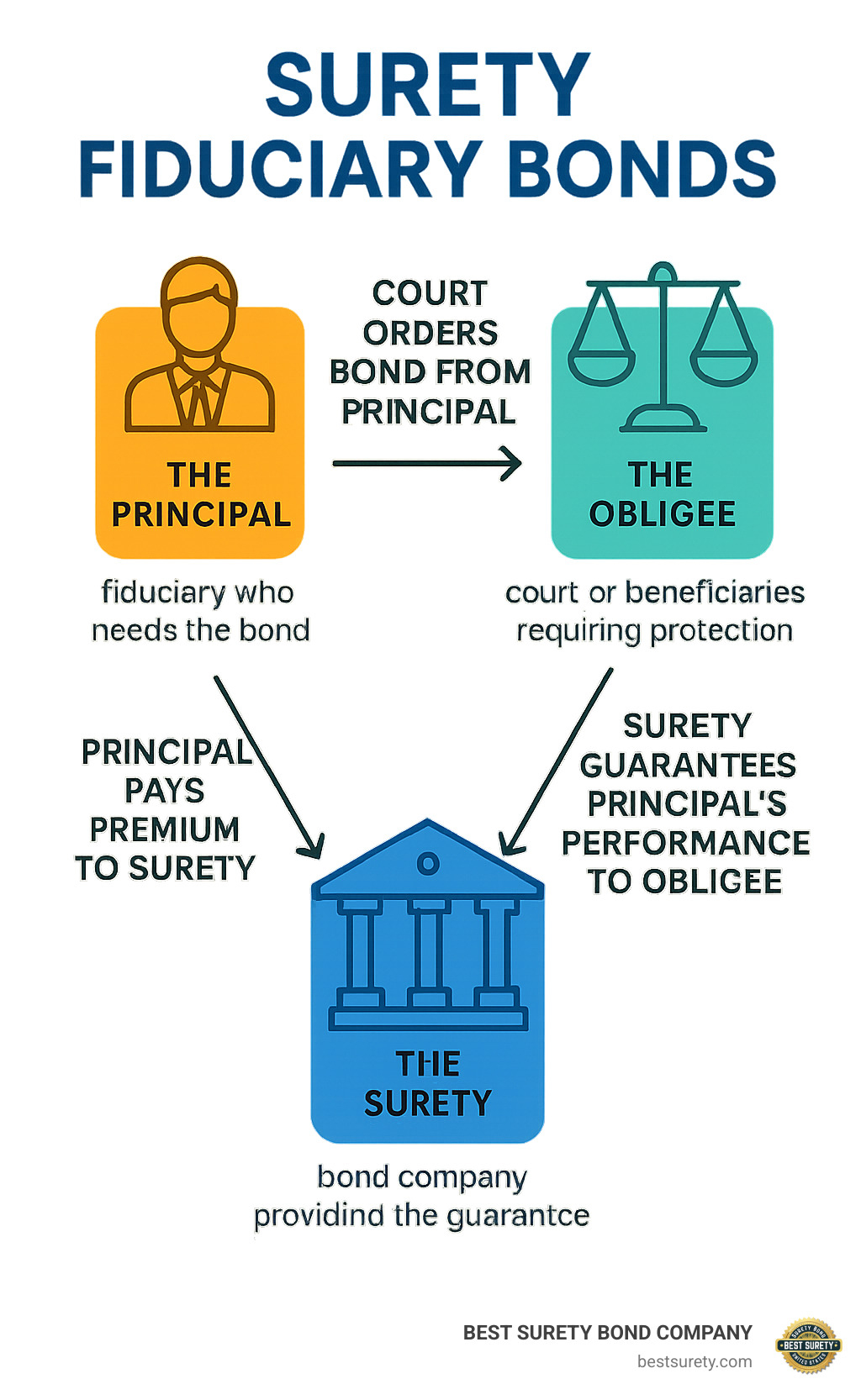
The bond creates a surety guarantee between three parties: you (the fiduciary), the court or beneficiaries (who need protection), and the surety company (who backs your promise). When everything goes smoothly, the bond quietly does its job in the background. But when problems arise, the claims process springs into action.
Filing a claim typically begins when beneficiaries or the court find that a fiduciary has breached their duties. This might involve mismanaging assets, failing to distribute funds properly, or acting outside their legal authority. The affected parties must provide solid evidence of the misconduct or failure to perform duties.
Once a claim is filed, we conduct a thorough investigation of the allegations. Our team examines the facts, reviews all relevant documentation, and determines whether the claim has merit. This process protects both the beneficiaries and prevents frivolous claims from moving forward.
If the investigation confirms valid misconduct, the surety company pays out to beneficiaries up to the bond’s coverage limit. This compensation helps recover financial losses and provides the protection the bond was designed to offer.
Here’s the crucial part many fiduciaries don’t fully grasp: the fiduciary’s repayment obligation means you’re ultimately responsible for any claims paid out. Unlike insurance that transfers risk away from you, a surety bond is essentially a credit instrument. If we pay a claim on your behalf, you must repay us for those losses. Most executors sign a personal indemnity agreement acknowledging this responsibility.
Understanding your fiduciary responsibilities is crucial to avoiding claims altogether. The IRS offers valuable guidance on fiduciary responsibilities and potential claims that can help you stay compliant and protect both yourself and the beneficiaries you serve.
Can a Fiduciary Bond Be Waived?
Yes, surety fiduciary bonds can sometimes be waived, but this doesn’t happen automatically. Texas courts have specific conditions under which they might allow a fiduciary to serve without posting a bond, though they’re generally cautious about removing this protection.
Will provisions represent the most common path to a bond waiver. If the deceased person explicitly stated in their will that the executor should not be required to post a bond, courts often honor this request. However, even with such language, judges retain discretion to require a bond if they have concerns about the estate’s complexity or the fiduciary’s qualifications.
Beneficiary agreement offers another route to waiver. When all beneficiaries unanimously agree to waive the bond requirement, courts may consider this request. But this becomes complicated when minor beneficiaries are involved, as courts are particularly protective of children’s interests and may still require bonding despite adult beneficiaries’ wishes.
Court discretion plays the deciding role in all waiver requests. Judges consider factors like the fiduciary’s relationship to the deceased, their financial standing, and the nature of the assets being managed. Corporate fiduciaries like banks or trust companies typically don’t need bonds due to their existing regulatory oversight and insurance coverage.
However, waiving a bond carries significant risks. Without a surety fiduciary bond in place, the estate and beneficiaries lose their financial safety net against potential misconduct. If problems arise later, recovering losses becomes a lengthy and expensive legal battle with no guarantee of success.
The legal implications of failing to bond when required can be severe. Fiduciaries may face removal from their position, personal liability for any losses, and in cases involving fraud or embezzlement, potential criminal charges. We always recommend consulting with a qualified Texas attorney before considering a bond waiver.
Fiduciary Bonds vs. Other Types of Bonds
Understanding how surety fiduciary bonds compare to other types of bonds helps clarify their unique role in protecting estates and beneficiaries. While all surety bonds provide guarantees, they serve different purposes and protect different parties.
| Feature | Fiduciary Bond | Fidelity Bond | Performance Bond |
|---|---|---|---|
| Purpose | Protects beneficiaries from fiduciary misconduct | Protects employers from employee dishonesty | Guarantees completion of contracted work |
| Who is Protected | Estates, trusts, beneficiaries, courts | Employers and business owners | Project owners and clients |
| Who Pays for Claims | Fiduciary must reimburse surety company | Employer typically pays premium, coverage protects them | Contractor must reimburse surety company |
| Risk Transfer | No – fiduciary remains liable for repayment | Yes – transfers employee theft risk to insurer | No – contractor remains liable for repayment |
The key difference lies in risk transfer versus guarantee. Fidelity bonds function more like insurance, transferring the risk of employee theft away from the employer. In contrast, fiduciary bonds and performance bonds work as credit instruments, where the principal (fiduciary or contractor) ultimately remains responsible for any claims paid.
Surety fiduciary bonds also differ from other court bonds in their duration and scope. While some court bonds cover specific legal proceedings, fiduciary bonds typically remain in effect until the court formally releases the fiduciary from their duties. This might take months or even years, depending on the complexity of the estate or trust administration.
For fiduciaries in Texas, understanding these distinctions helps set proper expectations about their responsibilities and the protection the bond provides. We work closely with our clients to ensure they fully understand both the benefits and obligations that come with their surety fiduciary bonds.
