
Why Understanding Bonded vs. Insured Matters for Your Business

What is the difference between insured and bonded? This question confuses thousands of business owners every year, yet the answer is surprisingly simple once you break it down.
Quick Answer:
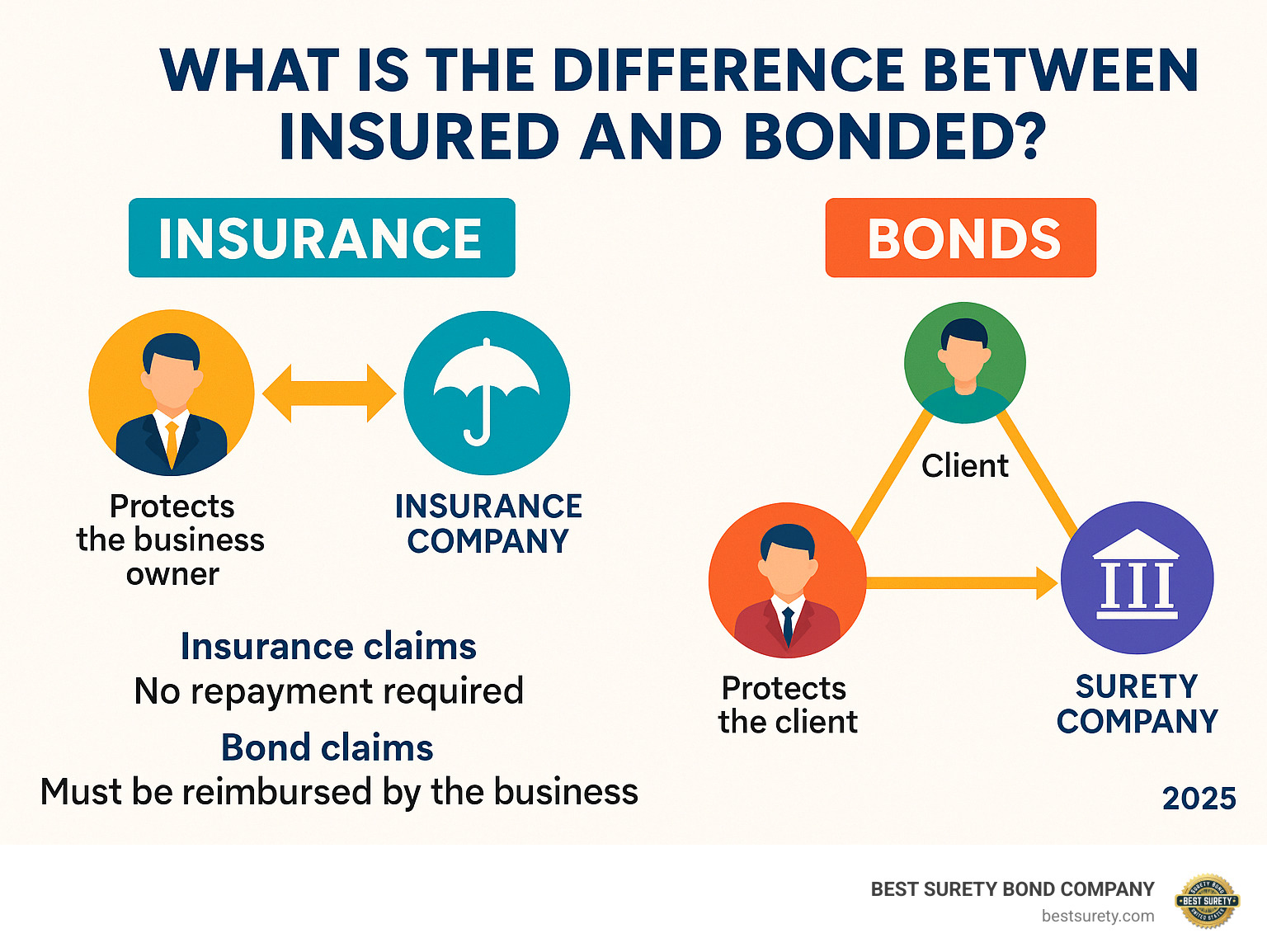
- Insurance protects YOU (the business owner) from financial losses
- A bond protects YOUR CLIENT from your failure to meet obligations
- Insurance = Two parties (you + insurance company)
- Bond = Three parties (you + client + surety company)
- Insurance claims = No repayment required from you
- Bond claims = You must repay the surety company
As one industry expert noted: “As the largest bonding brokerage in the U.S., we hear this question regularly.” The confusion is understandable – both provide financial protection, but they work in completely opposite directions.
Insurance is like a safety net for your business. If someone gets hurt on your job site or your equipment damages property, your insurance company pays the claim. You don’t have to pay them back.
A bond is like a promise to your client. If you fail to complete work or follow regulations, the bond pays your client for their losses. But here’s the catch – you have to pay back every penny to the bond company.
This distinction matters because many clients and government agencies require you to be “bonded and insured” before they’ll hire you. In Texas alone, contractors, auto dealers, and freight brokers all face these requirements regularly.
I’m Haiko de Poel, and I’ve helped scale multiple insurance and financial service companies over two decades, including work with surety bonds and business protection strategies. Understanding what is the difference between insured and bonded has been crucial for helping businesses steer complex compliance requirements while protecting their bottom line.
What Does It Mean to Be Insured?
Being “insured” means you’ve created a financial safety net specifically designed to protect your business when things go wrong. It’s essentially a deal where you transfer your financial risks to an insurance company – and trust me, it’s one of the smartest investments you can make as a business owner.
Here’s how it works: You pay regular premiums to an insurance company, and in return, they promise to cover certain types of losses that could otherwise devastate your business. When we’re talking about what is the difference between insured and bonded, this is the key distinction – insurance protects you, not your clients.

How Business Insurance Works
Business insurance operates as a two-party contract between you (the policyholder) and your insurance provider. You’re essentially joining a large pool of businesses who all pay premiums into a shared fund. When someone in that pool experiences a covered loss, the insurance company pays the claim from this collective pot of money.
The beautiful part? You never have to pay the insurance company back when they cover a claim. If a customer slips and falls at your Houston office, your general liability insurance handles their medical bills and any legal costs. If a hailstorm damages your equipment in Dallas, your property insurance covers the repairs. The financial burden shifts completely off your shoulders.
This system works because insurance companies are experts at calculating risk across thousands of businesses. They know that while some will file claims, many others won’t – allowing them to spread the costs and keep premiums affordable for everyone.
Common Types of Business Insurance
Every Texas business needs different types of protection, but there are some core policies that most companies should consider. General Liability Insurance serves as your foundation – it protects you when someone gets hurt on your property or your work accidentally damages someone else’s stuff.
Professional Liability Insurance (also called Errors & Omissions) becomes crucial if you provide advice or professional services. Say you’re a consultant in Austin and give advice that costs a client money – this coverage has your back.
If you have employees, Workers’ Compensation Insurance isn’t just smart, it’s required in most situations. It covers medical bills and lost wages when team members get injured on the job, protecting both them and you from potential lawsuits.
Commercial Auto Insurance rounds out the essentials if your business uses vehicles. Whether it’s a delivery truck in San Antonio or a service van making calls around Houston, this coverage protects you from accident-related costs.
The key thing to remember is that all these insurance types exist to protect your business from unexpected financial hits. They’re your shield against the costly surprises that could otherwise put you out of business.
What Does It Mean to Be Bonded?
Here’s where things get interesting – and where many business owners get confused about what is the difference between insured and bonded. Being “bonded” flips the script entirely. Instead of protecting your business like insurance does, a bond is all about protecting someone else – typically your client, a government agency, or the general public.
Think of a bond as a financial promise or guarantee. When you’re bonded, you’re essentially saying to your client: “Don’t worry – if I mess up, fail to complete the work, or don’t follow the rules, there’s money set aside to make things right for you.”

How a Surety Bond Works
The biggest difference between insurance and bonding becomes crystal clear when you look at the players involved. While insurance is a cozy two-party relationship between you and your insurance company, a surety bond is a three-party agreement that brings everyone to the table.
Here’s who’s involved in every bond:
The Principal – that’s you and your business. You’re the one buying the bond and making promises about your performance or compliance.
The Obligee – this is the party who requires the bond and benefits from its protection. It could be your client who wants assurance you’ll finish their project, or a state agency that needs to know you’ll follow licensing regulations.
The Surety – this is the bonding company (like us at BEST SURETY BOND COMPANY!) that issues the bond and backs up your promise with financial muscle.
But here’s the kicker that catches many business owners off guard: if a claim is paid out on your bond, you have to pay back every penny to the surety company. Unlike insurance where claims come from a shared pool and you never repay them, a bond works more like a line of credit. The surety pays your client first, then comes knocking on your door for reimbursement.
This setup means bonds are designed to prevent claims rather than simply pay them. The goal is for you to fulfill your obligations so no one ever needs to file a claim in the first place. More info about our surety bond services.
Common Types of Surety Bonds
Texas businesses encounter surety bonds in dozens of different situations, but some types are far more common than others. Understanding these can help you prepare for when clients or regulators ask you to get bonded.
License & Permit Bonds are probably the most widespread requirement. If you’re starting a business in Texas that requires professional licensing – whether you’re an auto dealer in Houston, a mortgage broker in Dallas, or even a notary public – chances are good you’ll need one of these bonds. They guarantee you’ll follow all the rules and regulations that come with your license.
Contractor Bonds dominate the construction industry, and they come in several flavors. Performance Bonds promise you’ll complete a project according to the contract specifications – no cutting corners or walking away halfway through. Payment Bonds guarantee you’ll pay your subcontractors and suppliers (a huge relief for everyone working on your project). Bid Bonds show you’re serious when submitting a proposal and will actually sign the contract if selected.
Court Bonds pop up in legal situations where a judge needs financial assurance that someone will fulfill a court-ordered duty. Fidelity Bonds are interesting because they’re actually a type of insurance that protects your business from employee theft – they’re often lumped in with surety bonds even though they work differently.
The Small Business Administration recognizes how important bonding can be for small contractors competing against larger companies, which is why they guarantee certain types of bonds to help level the playing field. The Small Business Administration guarantees some bonds.
What is the Difference Between Insured and Bonded?
Now that we’ve covered both concepts, let’s put them side by side to really understand what is the difference between insured and bonded. The primary distinction comes down to who receives protection and what happens when you need to make a claim.
| Feature | Insured (Insurance) | Bonded (Surety Bond) |
|---|---|---|
| Who is Protected | The policyholder (your business) | A third party (your client, the public, government) |
| Number of Parties | Two (Policyholder, Insurer) | Three (Principal, Obligee, Surety) |
| Primary Purpose | Transfers risk from policyholder to insurer | Guarantees performance or compliance of principal to obligee |
| Financial Responsibility for Claims | Insurer pays, policyholder does NOT repay insurer | Surety pays, but principal MUST reimburse surety |
| Premiums | Paid to pool funds for potential future claims | Paid for underwriting costs and assumption of risk (like a line of credit) |
| Claim Process | Insurer investigates and pays covered losses directly to policyholder or third party | Obligee files claim with surety; surety pays obligee; principal repays surety |
Who is Protected: The Core Difference
Here’s the simplest way to remember what is the difference between insured and bonded: it’s all about direction of protection.
Insurance protects you – the business owner. When something goes wrong that’s covered by your policy, your insurance company steps up to cover your losses. Whether it’s a slip-and-fall lawsuit, equipment damage, or professional liability claim, insurance is your financial safety net.
A bond protects them – your clients, the government, or the public. It’s essentially a promise that you’ll do what you said you’d do. If you don’t follow through on your obligations, the bond ensures the other party doesn’t lose money because of your failure.
Think of it this way: if a storm damages your office, insurance covers your repair costs. But if you fail to complete a client’s project as promised, your bond covers their financial losses from your non-performance.
How Claims and Payouts Work
The claims process reveals the most significant difference between these two forms of protection, and it’s where many business owners get surprised.
Insurance claims work like a traditional safety net. When you file a claim, your insurance company investigates and pays out from the pool of premiums collected from all policyholders. You don’t have to pay them back – that’s what you’ve been paying premiums for all along. The financial burden stops with the insurance company.
Bond claims work more like a credit arrangement. If someone files a valid claim against your bond, the surety company will pay the injured party to make them whole. But here’s the crucial part: you must then reimburse the surety company for every dollar they paid out. It’s essentially a loan that gets extended on your behalf, and you’re legally obligated to pay it back with interest.
This difference in financial responsibility explains why bond claims can be so devastating. Not only do you face the reputational damage of failing to meet your obligations, but you also face the full financial cost of making it right. Studies show that reputational damage alone can cost businesses an average of $50,000, and that’s before factoring in the direct reimbursement costs.
Understanding Premiums and Costs
The way premiums are calculated also reflects these fundamental differences in purpose and risk.
Insurance premiums are based on shared risk across many policyholders. The insurance company looks at historical data, assesses the likelihood of claims in your industry, and sets rates that allow them to pay claims from the collective premium pool. Your individual financial situation matters less than the overall risk profile of your business type.
Surety bond premiums work more like qualifying for a line of credit. The cost typically ranges from 1% to 15% of your bond amount annually, depending heavily on your business’s financial stability and credit score. A contractor needing a $50,000 performance bond might pay anywhere from $500 to $7,500 per year, with creditworthy businesses paying toward the lower end of that range.
Your personal and business credit score plays a huge role in bond pricing because the surety company knows they’ll need to collect from you if a claim occurs. They’re essentially underwriting your ability to pay them back, not just your likelihood of having a claim.
For Texas businesses, especially in Houston and Dallas where construction and licensing requirements are common, understanding these cost differences can significantly impact your budget planning and business strategy.
Do You Need to Be Bonded, Insured, or Both?
Here’s the truth that most business owners find eventually: you probably need both. While understanding what is the difference between insured and bonded is important, the real question isn’t choosing one over the other – it’s about creating comprehensive protection that covers all your bases.
Think of it this way: insurance is your personal safety net, while bonding is your professional promise to clients. Together, they create a powerful combination that not only protects your business but also opens doors to opportunities you might otherwise miss.
When Being Bonded is Required
Sometimes the decision is made for you. In Texas and across the country, certain situations absolutely require surety bonds – it’s not optional, it’s the law.
Licensing requirements are probably the most common reason businesses need bonds. If you’re a contractor in Houston, an auto dealer in Dallas, or a freight broker anywhere in Texas, chances are your professional license requires a surety bond. The state isn’t trying to make your life difficult – they’re protecting consumers by ensuring licensed professionals follow the rules and operate ethically.
Government contracts are another area where bonds are non-negotiable. Whether you’re bidding on a city project in Austin or a federal contract, you’ll need performance bonds, payment bonds, and sometimes bid bonds too. These requirements exist because public funds are involved, and taxpayers deserve protection.
But here’s something interesting: even when bonds aren’t legally required, client demands often make them practically necessary. I’ve seen contractors lose out on lucrative residential projects simply because they couldn’t show proof of bonding. Homeowners investing $50,000 in a kitchen renovation want that extra layer of security, and they’ll choose the contractor who can provide it.
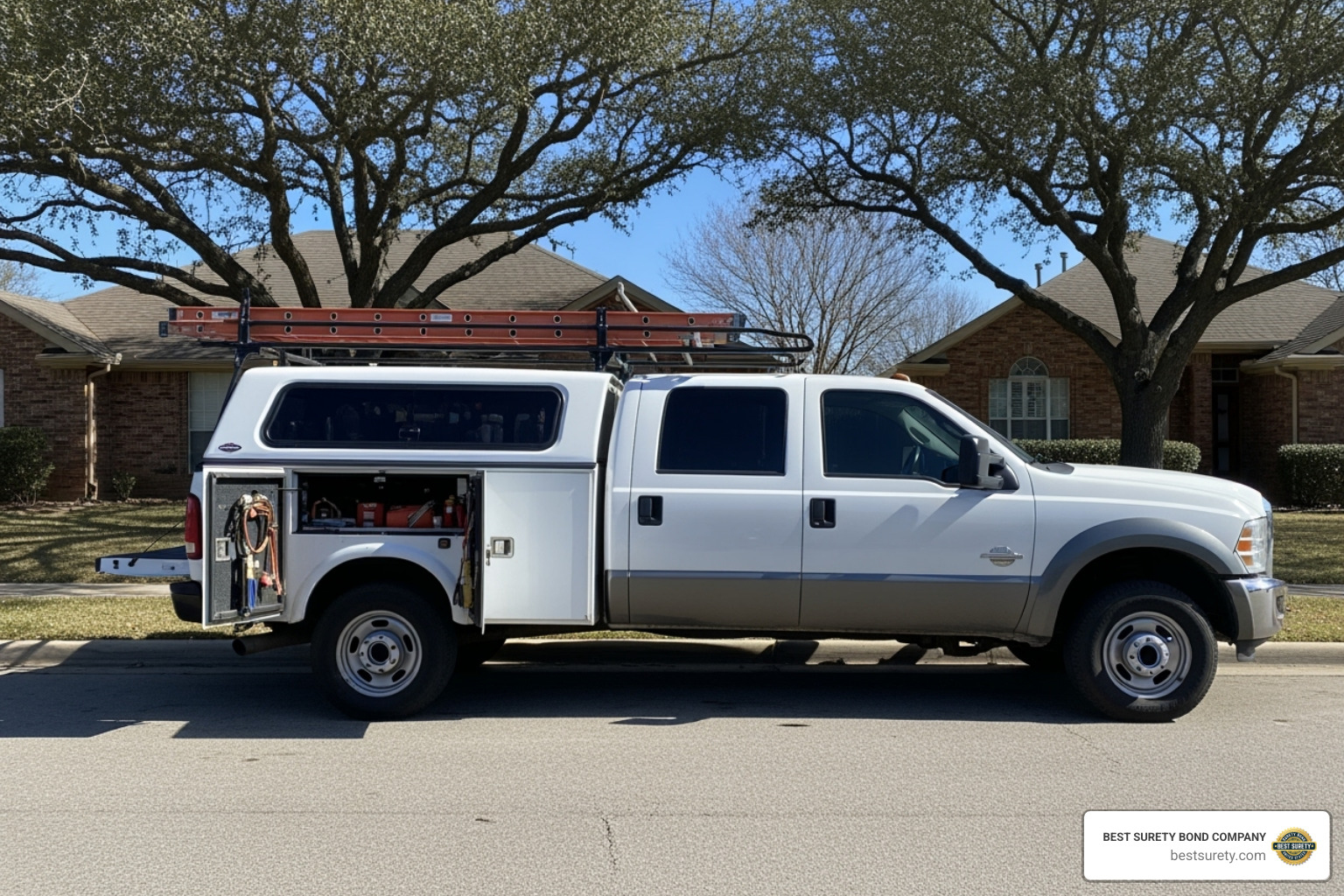
This is why you see those “Licensed, Bonded & Insured” signs on trucks all over Texas – it’s become a mark of professionalism that clients actively look for.
Why You Still Need Insurance
Now, here’s where some business owners make a costly mistake. They think being bonded means they’re fully protected. Unfortunately, that’s not how it works.
Bonds protect your clients from your failures, but they don’t protect you from the everyday risks of running a business. What is the difference between insured and bonded becomes crystal clear when you consider what happens if a customer slips and falls at your office, or if your delivery truck gets hit by a storm.
Insurance covers accidents that happen during normal business operations. Your general liability policy kicks in when someone gets hurt on your property or when your work accidentally damages something. A bond won’t help you here – this is purely about protecting your business assets.
Employee injuries are another area where insurance is essential. Workers’ compensation isn’t optional in Texas for most businesses with employees, and for good reason. If one of your team members gets hurt on the job, workers’ comp covers their medical bills and lost wages while protecting you from potential lawsuits.
There are also gaps in bond coverage that insurance fills perfectly. Your contractor’s performance bond might guarantee you’ll complete a project, but it won’t cover you if a client sues for negligence or if your professional advice leads to financial losses. That’s where professional liability insurance becomes invaluable.
The Ultimate Guide to what is the difference between insured and bonded for Texas Businesses
For Texas businesses, especially in competitive markets like Houston, Dallas, and Austin, being both bonded and insured isn’t just about compliance – it’s about building client trust and gaining a competitive edge.
When potential clients see that you’re fully protected, it immediately sets you apart from competitors who might be cutting corners. It signals that you’re serious about your business and committed to professional standards. This is particularly important in industries like construction, where clients are making significant investments.
The competitive advantage can’t be overstated. In a market where multiple contractors might bid on the same project, being licensed, bonded, and insured often becomes the deciding factor. It shows you’re prepared for anything and that working with you carries minimal risk.
Most importantly, having both types of protection ensures you’re meeting all legal and contractual obligations while providing comprehensive protection for your business. You’re covered whether the issue comes from your side (accidents, property damage) or from client concerns about your performance.
At BEST SURETY BOND COMPANY, we’ve helped thousands of Texas businesses steer these requirements quickly and affordably. We understand that every day without proper bonding could mean missed opportunities, which is why we focus on fast approvals and competitive rates. Whether you’re in Houston’s busy construction market or expanding your business across Texas, we’re here to help you get bonded and stay competitive.
Frequently Asked Questions about Bonds and Insurance
Let’s tackle some of the most common questions we hear from business owners trying to understand what is the difference between insured and bonded. These answers will help clarify any remaining confusion and guide your decision-making process.
How much does it cost to get a surety bond in Texas?
The cost of getting a surety bond in Texas depends on several factors, but here’s what you can expect. Most surety bonds are priced as a percentage of the total bond amount, typically ranging from 1% to 15% annually. This percentage isn’t random – it’s carefully calculated by underwriters who assess the risk of having to pay out a claim on your behalf.
Your credit score plays a huge role in determining your rate. Business owners with excellent credit might pay just 1-3% of the bond amount, while those with credit challenges could see rates closer to 10-15%. Your business’s financial statements, industry experience, and the specific type of bond also factor into the equation.
Here’s a real-world example: if you need a $25,000 contractor license bond, you might pay anywhere from $250 to $1,000 annually depending on your creditworthiness and risk profile. The good news? We specialize in offering fast online quotes and work hard to secure the lowest possible rates for Texas businesses, whether you’re in Houston, Dallas, Austin, or anywhere else in the Lone Star State.
What is the primary difference between a fidelity bond and a surety bond?
This question trips up a lot of business owners, and honestly, it’s understandable! The terminology can be confusing because both have “bond” in the name, but they work very differently.
A fidelity bond is actually a type of insurance that protects your business from financial losses caused by dishonest acts of your own employees. Think employee theft, embezzlement, or fraud committed by someone on your payroll. If your bookkeeper steals $10,000 from your company account, a fidelity bond would reimburse you for that loss. It’s protecting your business, just like other insurance policies.
A surety bond protects a third party – your client, a government agency, or the public – from your business’s failure to meet its obligations. If you don’t complete a project as promised and a claim is filed, the surety pays your client for their damages. But here’s the critical difference: you must then reimburse the surety company for every penny they paid out.
So remember: fidelity bonds are insurance for employee dishonesty, while surety bonds are guarantees of your performance to others.
What is the simplest way to understand what is the difference between insured and bonded?
After helping thousands of Texas business owners steer this question, I’ve found the simplest explanation is this:
Insurance is for your unexpected losses. When accidents happen, property gets damaged, or someone gets hurt, your insurance steps in to protect your business from financial ruin. You pay premiums, and if something goes wrong, the insurance company covers the costs. You don’t pay them back.
A bond is a guarantee for your client’s protection that you will fulfill your promise. It’s essentially a financial promise that ensures a third party won’t suffer a loss due to your non-performance, failure to follow regulations, or dishonesty. If you break that promise and a claim gets paid, you’re on the hook to reimburse the bond company.
Think of it this way: insurance protects you from the world, while bonds protect the world from you. Both are valuable, but they serve completely different purposes. That’s why many successful businesses in Texas choose to be both bonded and insured – it provides comprehensive protection and builds tremendous trust with clients who see that “Licensed, Bonded & Insured” sign.
Get the Right Protection for Your Business Today
Now that you understand what is the difference between insured and bonded, you’re equipped to make smart decisions about protecting your business. Remember the core distinction: insurance shields your business from unexpected financial losses, while bonds guarantee to your clients that you’ll fulfill your promises and meet your obligations.
Both forms of protection work together to create a comprehensive safety net. Your insurance covers accidents, property damage, and liability claims that could devastate your business finances. Your bond builds client trust and ensures you can bid on bigger projects, especially those government contracts that require bonded contractors.
For Texas businesses competing in markets like Houston, Dallas, and Austin, being both bonded and insured isn’t just smart business – it’s often the difference between landing that next big contract and watching it go to a competitor. When clients see you’re fully protected, they know they’re working with a professional who takes their obligations seriously.
At BEST SURETY BOND COMPANY, we’ve made getting bonded as simple as possible. We offer fast approvals – often the same day – and our low rates help keep your overhead manageable. Whether you need a license bond to maintain your professional credentials or a performance bond to secure that next construction project, we’re here to help.
Our team understands the unique requirements for businesses across Texas, and we’re licensed to serve clients nationwide. We’ve bonded over 10,000 businesses because we focus on what matters most: speed, affordability, and reliable service.
Don’t let confusion about bonds and insurance hold your business back. Get the protection you need to compete confidently and grow your client base.
Get Your Free Surety Bond Quote Now
