

Who Actually Issues Texas Probate Bonds?
When a loved one passes away, navigating the complexities of estate administration can be overwhelming. One of the first and most critical steps in this process is often securing a probate bond. If you’ve been appointed as an executor or administrator of an estate in Texas, you might be asking, who issues Texas probate bonds? Understanding this is crucial for fulfilling your duties legally and efficiently.
Quick Answer: Texas probate bonds are primarily issued by specialized insurance companies known as surety companies. These companies, and the surety agencies that represent them, provide the financial guarantee required by probate courts to protect the interests of heirs and creditors.
Here’s a breakdown of the key players involved:
- Licensed Surety Companies: These are the underwriters who financially back the bond.
- Surety Bond Agencies: These are the intermediaries, like us at BEST SURETY BOND COMPANY, who work with multiple surety companies to find you the best rate and terms. We streamline the application process for you.
- Insurance Companies with a Surety Department: Some larger insurance carriers have dedicated departments that handle surety bonds, including probate bonds.
- Personal Sureties (Rarely Used): In some cases, a court might allow individuals to act as sureties, but this is uncommon due to the significant financial risk involved.
- Government Entities: For specific cases, like those involving veterans’ estates, a government body like the Department of Veterans Affairs (VA) might be involved.
The vast majority of probate bonds in Texas are issued by A-rated, Treasury-listed surety companies. These companies are the financial backbone of the probate process, providing the necessary security to allow the administration of an estate to proceed. The cost of these bonds, known as the premium, typically ranges from 0.5% to 3% of the total bond amount required by the court. For example, a $100,000 probate bond could cost between $500 and $3,000 per year, with the final price depending on the applicant’s credit history and the complexity of the estate.
As an experienced provider of surety bonds across Texas, from Houston to Dallas and beyond, we specialize in simplifying this process. We understand the legal nuances and work quickly to get you the bond you need, so you can focus on your responsibilities as an executor or administrator.
The Primary Issuers: Who Issues Texas Probate Bonds?
When a Texas probate court requires a bond, you might wonder, “who issues Texas probate bonds?” The answer is clear: you’ll typically turn to a surety company. These aren’t just any insurance providers you might know for your car or home; they are specialized insurance carriers focused on what are called fiduciary bonds. Their main job is to offer a financial promise, or guarantee, to the court. This promise ensures that the person managing an estate—whether an executor, administrator, or guardian—handles their responsibilities honestly and according to the law.
Think of a surety company as a financial safety net for the estate. If, for any reason, the personal representative mismanages the estate’s assets, commits fraud, or fails to follow the court’s directives, the surety company steps in. They will cover the financial losses up to the full amount of the bond, ensuring that the heirs, beneficiaries, and creditors of the estate are protected from harm. While you can approach a surety company directly, it’s often faster and more efficient to work with a specialized surety bond agency like ours. We have established relationships with multiple A-rated surety carriers, allowing us to shop for the best rates and terms on your behalf. This is especially beneficial for clients in major Texas hubs like Houston, Dallas, Austin, and San Antonio, where we can expedite the process to meet court deadlines.
What is a Probate Bond in Texas?
A Texas probate bond is a type of court bond, often referred to as a fiduciary bond, that is required by a probate court. It serves as a financial guarantee that the person appointed to manage a deceased person’s estate (the personal representative, executor, or administrator) will perform their duties faithfully and in accordance with the law and the court’s orders. The primary purpose of this bond is to protect the estate’s assets from being mishandled, whether through intentional fraud or unintentional errors. It ensures that all legitimate debts of the estate are paid and that the remaining assets are distributed correctly to the rightful heirs and beneficiaries. While not every probate case in Texas requires a bond, it is a standard requirement in most dependent administrations or when the will does not explicitly waive the bond requirement.
What are the requirements for surety companies to issue probate bonds in Texas?
For a company to issue probate bonds in the state of Texas, it must meet stringent regulatory requirements. The most fundamental requirement is being licensed by the Texas Department of Insurance. This license is proof that the company adheres to state laws and regulations designed to protect consumers.
Beyond licensing, these companies must also hold a certificate of authority, which demonstrates their financial stability and ability to fulfill their obligations. Courts, particularly in large metropolitan areas like Harris County (Houston) or Dallas County, maintain their own lists of approved surety providers. To be included on such a list, a surety must often provide additional documentation, such as a current letter of authority that specifies who is authorized to sign bonds on their behalf and the limits of their authority. For instance, you can find more details on the requirements for sureties on the Harris County Probate Courts site.
Furthermore, reputable surety companies are typically rated by independent financial rating agencies like A.M. Best. A high rating indicates strong financial health and a reliable track record. Finally, all surety companies operating in Texas must comply with the Texas Estates Code, which provides the legal framework for all probate matters, including the specific requirements and procedures for posting bonds.
How Surety Companies Determine Eligibility and Cost
The process of obtaining a Texas probate bond is largely based on a thorough risk assessment conducted by the surety company. Before issuing a bond, underwriters carefully evaluate both the applicant (the personal representative) and the specifics of the estate. This comprehensive review helps them determine if the applicant is a good risk and what the premium for the bond should be. At BEST SURETY BOND COMPANY, our goal is to make this process as seamless as possible, offering fast approvals and the most competitive rates for our clients across Texas.
What information does a surety company need from an applicant?
When you apply for a Texas probate bond, the surety company will require a complete application package to assess the level of risk involved. This typically includes:
- A Completed Application: This is the foundational document that gathers essential information about you (the applicant) and the deceased’s estate. It will ask for personal details, contact information, and specifics about the estate you will be managing.
- The Court Order: A copy of the official court order appointing you as the personal representative is mandatory. This document is crucial as it specifies the required bond amount, the type of bond needed (e.g., Administrator’s Bond, Executor’s Bond), and outlines the court’s specific requirements and expectations.
- The Required Bond Amount: The court determines this amount, which is usually based on the estimated value of the estate’s personal property, plus one year’s worth of estimated income from all property (real and personal). This figure represents the maximum liability of the surety company.
- A Detailed Inventory of the Estate’s Assets: Providing a clear and detailed list of the estate’s assets, including bank accounts, real estate, vehicles, and other valuables, helps the surety underwriter understand the scope and complexity of the estate you will be managing. This transparency can often lead to a more favorable assessment.
- Applicant’s Personal Credit History and Financial Statement: Your personal financial health is a key indicator of your reliability and ability to manage financial matters. Surety companies will almost always run a credit check. A strong credit history demonstrates financial responsibility and can result in lower premium rates. In some cases, a personal financial statement may also be required, especially for larger bond amounts.
- An Indemnity Agreement: This is a standard and legally binding part of the surety bond application. By signing it, you (the principal) agree to reimburse the surety company for any losses or expenses it incurs if a valid claim is filed against the bond. This agreement underscores your personal responsibility to manage the estate properly.
How do surety companies determine the cost of a Texas probate bond?
The cost of a Texas probate bond, known as the premium, is not a flat fee. Instead, it is calculated as a percentage of the total bond amount required by the court. This premium is an annual cost that must be paid to keep the bond active for the duration of the probate process.
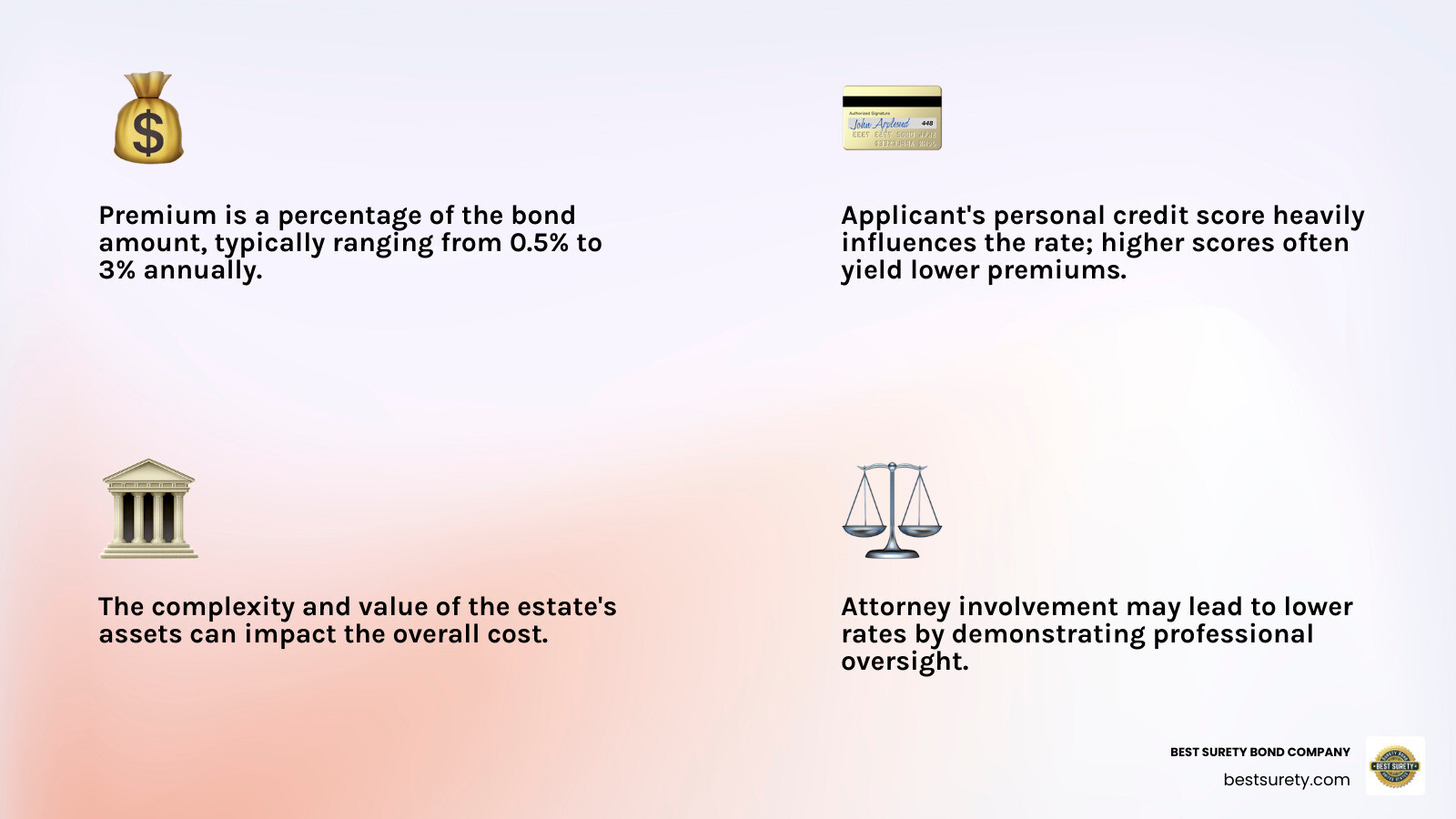
Here’s a general breakdown of how costs are determined:
| Bond Amount (Court-Ordered) | Estimated Annual Premium | Notes – |
|---|---|---|
| $50,000 | $250 – $400 | Based on a standard rate of 0.5% to 0.8%. This is common for applicants with good credit and a straightforward estate. – |
| $100,000 | $500 – $1,000 | The rate for this bond amount is highly dependent on the applicant’s credit score. A higher score can secure a rate closer to 0.5%. – |
| $500,000 | $2,500 – $5,000 | For larger estates, the underwriting process is more in-depth. Factors like the complexity of assets and potential for litigation can influence the premium, pushing it towards the higher end of the range. – |
Several factors influence the final premium:
- Applicant’s Credit Score: This is a primary factor. A higher credit score indicates financial responsibility and typically results in a lower premium.
- Estate Complexity: An estate with complex assets, such as multiple properties, business interests, or significant investments, may be considered higher risk, leading to a higher premium.
- Attorney Involvement: Having an experienced probate attorney representing the estate can often lower the perceived risk, which may result in a more favorable rate.
- Bond Amount: The larger the bond amount required by the court, the higher the annual premium will be.
What are the potential risks for applicants when obtaining a Texas probate bond?
While a probate bond protects the estate, it’s important for the applicant (the principal) to understand their own obligations and risks. The most significant risk is personal liability. The indemnity agreement you sign is a legal contract that makes you personally responsible for reimbursing the surety company for any amount it pays out on a claim. For example, if a court finds you mismanaged $50,000 of estate funds, the surety will pay that amount to the estate, and then they will seek full repayment from you. This can have serious financial consequences, including potential legal action against your personal assets. Furthermore, a claim on your bond can negatively impact your credit score, making it difficult to obtain credit or other bonds in the future. Finally, failing to pay the annual premium can lead to the surety company canceling the bond, which would require you to notify the court and could result in your removal as the estate’s representative.
